
Plants
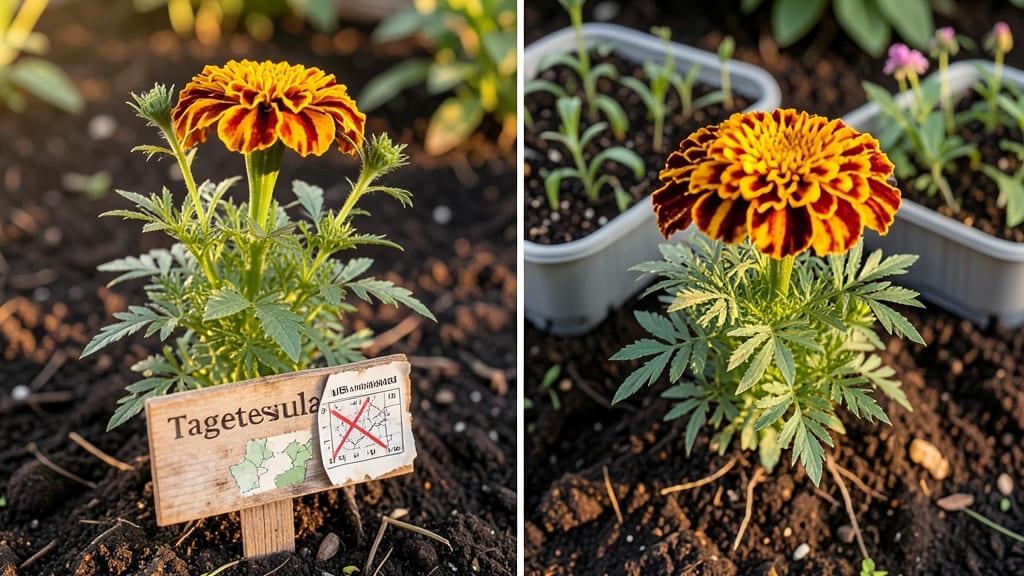
French marigolds are not true perennials in most climates, dying back completely each winter but often self-seeding prolifically.
Are French marigolds perennials? While they behave like tender perennials, they can't survive freezing temperatures. 🌱 In colder climates, their foliage dies back completely, but their roots may linger until spring—though they rarely regrow from the same plants. The key to their annual behavior lies in their native Mediterranean origins, where they evolved to thrive in warm seasons. What makes them special is their prolific self-seeding habit, which often creates dense patches of volunteers the following year, giving gardeners the illusion of perennialism without the true hardiness.
In warmer zones like 9-11, French marigolds may persist through winters with minimal protection, but even there they're not guaranteed to return. The difference comes down to temperature thresholds—most varieties can't tolerate prolonged exposure below 20°F.
That's why gardeners in colder regions typically treat them as annuals, replanting fresh seeds each spring while enjoying their vibrant blooms and pest-repelling benefits.
💡 In This Article
- French Marigold Cold Tolerance and Perennial Behavior
- How to Extend French Marigold Lifespan in Cold Climates
French marigold cold tolerance and perennial behavior
French marigolds (Tagetes patula) evolved in Mediterranean climates where winters are mild and summers are hot—conditions that explain their delicate relationship with cold.
These plants can't tolerate freezing temperatures, with most varieties dying back when nighttime temperatures drop below 20°F (-6°C). 🌡️ The confusion about their perennial status stems from their ability to survive mild winters in zones 9-11, where they might retain some foliage or even bloom sporadically through winter.
However, their roots rarely survive repeated freeze-thaw cycles, which is why they're classified as tender perennials rather than true hardy perennials like lavender or Russian sage.
The key difference between annual and perennial behavior in French marigolds comes down to root survival and regrowth. In warmer zones, their fibrous root systems can persist through 30-40°F (1-4°C) temperatures, allowing new growth to emerge in early spring.
But in colder zones, the roots typically rot within weeks of exposure to 15°F (-9°C) or below. Even in zone 9, where they might overwinter, the plants often emerge weakened, producing fewer blooms than fresh spring-planted seedlings.
This explains why gardeners in milder climates observe "perennial-like" behavior while those in colder regions treat them strictly as annuals.
What makes French marigolds appear more perennial than they actually are is their prolific self-seeding habit.
A single plant can produce 500-1,000 seeds that scatter readily, creating dense volunteer patches the following spring. 🌱 This natural propagation gives the illusion of perennialism, especially when combined with their ability to regrow from the base in warm climates.
The seeds themselves are remarkably resilient, capable of germinating after 2-3 years in the soil, which is why you might see marigolds popping up unexpectedly in garden beds long after the original plants died back.
Another factor influencing their perceived perennial behavior is their growth cycle. French marigolds grow quickly—reaching 12-18 inches (30-45 cm) in just 6-8 weeks—and produce continuous blooms from early summer until frost. This rapid growth and long flowering period make them seem more established than they are.
In contrast, true perennials like coneflowers or black-eyed Susans have robust root systems that store energy for multiple growing seasons, allowing them to return year after year with minimal intervention.
The temperature threshold of 20°F (-6°C) is critical for understanding French marigold survival. Most varieties can handle brief dips to 25°F (-4°C) with protection, but prolonged exposure to freezing temperatures will kill the plants to the ground.
This is why gardeners in zones 7-8 often see them die back completely each winter, only to have new plants emerge from self-seeded volunteers the following spring. The confusion arises because these volunteers aren't the same plants—just new ones growing from seeds dropped the previous year.
For comparison, consider how French marigolds differ from African marigolds (Tagetes erecta), which are slightly more cold-tolerant and can sometimes survive winters in zone 8 with heavy mulching. African marigolds have thicker stems and larger flowers, but their root systems still aren't designed for true perennial survival.
The key takeaway is that French marigolds are more about the experience of continuous blooms and self-sufficiency than about true perennial hardiness. 🌿