
Plants
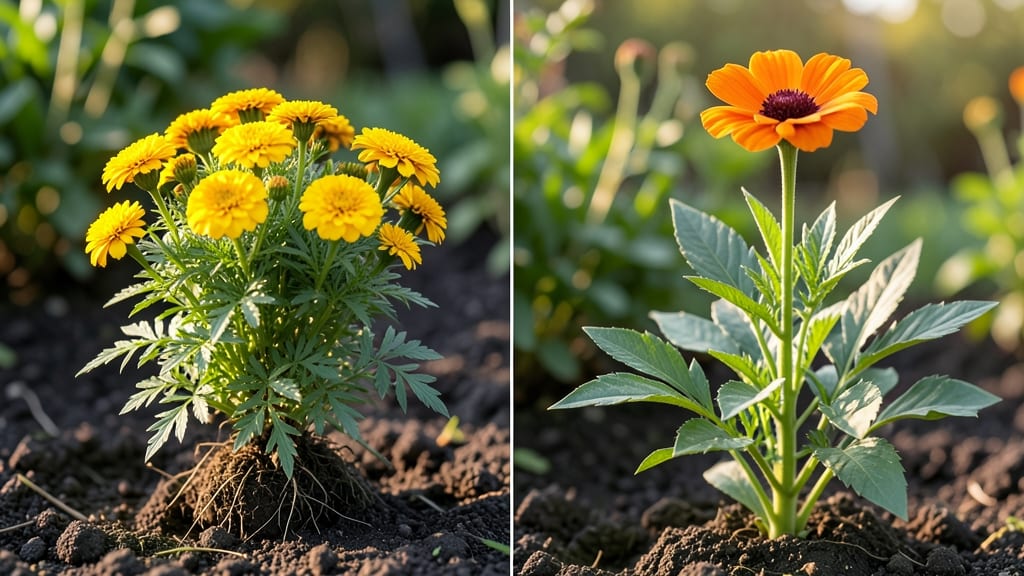
Marigolds grow as perennials in USDA Zones 9-11, where they naturally return each year, but most gardeners plant them as annuals in colder regions because frost kills their tender foliage. Proper care like deadheading can help them thrive longer in warmer climates.
Marigolds' perennial nature depends entirely on where you live.
In frost-free zones like Southern California or Florida, they'll happily regrow from their roots year after year, often spreading into cheerful patches. 🌼 The key difference comes down to cold tolerance—once temperatures dip below 30°F, their leaves turn brown and crispy, but the roots often survive underground to sprout again when warmth returns.
This is why gardeners in Zones 3-8 usually replant them each spring, even though they're technically perennials in warmer areas.
What's fascinating is how marigolds adapt: in colder climates, their growth cycle resets annually, while in mild winters they might even self-seed. This dual nature makes them incredibly versatile—just adjust your expectations based on your local climate.
For gardeners outside Zones 9-11, overwintering techniques like heavy mulching or container growing can sometimes coax them through the cold months.
💡 In This Article
- Marigold Hardiness Zones and Cold Tolerance
- Tips to Overwinter Marigolds in Cooler Climates
Marigold hardiness zones and cold tolerance
The reason marigolds act like perennials in USDA Zones 9-11 comes down to their biological cold tolerance threshold. These bright blooms are native to tropical and subtropical regions, meaning their cellular structure can't handle prolonged exposure to 32°F or below.
When frost hits, the water inside their leaves freezes and expands, rupturing cell walls—a process called cryoinjury. This is why you'll see their foliage turn black and crispy in colder climates, even though the roots might survive underground.
In warmer zones, marigolds develop a fibrous root system that can store enough energy to regrow after winter dormancy. Think of it like a natural battery: the plant converts sunlight into carbohydrates during the growing season and stores them in its roots.
When temperatures rise again, these reserves fuel new growth.
This is why you'll often find marigolds spreading aggressively in frost-free areas—they're not just surviving, they're thriving with minimal care. 🌱 For comparison, their cold tolerance is similar to other tender perennials like hibiscus or bougainvillea, which also retreat underground in winter.
Gardeners in Zones 3-8 typically treat marigolds as annuals because the energy required to protect them through winter often isn't worth the effort. The 30°F threshold is critical—below this, even the roots can suffer damage.
This is why you'll see most commercial marigold varieties labeled as "annual" despite their botanical classification. The key difference between zones is that in colder areas, the entire plant dies back each winter, while in warmer zones, the roots remain active year-round.
What most people don't realize is that marigolds have two distinct growth phases: vegetative (leafy growth) and reproductive (flowering). In colder climates, they complete their entire life cycle in one season, while in warmer zones, they can extend their vegetative phase for multiple years.
This is why deadheading (removing spent flowers) becomes especially important in perennial zones—it redirects the plant's energy from seed production back into root development for next year's growth.
Consider these zone-specific care factors when planning your marigold garden:
- Zones 9-11: Minimal winter care needed—focus on deadheading and occasional watering during dry spells. The plants will naturally regrow from their roots.
- Zones 7-8: Use 4-6 inches of mulch around the base to insulate roots. Choose organic mulch like straw or shredded leaves.
- Zones 3-6: Treat as annuals unless you're willing to use row covers or move plants to containers for overwintering.
The most successful perennial marigold gardens in colder zones combine proper mulching with selecting cold-hardier varieties like 'Bonanza' or 'Tangerine Gem'. These cultivars have shown better survival rates when given extra protection during winter months. 🌿