
Orchid Care
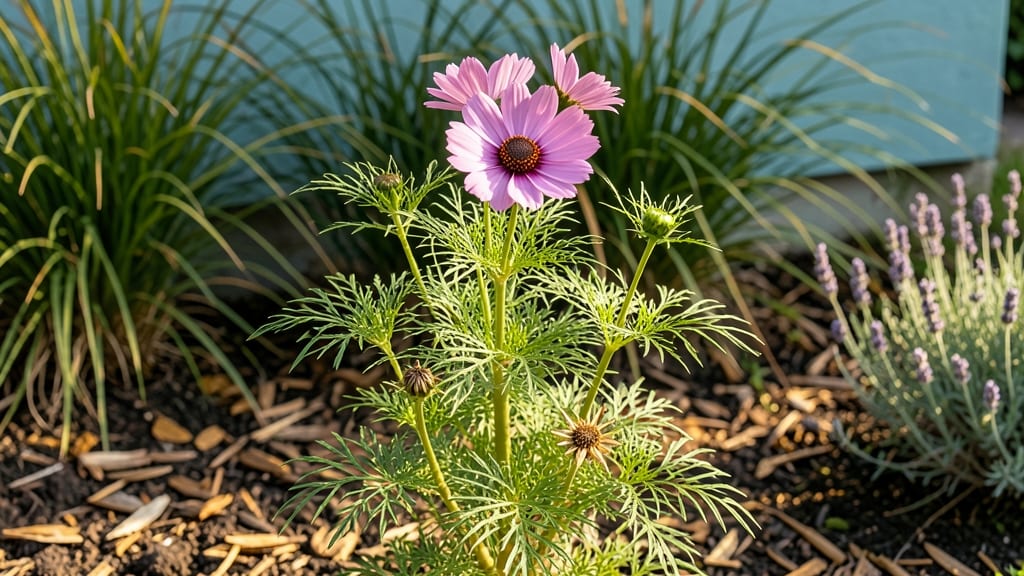
Cosmos plants are annuals in most climates, acting like perennials only in frost-free zones where they survive winter and regrow. Their lifespan hinges on whether freezing temperatures occur.
This behavior stems from their native habitats in warm, temperate regions where frost never arrives.
When temperatures drop below 32°F, the plants either die back completely or enter a short-lived perennial phase. 🌱 The key difference lies in their root systems—some varieties develop hardier roots that persist through mild winters, while others simply reseed prolifically, creating the illusion of perennial growth.
Gardeners in colder zones often rely on this self-seeding trait to maintain continuous blooms year after year.
For those in USDA Zones 8-11, cosmos can become semi-perennial, returning each season with minimal intervention. In colder climates, treating them as annuals and replanting yearly yields the same vibrant displays.
The trade-off? Annual cosmos often produce more abundant blooms in their single growing season compared to their perennial counterparts.
💡 In This Article
- Why Cosmos Die Back: The Science of Their Growth Cycle
- How to Extend Cosmos Blooms Year-Round in Different Climates
Why cosmos die back: the science of their growth cycle
Cosmos plants exhibit this annual-perennial duality because their survival hinges on a delicate balance between temperature and photoperiod. Their native range spans warm regions where frost is rare, meaning they evolved without needing winter hardiness.
When exposed to consistent temperatures above 50°F, cosmos thrive as annuals, completing their lifecycle in just 60-90 days from seed to flower.
The key trigger for their demise is frost—when temperatures drop below 32°F, cellular damage occurs in their tender stems and leaves, causing the entire plant to blacken and collapse within 24-48 hours. 🌱
The botanical mechanism involves a process called "cold acclimation failure." Unlike true perennials (such as lavender or salvia), cosmos lack the ability to produce protective antifreeze proteins or accumulate sugars that prevent ice crystal formation in their tissues.
Their shallow root systems—typically reaching only 12-18 inches deep—offer minimal insulation against freezing ground. Even in USDA Zone 7, where winter lows occasionally dip below freezing, cosmos rarely survive beyond the first frost unless heavily mulched.
What makes this behavior fascinating is how cosmos compensate through prolific self-seeding. Each plant can produce 500-1,000 seeds per season, which germinate eagerly in spring. This strategy ensures genetic continuity even when the parent plants perish.
Compare this to poppies, another self-seeding annual: both rely on seed dispersal, but cosmos seeds remain viable in soil for up to 5 years, creating dense, naturalized colonies over time. The trade-off? Their short-lived nature means gardeners must either resow annually or accept patchy regrowth in colder climates.
In frost-free zones (Zones 9-11), cosmos adopt a semi-perennial growth habit. Their roots—though not true woody perennials—develop a slightly thicker, fibrous structure that persists through mild winters. This allows regrowth from the base in spring, mimicking perennial behavior.
The difference? True perennials like coneflowers regenerate from established root crowns, while cosmos rely on residual root fragments and new seedlings. This "cheater perennial" strategy explains why cosmos often appear perennial in warm climates but fail in colder ones.
Another critical factor is photoperiod sensitivity. Cosmos flower in response to day length, typically blooming when daylight exceeds 12-14 hours. This trait ensures they produce seeds before frost arrives in temperate zones.
In tropical climates, where day length is consistent, cosmos may continue flowering indefinitely until other environmental stresses (like drought) intervene. This explains why some gardeners in Zone 8 report cosmos returning for 2-3 years—they're not true perennials, but their seeds germinate reliably in the absence of harsh winters.
For gardeners, understanding this science translates to practical choices. In cold climates, treating cosmos as annuals guarantees vibrant, pest-free blooms each season. In warmer regions, embracing their self-seeding nature reduces maintenance. The key takeaway? Cosmos don't "choose" to be annuals or perennials—their fate is dictated by the thermometer. 🌡️