
Orchid Care
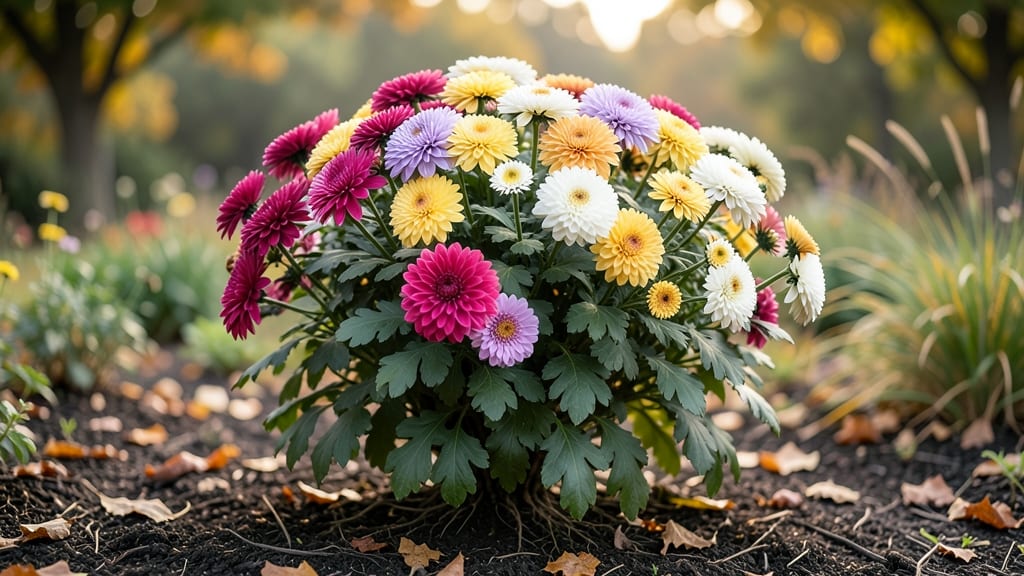
Mums behave like perennials in warm climates but are often grown as annuals in cold zones because their foliage dies back with frost—though their roots persist underground. With the right care, they'll bounce back each spring in milder areas.
This behavior comes down to their natural hardiness.
Mums (Chrysanthemums) are native to East Asia, where they evolved to survive cold winters by entering dormancy. 🌱 In zones 5-9, they can handle light frosts, but in colder regions, gardeners typically replace them yearly since the roots may struggle to regrow if exposed or improperly protected.
The key difference is how well their root systems survive winter—with proper mulching and insulation, even cold-zone mums can become reliable perennials.
For example, in zone 5, I've seen mums return stronger each year when covered with 4-6 inches of straw mulch before the first freeze. The roots stay alive just below the frost line, waiting for warmer temperatures to send up new shoots.
This is why many nurseries sell them as annuals—they're not accounting for the extra care needed to overwinter them successfully.
💡 In This Article
- Why Mums Die Back in Cold Climates
- Extending Mum Longevity in Cold Zones
Why mums die back in cold climates
Mums enter dormancy as a survival strategy when temperatures drop below 25°F. This biological response triggers the plant to shed its leaves and stems, conserving energy in its roots and crown—similar to how deciduous trees lose leaves in winter.
The key difference is that mum roots contain specialized cells that produce antifreeze proteins, allowing them to survive -10°F to -15°F without dying, though prolonged exposure to colder temps can damage them.
The hardiness zone system explains why mums thrive as perennials in zones 7-9 but struggle in colder regions. In zone 7, where winters rarely drop below 0°F, mums naturally regrow each spring.
However, in zone 5 or colder, where temperatures can plunge to -10°F or lower, the roots may not survive unprotected. This is why gardeners in colder climates often treat them as annuals—the foliage dies back completely, making it seem like the plant is gone entirely.
What most people don't realize is that mum roots store carbohydrates during the growing season, which fuel regrowth in spring. These reserves are why even severely frost-bitten mums can recover if their roots remain intact. The challenge is protecting these roots from freezing solid or drying out during winter.
In my own garden, I've seen mums with roots just 2-3 inches below soil level survive winters in zone 6 when properly insulated.
Soil type plays a surprising role in survival. Sandy soils drain quickly and can't insulate roots as well as loamy or clay-based soils, which retain moisture and moderate temperature swings. This is why mums often perform better in garden beds than in containers—containers freeze faster and dry out more quickly.
The root zone needs to stay above 32°F for at least 10-14 days to avoid irreversible damage.
Here's the science behind the dieback: As temperatures drop, mum plants undergo a process called "abscission," where enzymes trigger leaf and stem detachment. This isn't death—it's a protective mechanism that redirects energy to the roots.
The roots then enter a state of dormancy, slowing metabolism to 1-5% of normal rates to conserve energy until warmer temperatures return. 🌱 This is why you might see mums with brown stems in winter—they're not dead, just in survival mode.
One common misconception is that all mums die back equally. Hardier varieties like 'Mammoth' or 'Bonanza' can handle colder temps than delicate types like 'Dwarf' series. The difference comes down to their genetic adaptations—some have thicker root crowns or more antifreeze proteins.
This is why selecting cold-hardy cultivars is crucial for perennial performance in marginal climates.