
Flowers
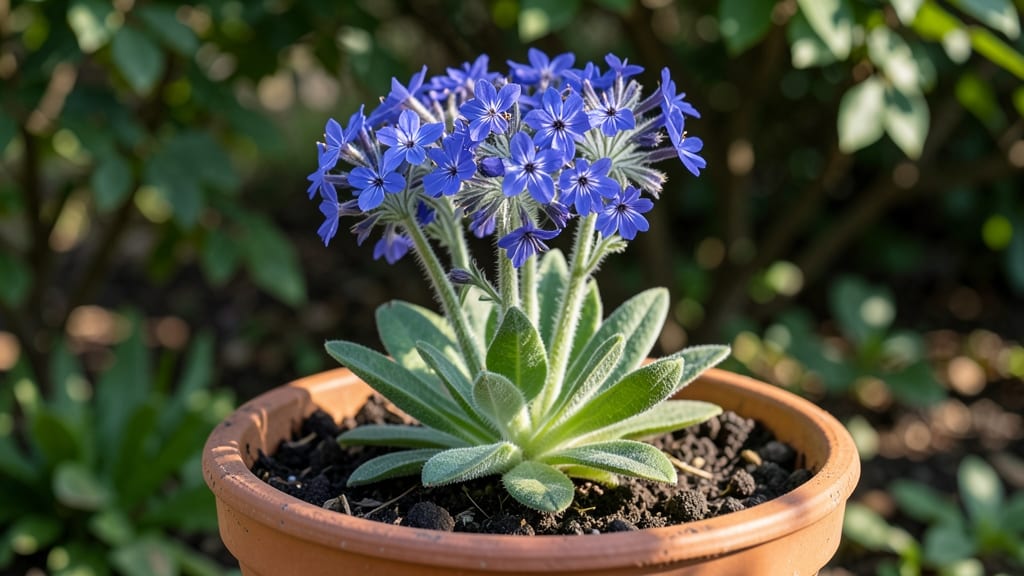
Chinese forget-me-nots aren't true perennials—they act like annuals or short-lived perennials, often dying back completely in cold winters and rarely returning the following year. Their hardiness peaks in USDA Zones 4-9 with proper winter mulch protection.
These plants may look like classic perennials with their vibrant blue blooms, but their shallow root systems and tender growth make them far more sensitive to temperature drops. 🌱 Unlike hardy forget-me-not varieties that survive winter dormancy, Chinese forget-me-nots typically require annual replanting in colder regions.
The key to extending their lifespan lies in protecting their roots—adding thick mulch in late fall can help preserve them through mild winters, though they'll still often behave as annuals in most climates.
What sets them apart is their fast growth cycle—given the right conditions, they'll bloom prolifically in their first season, making them popular for seasonal color. However, their inability to reliably regrow makes them better suited for gardeners who enjoy quick, seasonal displays rather than long-term perennial planting.
💡 In This Article
- Chinese Forget-Me-Nots’ Growth Cycle and Cold Sensitivity
- Extending Chinese Forget-Me-Nots’ Life with Winter Care
Chinese forget-me-nots’ growth cycle and cold sensitivity
The tender nature of Chinese forget-me-nots (Cynoglossum amabile) stems from their shallow root systems, which rarely penetrate deeper than 6-8 inches into the soil. This makes them highly vulnerable to freeze-thaw cycles that disrupt their delicate root structure.
Unlike hardy European forget-me-nots (Myosotis sylvatica), which develop deep, woody crowns that survive winter dormancy, Chinese varieties lack this protective adaptation. Their roots contain minimal starch reserves, leaving them unable to sustain regrowth after severe cold snaps below 20°F.
Temperature fluctuations trigger their dormancy cycle through a process called vernalization, where exposure to prolonged cold (35-45°F for 4-6 weeks) signals the plant to prepare for dormancy. However, Chinese forget-me-nots don't store enough energy reserves to survive multiple freeze-thaw events.
Their leaves also contain high moisture content, which crystallizes and damages cell walls when frozen. 🌡️ Compare this to Myosotis sylvatica, which can endure -20°F winters by developing protective bud scales that shield meristem tissue.
What makes this particularly challenging is their fast growth habit—Chinese forget-me-nots can reach 12-18 inches tall in just 6-8 weeks under ideal conditions (full sun, well-draining soil). This rapid above-ground development creates a mismatch with their underdeveloped root systems, making them prone to toppling or complete dieback when winter arrives.
Their stems also lack the woody strength of true perennials, snapping easily under snow or ice accumulation.
Light exposure plays a critical role too. Chinese forget-me-nots require 6+ hours of direct sunlight daily to establish strong roots, but if planted too late in the season, they won't develop sufficient root mass before winter.
This is why gardeners in Zones 4-5 often see them behave as annuals—they simply don't have time to build winter resilience. Even in milder Zone 9 climates, they may only persist for 2-3 years before declining.
Here's what's happening at the cellular level: Their meristematic tissue (growth centers) lacks the protective suberin layers found in true perennials. When temperatures drop below 28°F, ice formation in these unprotected cells causes irreversible damage.
The plant's survival strategy shifts from root storage to rapid above-ground reproduction, prioritizing seed production over perennial persistence—a classic annual adaptation.
For visual comparison, imagine a dandelion versus a peony: Both produce flowers, but the dandelion's entire life cycle focuses on quick reproduction, while the peony invests in robust root systems. Chinese forget-me-nots operate more like dandelions in their growth priorities, which explains their unreliable perennial behavior. 🌿