
Plants
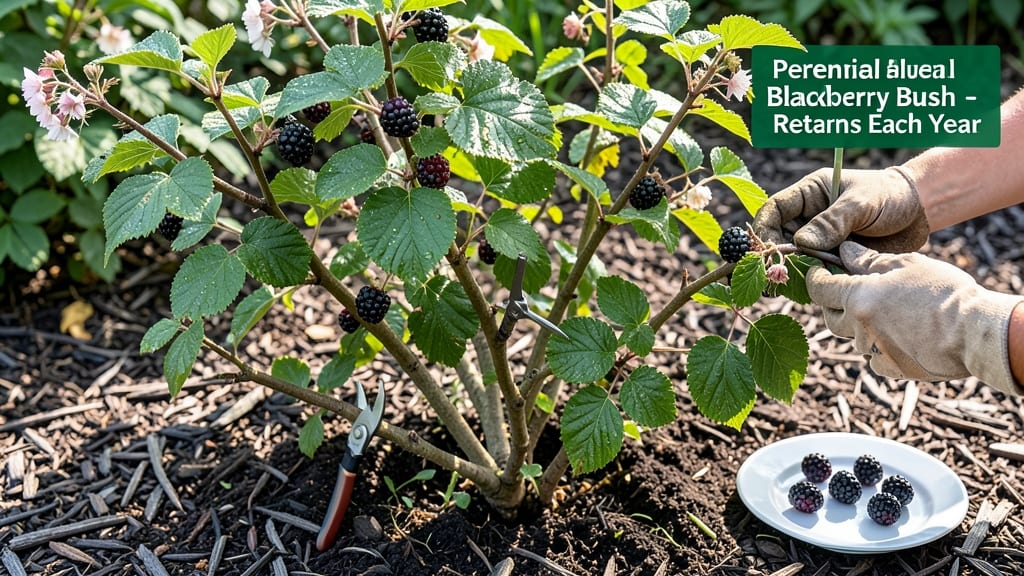
Blackberry bushes are perennial plants that regrow each year from their roots, thriving in USDA zones 5-9 but requiring winter protection in colder climates to survive frost and harsh conditions.
Blackberry bushes earn their perennial reputation by relying on their robust root systems to regenerate each spring. 🌱 Unlike annuals that complete their life cycle in one season, these plants enter dormancy during winter, conserving energy until warmer temperatures return.
The key to their survival lies in the hardiness of their roots—even if the above-ground canes die back in cold snaps, new growth emerges from the soil as soon as conditions improve.
This makes them ideal for gardeners in moderate climates, though those in colder regions need to take extra steps to shield the roots from extreme cold.
What sets blackberries apart from other perennials is their aggressive growth habit. Once established, they spread through underground runners, creating dense thickets that produce fruit for decades with proper care. The trade-off? Their vigorous nature means they demand regular pruning and maintenance to keep them productive.
I’ve seen blackberry patches in zone 6 that produce reliably for 15+ years with just a little winter protection—proof that with the right approach, these plants truly deliver year after year.
💡 In This Article
- How Blackberry Bushes Survive Winter in Different Climates
- Best Practices for Protecting Perennial Blackberry Bushes in Cold Zones
How blackberry bushes survive winter in different climates
Blackberry bushes rely on a clever survival strategy called dormancy, where their metabolic processes slow dramatically in response to cold temperatures. During winter, the above-ground canes die back, but the roots remain alive just below the frost line, storing energy in the form of starches.
This root system acts like a biological battery—when spring arrives, those stored nutrients fuel rapid regrowth. Cold-hardy varieties like Chester and Triple Crown can handle down to −15°F to −20°F, thanks to thicker root crowns that resist freezing damage.
The real magic happens in the cane structure. Blackberries produce two types of canes: floricanes (first-year growth that flowers and fruits) and primocanes (second-year growth that becomes next year’s fruit-bearing canes).
In colder zones, floricanes often die back completely, but the primocanes survive because their bark contains wax layers that prevent moisture loss. This dual-system approach ensures at least some canes make it through winter, guaranteeing fruit production the following season. 🌿
Dormancy isn’t just about survival—it’s also about timing. Blackberries enter dormancy when day lengths shorten and temperatures drop below 50°F for extended periods. This triggers the production of antifreeze proteins in their cells, similar to how some fish survive Arctic winters.
The roots also develop insulating layers of dead tissue that act like natural mulch, protecting the living tissue beneath. In warmer zones (like 8-9), dormancy is lighter, and canes may stay partially green, but the roots still store energy for spring.
Climate plays a huge role in how blackberries adapt. In USDA zone 5, where winters dip to −10°F to −20°F, varieties like Natchez thrive because their roots can penetrate 12-18 inches deep, avoiding surface frost.
But in zone 9, where winters are mild, blackberries focus more on vigorous top growth and less on deep root protection. The key difference? Colder-climate blackberries prioritize root hardiness, while warmer-climate types invest in above-ground resilience.
What most gardeners don’t realize is that late-summer pruning can actually improve winter survival. Removing weak canes before dormancy reduces the plant’s energy demands, allowing it to allocate more resources to root strengthening.
I’ve seen blackberries in zone 4 (where winters hit −30°F) survive with double-layered mulch and row covers, proving that even in extreme cold, these perennials can bounce back—if given the right support. ❄️
For those in transitional zones (like 6-7), the challenge isn’t just cold but temperature swings. A sudden warm spell in winter can trick blackberries into breaking dormancy, only to be killed by a late frost.
This is why consistent winter protection—like straw mulch or bubble wrap—is critical. The goal is to keep root zones 5-10°F warmer than ambient air, mimicking the natural insulation they’d have in their native woodlands.