
Flowers
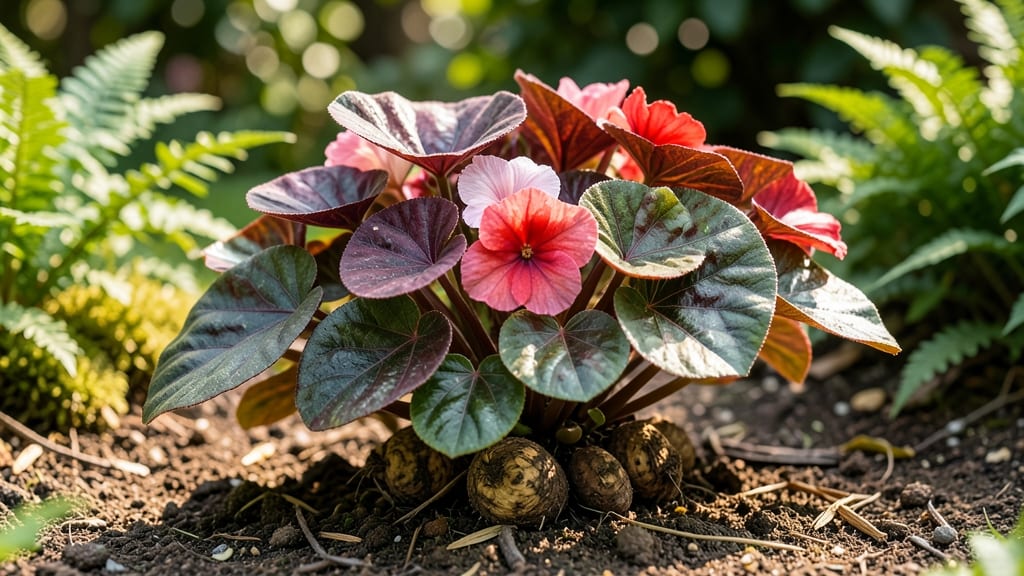
Begonias are perennial flowers in warm climates (USDA Zones 10-12) but die back in cold weather, requiring replanting each year in colder regions. Some varieties, like tuberous begonias, survive winter underground, while others must be treated as annuals or overwintered indoors.
Begonias thrive as perennials in frost-free zones because their growth cycle naturally pauses during cold months. 🌱 In regions with freezing temperatures, these plants either retreat underground (like tuberous types) or lose foliage entirely, entering dormancy.
The key difference lies in their ability to regrow from stored energy—whether in roots, tubers, or cuttings—once warmer weather returns. For gardeners in colder climates, understanding these survival strategies makes all the difference between losing plants and enjoying seasonal reblooms.
What sets begonias apart is their adaptability: while some varieties can't tolerate frost at all, others have evolved clever storage mechanisms. For example, tuberous begonias develop thick underground stems that act like living batteries, storing nutrients until spring.
Meanwhile, fibrous-rooted types might need more careful overwintering indoors. The USDA zone system helps predict which begonias will naturally overwinter outdoors versus those requiring human intervention.
💡 In This Article
- How Begonia Perennials Survive Cold Zones
- Overwintering Begonias in Cold Climates
How Begonia perennials survive cold zones
Begonias employ two primary survival strategies when temperatures drop: dormancy and underground storage. In USDA Zones 10-12, where winters rarely dip below 30°F, begonias remain active year-round. But when frost threatens, their growth halts as a protective response.
This dormancy isn't mere inactivity—it's a metabolic slowdown where the plant conserves energy by reducing respiration rates by up to 90%, similar to how deciduous trees prepare for winter.
The magic happens in their storage organs. Tuberous begonias develop thick, potato-like tubers that can survive 25°F temperatures when properly dried and stored. These tubers contain concentrated starch reserves—sometimes up to 20% of their dry weight—that fuel regrowth when warmth returns.
In contrast, fibrous-rooted types like Rex begonias don't form tubers but instead rely on thickened rhizomes packed with nutrients. The key difference? Tubers have 10-15 times more storage capacity than fibrous roots.
USDA zones determine survival because they map average minimum temperatures. Begonias in Zone 10 (where winters rarely go below 30°F) can often survive outdoors, while those in Zone 7 (where 0°F is common) need protection.
The critical threshold is 28°F
What most people don't realize is how begonias "remember" their growth cycle. The tubers contain dormancy hormones that prevent premature sprouting until temperatures consistently stay above 55°F for several weeks. This built-in delay ensures they don't waste energy on false starts during unpredictable spring weather. It's nature's way of ensuring survival in uncertain climates. Consider the example of Begonia x tuberhybrida (tuberous hybrids). These plants can store enough energy to produce 20-30 new shoots from a single tuber when conditions are right. The secret lies in their meristematic cells—undifferentiated cells that can develop into any plant part—remaining protected within the tuber's core. This cellular memory is what allows begonias to bounce back year after year in favorable climates. For gardeners pushing the limits, understanding these biological mechanisms means the difference between losing plants and enjoying seasonal reblooms. The right variety in the right zone can mean 3-5 years of continuous growth from the same tuber, while mismatched conditions may require annual replanting. 🌱