
Plants
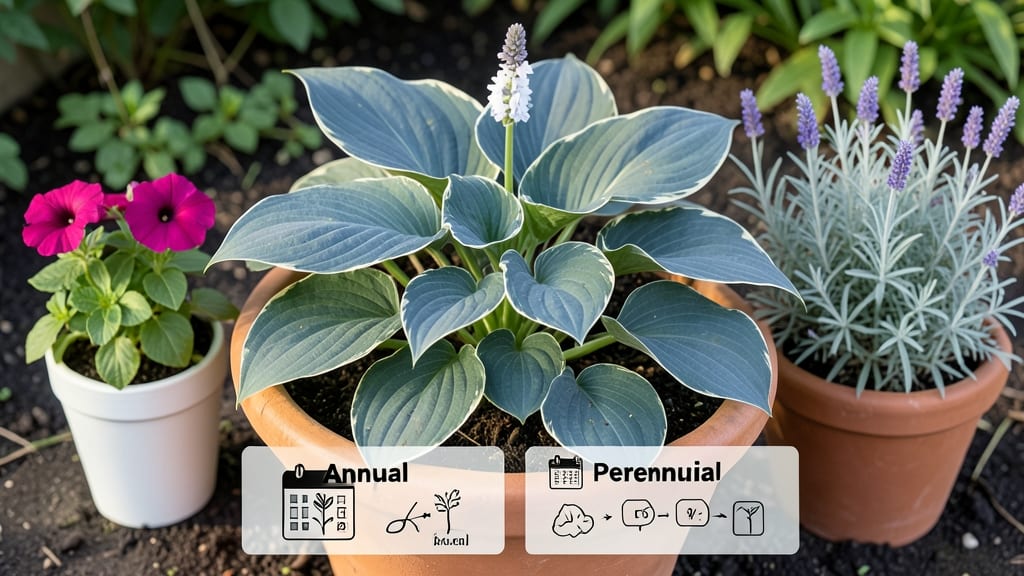
The key annual vs perennial difference is that annual plants live and bloom for just one growing season, while perennials return year after year from the same root system, enduring winter dormancy. This distinction shapes everything from planting timing to long-term garden design.
This fundamental difference isn't just about lifespan—it affects how you plan your garden. Annuals like marigolds or zinnias deliver vibrant color quickly but require replanting each spring, while perennials like lavender or hostas establish strong root systems that reward you with years of low-maintenance beauty. 🌱 The trade-off?
Annuals give you more seasonal variety, while perennials build soil health and reduce replanting work over time.
For example, if you want summer blooms that change with each season, annuals are your go-to. But if you're designing a low-maintenance border that thrives year after year, perennials offer far greater value. Many gardeners use both strategies—planting annuals for seasonal color accents around established perennial foundations.
💡 In This Article
- Life Cycle Science: How Annuals vs Perennials Grow Differently
- Garden Planning: When and How to Plant Annuals vs Perennials
Life cycle science: how annuals vs perennials grow differently
The fundamental difference between annuals and perennials starts at the cellular level with their growth strategies. Annual plants like sunflowers or basil are programmed to complete their entire life cycle—from seed germination to flowering to seed production—in just one growing season (90-180 days for most species).
This rapid growth is driven by their shallow root systems that focus energy on quick above-ground development rather than deep soil establishment. The trade-off? They allocate more resources to seed production, ensuring the next generation survives.
Perennials, on the other hand, invest heavily in their root systems from the start. Take peonies as an example: their roots can grow 3-5 feet deep over several years, creating extensive networks that store nutrients and water.
This underground growth allows perennials to survive winter dormancy when above-ground parts die back. During dormancy, their roots maintain just enough metabolic activity to sustain themselves until spring warmth triggers regrowth.
The key mechanism here is called "bud dormancy," where specialized buds remain protected in the soil or crown, shielded from freezing temperatures.
Light exposure triggers another critical difference. Annuals often rely on photoperiodism—they detect day length changes to time their flowering precisely for optimal pollination. For instance, poinsettias (which are technically annuals in most climates) begin flowering when daylight shortens in late summer.
Perennials, however, have more flexible timing. Many perennials like coneflowers use a combination of temperature cues and stored energy from previous seasons to determine when to push new growth, making them more adaptable to climate variations.
Water management also plays a crucial role. Annuals typically have shallow, fibrous root systems that spread widely but don't penetrate deeply. This makes them more drought-sensitive once established, though their quick life cycle means they often complete their needs before summer heat peaks.
Perennials develop taproots or deep lateral roots that access moisture from lower soil layers, giving them a survival advantage during dry spells. The deep roots also help perennials compete with weeds by outgrowing them for resources.
One fascinating adaptation is how perennials handle winter survival. Many develop specialized tissues that can withstand freezing temperatures by producing antifreeze proteins similar to those found in cold-hardy fish.
Some perennials like hellebores even bloom in early spring when soil is still cold, using stored energy to push through snow cover. Annuals, lacking this capability, must complete their entire life cycle before the first frost, which is why their growing season is so tightly constrained.
Consider the example of tomatoes (annuals) versus asparagus (perennials). A tomato plant puts all its energy into producing fruit within 60-90 days, while an asparagus crown may take 2-3 years to establish before producing spears.
The tomato's rapid growth is fueled by immediate seed energy, whereas asparagus relies on gradual root development to build the energy reserves needed for future harvests. This biological trade-off explains why you can harvest tomatoes the same year you plant them, but asparagus requires patience and long-term commitment.