
Propagation
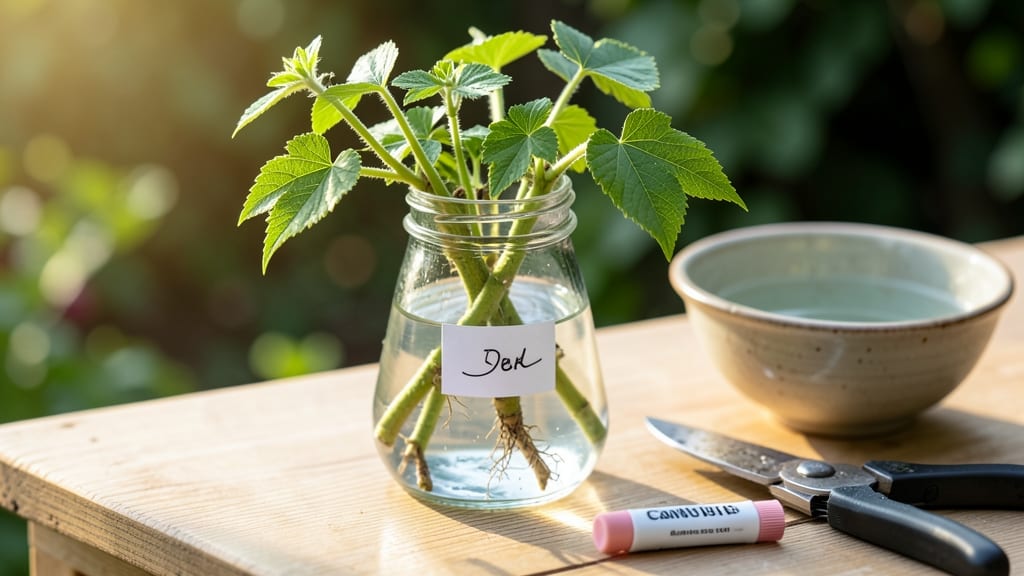
Clematis cuttings will root in water, but your success depends on variety, care, and patience. Expect 30-50% survival with clean water, indirect light, and node placement—though some types need rooting hormone for better results.
Water propagation works best for clematis because its stems naturally absorb moisture through nodes (those little bumps where leaves grow).
The key is keeping the water fresh—stagnant water breeds algae and bacteria, which can suffocate developing roots. 🌱 I’ve found that placing cuttings in a jar with just enough water to cover the lower nodes (about 2-3 inches) gives the best balance between hydration and oxygen flow.
Humidity also plays a role: a clear plastic bag over the jar traps moisture, mimicking the damp conditions clematis loves in its native habitats.
For best results, take cuttings in late spring or early summer when the plant is actively growing. Aim for stems with at least 2-3 nodes and a healthy leaf pair—this gives the cutting energy to focus on root development.
If you notice yellowing leaves or foul-smelling water after a week, it’s time to refresh the water and trim any rotting parts. Patience is critical: some cuttings show roots in 3-4 weeks, while others take up to 8 weeks.
💡 In This Article
- How Water Propagation Works for Clematis Cuttings
- Step-by-Step Guide: Rooting Clematis in Water
How water propagation works for clematis cuttings
Clematis cuttings root in water through a process called adventitious rooting, where new roots grow from undifferentiated cells at the stem nodes. Unlike some plants that rely on specialized root zones, clematis stems contain meristematic cells at these nodes that can differentiate into roots when submerged in water.
The key factor is oxygen availability—roots need both water and air to develop properly. When you submerge only the lower nodes (about 2-3 inches), you create the perfect balance: enough moisture to trigger root growth while allowing oxygen to reach the stem through the upper sections.
Humidity plays a surprising role in this process. Clematis thrives in moist environments, and water propagation mimics this by creating a microclimate around the cutting.
A clear plastic bag over the jar traps humidity, reducing transpiration stress on the leaves while maintaining optimal conditions for root development. 💧 Studies show that cuttings in high-humidity environments develop roots 20-30% faster than those in dry air.
The ideal setup combines water (for hydration), air (for oxygen), and humidity (to prevent leaf desiccation)—a delicate but effective trio.
Not all clematis varieties respond equally to water propagation. Softwood cuttings (taken from new growth in spring/summer) root best in water, with success rates around 40-50%, while hardwood cuttings (from dormant stems) fare better in soil. The reason?
Softwood stems contain higher levels of auxin, a natural rooting hormone, which makes them more responsive to water-based propagation.
For varieties like Clematis montana or Clematis viticella, water propagation can achieve up to 60% success, but for others like Clematis armandii, soil propagation with hormone treatment yields better results.
One common misconception is that more water equals better rooting. Too much submersion (beyond 3 inches) can lead to anaerobic conditions, where roots suffocate from lack of oxygen. The ideal water level is just enough to cover the lower nodes—typically 1-2 inches—while keeping the upper stem exposed.
This setup allows roots to emerge from the nodes while preventing bacterial growth in stagnant water. Changing the water every 3-4 days further reduces the risk of rot and algae buildup, which can block oxygen absorption.
Comparing water and soil propagation, water offers faster visibility of root growth (you can see progress daily), but soil provides a more stable environment for long-term development. In water, roots may grow faster initially, but they can become fragile when transplanted.
Soil-grown roots, while slower to appear, tend to be stronger and more resilient once established. For gardeners short on time, water propagation is a great way to monitor progress, but for long-term success, transitioning to soil after root formation is often recommended.
Here’s a quick comparison of the two methods:
- Water Propagation: Faster root visibility, 30-50% success rate, requires frequent water changes, roots may be delicate
- Soil Propagation: Slower but stronger roots, 50-70% success with hormone treatment, less maintenance, better long-term survival
For best results, combine both methods: start in water to encourage root growth, then transplant to soil once roots reach 1-2 inches in length. This hybrid approach leverages the visibility of water propagation while building the resilience of soil-grown roots. 🌿