
Companion Plants
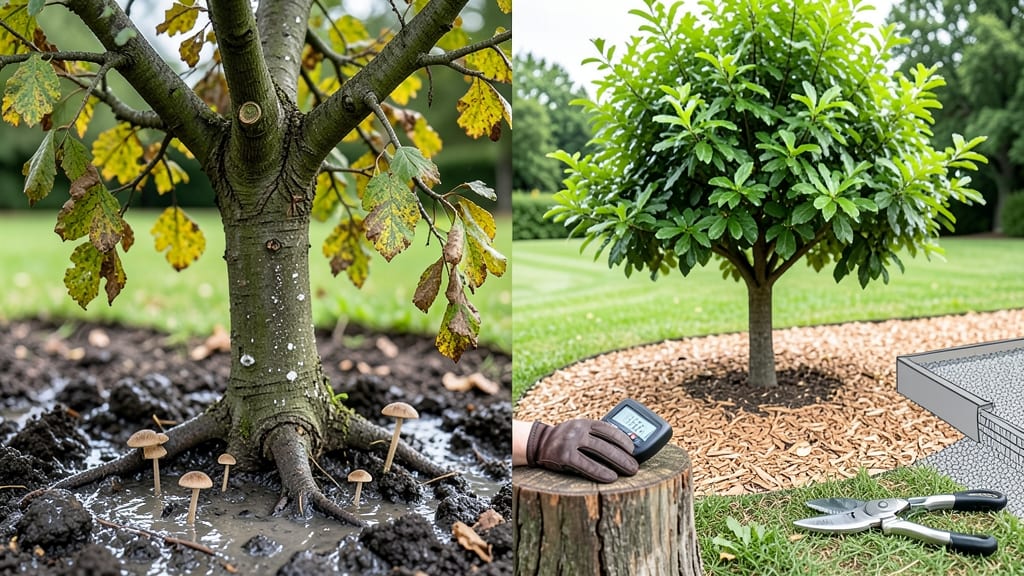
Will an overwatered tree recover? It depends—early intervention can save it, but advanced root rot or fungal infections often lead to permanent damage. Look for yellowing leaves, limp branches, or foul-smelling soil as warning signs, then cut back on water and improve drainage immediately.
Overwatering creates a suffocating environment where roots drown from lack of oxygen, inviting rot and fungal infections like Phytophthora. 🌱 The key is acting fast—within days of noticing symptoms—because once roots turn mushy or the trunk feels soft, recovery becomes nearly impossible.
I’ve seen oaks and maples bounce back after adjusting watering schedules and adding perlite to heavy clay soil, but pines often struggle due to their shallow root systems. The first step is always stopping water completely and letting the soil dry out before assessing damage.
Even with recovery, expect some leaf drop and stunted growth as the tree regains balance. Monitoring soil moisture with your finger (top 2-3 inches should feel dry before watering) prevents future issues.
For container-grown trees, ensure pots have drainage holes and consider repotting into lighter, well-draining mixes if roots appear waterlogged.
💡 In This Article
- How Overwatering Damages Tree Roots and What to Watch For
- Step-by-Step Recovery Plan for Overwatered Trees
How overwatering damages tree roots and what to watch for
When roots sit in soggy soil for too long, they suffocate because water displaces the air pockets essential for oxygen uptake.
This creates anaerobic conditions, where harmful bacteria and fungi like Phytophthora thrive, breaking down root tissues. 🌱 Think of it like drowning—roots can’t "breathe," and within 24-48 hours of constant saturation, they start dying off.
The worst damage occurs in clay-heavy soils where water pools instead of draining, trapping roots in a waterlogged prison.
Early signs of overwatering include yellowing leaves (especially on lower branches), a musty soil odor, and leaves that wilt despite moist soil. Later-stage symptoms reveal themselves through soft or spongy trunks (press gently—healthy wood feels firm), mushroom-like growths at the base, or roots that smell foul when exposed.
For example, a maple tree might develop brown, crispy leaf edges, while a pine could shed needles prematurely due to shallow root stress.
The science gets even more precise when you consider root respiration rates. Healthy roots need oxygen to convert sugars into energy—without it, they switch to inefficient fermentation, producing toxic byproducts.
This is why overwatered trees often show stunted growth even after recovery: their root systems may never fully regenerate. 💧 A soil moisture meter reading above 60% saturation for more than 48 hours signals danger, as most trees prefer 40-50% moisture at best.
Species play a huge role in recovery potential. Oaks and maples have deep taproots that can recover if the top 6-12 inches of soil dries out, while pines and birches have fibrous roots that rot faster.
Even a single week of overwatering can trigger irreversible fungal spread in pines, making prevention critical. The key is catching the issue before roots turn black or mushy—a sign oxygen deprivation has lasted too long.
Don’t overlook the role of microorganisms in the soil. Beneficial bacteria like Pseudomonas help roots absorb nutrients, but they vanish in waterlogged conditions.
This creates a vicious cycle: fewer good microbes mean weaker roots, which struggle even more in soggy soil. 🌿 Testing soil pH (ideal range: 6.0-7.0) can reveal if overwatering has disrupted this balance—acidic soils (pH 5.0) become even more hostile to roots when saturated.
Here’s what’s happening at the cellular level: Root cells swell from excess water, bursting their membranes in a process called osmotic shock. This is why overwatered trees often develop brown, water-soaked spots on leaves—it’s the plant’s way of saying, "My roots can’t function!"
The damage spreads upward through the xylem vessels, which transport water and nutrients, creating a blockage that mimics drought stress.
For container-grown trees, the stakes are even higher. Without proper drainage, roots circle the pot (girdling), trapping moisture and accelerating rot. A 10-gallon pot might hold 20+ pounds of water when saturated—enough to drown roots in just 3-5 days.
Always check for drainage holes and use mixes with 30-40% perlite to prevent this. 🌱