
Fertilization
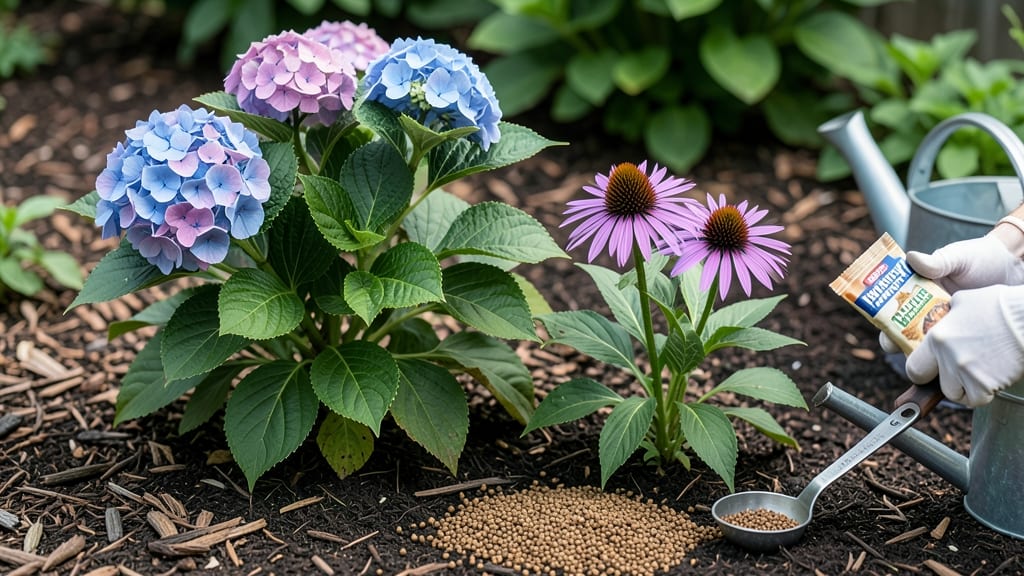
To fertilize perennials and shrubs at the right time, apply fertilizer in early spring as new growth emerges, then add a second dose mid-summer for flowering plants. Stop fertilizing by late summer to protect tender new growth before winter sets in.
Timing matters because perennials and shrubs follow natural growth cycles that dictate when they absorb nutrients most efficiently. 🌱 In early spring, roots wake up and need energy to support leaf and stem development, while mid-summer applications help flowering varieties produce vibrant blooms.
The key is avoiding late-season feeding—it encourages soft growth that won't survive frost, potentially harming your plants over winter.
This approach works for most temperate climates, though exact timing can shift slightly based on your USDA hardiness zone. For example, plants in Zone 5 may need their second feeding slightly earlier than those in Zone 8. Always check your specific plants' needs—evergreens often prefer different schedules than deciduous shrubs.
💡 In This Article
- Understanding Perennial and Shrub Growth Cycles
- Seasonal Fertilization Schedule for Different Plant Types
Understanding perennial and shrub growth cycles
Perennials and shrubs follow predictable biological rhythms that determine when they can best utilize fertilizer. In early spring, as temperatures rise above 40°F, roots begin actively absorbing water and nutrients after their winter dormancy.
This is when plants need a nutrient boost to fuel the rapid growth of leaves and stems—think of it as their "spring awakening." The root systems of established perennials can extend up to 3 feet deep by late spring, creating an extensive network to capture nutrients from the soil.
The mid-summer feeding window (typically June-August in most regions) aligns with the plant's flowering phase. During this time, plants are directing energy toward producing blooms rather than foliage. A balanced fertilizer with slightly higher phosphorus content (the middle number on the NPK label) supports this process.
For example, a 10-10-10 or 5-10-5 formula provides the right phosphorus-to-nitrogen ratio to encourage both foliage and flower development without overstimulating soft growth that might not survive winter.
Climate zones significantly impact these timelines. In colder regions (Zones 3-5), the spring feeding should occur when soil temperatures reach 50°F at 6 inches deep, while warmer zones (7-9) may begin earlier.
The key is observing your plants—look for the first 2-3 inches of new growth as your signal to fertilize. This visual cue is more reliable than calendar dates, as local microclimates can create variations even within the same zone.
Understanding dormancy periods is equally important. Most perennials enter a semi-dormant state in late summer as days shorten, preparing for winter. Fertilizing after mid-August in colder climates can trick plants into producing tender new growth that won't harden off properly before frost.
This is why the "no late-season feeding" rule exists—it's about protecting your plants' ability to survive winter rather than just about aesthetics.
Consider how different plant types respond: evergreen shrubs like boxwoods continue slow growth year-round, while deciduous shrubs like hydrangeas have distinct seasonal cycles. The timing difference between these groups can be as much as 4-6 weeks, making plant-specific knowledge crucial.
For instance, rhododendrons need acidic soil and benefit from a spring-only feeding schedule, while ornamental grasses often prefer a late summer application to support their fall color display.
One often-overlooked factor is how rainfall affects nutrient availability. After heavy rains, soil nutrients can leach away, making mid-summer applications particularly important in regions with seasonal downpours. A soil test can reveal whether your plants need additional micronutrients like iron or manganese, which become more critical during peak growth periods.
The test results will show you exactly what your soil is lacking, allowing for more targeted fertilization.
Remember that young plants (under 3 years old) have different needs than established perennials. They benefit from lighter, more frequent feedings to support root development, while mature plants can handle the standard two-season approach.
This age-related difference explains why some gardeners recommend a third, lighter feeding in early fall for young plants—it's about matching the fertilizer schedule to the plant's current growth stage rather than following a one-size-fits-all calendar.