
Transplanting
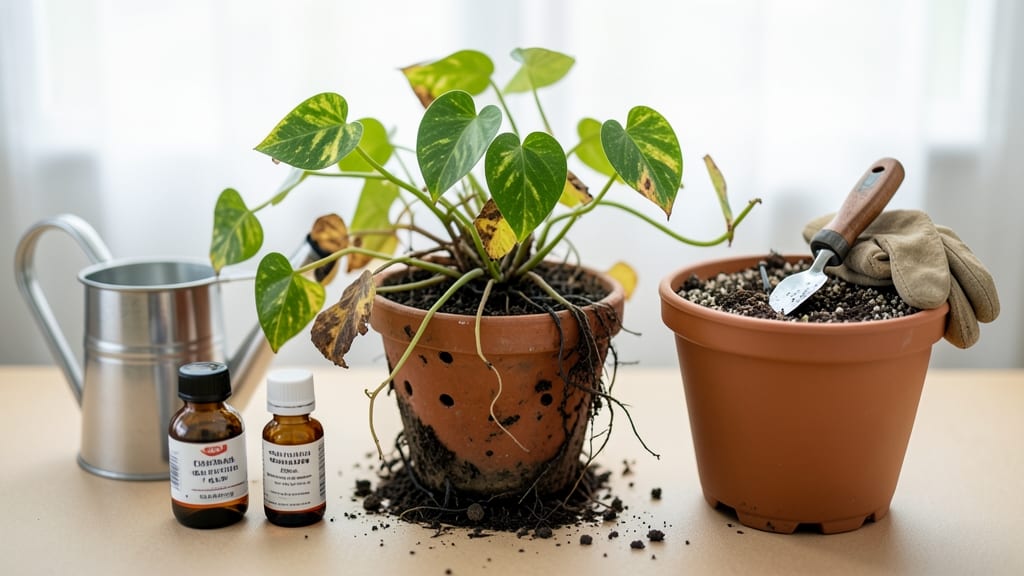
You should repot an overwatered plant immediately when you notice root rot, foul-smelling soil, or persistent yellowing leaves—even if you've already improved drainage. The key is to act fast with fresh, well-draining soil and a clean pot to give your plant a fighting chance at recovery.
Overwatering creates a perfect storm for root rot, where roots suffocate in soggy soil and can't absorb oxygen. 🌱 The moment you see black, mushy roots or a sour odor wafting from the pot, your plant is in distress—repotting becomes essential to prevent total collapse.
I've seen plants bounce back within weeks when moved to a container with proper drainage holes and a mix designed for their specific needs, like cactus soil for succulents or peat-based blends for ferns.
What's critical is the timing: don't wait for the plant to look completely dead. Even if leaves are drooping or falling, healthy roots might still be hidden beneath the surface.
Sterilize your tools with rubbing alcohol and trim away any dark, slimy roots with clean scissors—this helps redirect energy to the healthy portions. After repotting, hold off on watering for 3-5 days to let the roots adjust to their new, drier environment.
💡 In This Article
- Identifying Overwatering Damage in Plants
- Step-by-Step Guide to Repotting Overwatered Plants
Identifying overwatering damage in plants
The first clue that your plant needs repotting is often hidden beneath the soil surface—root rot.
Healthy roots should be firm and white or light tan, but overwatered roots turn black, mushy, and emit a foul, sour smell reminiscent of wet socks. 🌱 This rot spreads rapidly because anaerobic bacteria thrive in waterlogged soil, consuming oxygen and suffocating the roots.
Even if the leaves look fine above ground, the damage below can be irreversible if ignored for more than a week.
Look for visual red flags above the soil: leaves turning yellow (chlorosis) or brown at the edges, while the veins remain green—a classic sign of nutrient uptake failure.
Another telltale is wilting that doesn’t improve even after watering, because the roots can’t absorb moisture. 💫 The soil itself gives away the secret—it may feel heavy, compacted, and emit a musty odor when disturbed.
Unlike well-drained soil that crumbles easily, overwatered soil often sticks together like wet clay, making it hard to separate individual roots.
Fungal growth is another urgent warning sign. If you spot fuzzy white, gray, or black mold on the soil surface or stems, your plant is battling pathogens like Pythium or Phytophthora, which flourish in saturated conditions.
These fungi can spread to the roots within days, turning them into a slimy, decaying mess. 🔥 The key is to act before these symptoms become systemic—once the entire root ball is affected, even repotting may not save the plant.
Don’t overlook subtle changes in growth patterns, either. Overwatered plants often produce fewer leaves, with new growth appearing stunted or deformed.
The stems may also feel soft or hollow when pressed, another sign of internal rot. 🌿 Compare your plant to a healthy specimen of the same type—if it’s lagging in vigor, color, or structure, it’s time to investigate the roots.
One common mistake is assuming that yellow leaves mean the plant needs more water. In reality, they’re often a cry for help—either from too much moisture or poor drainage.
Before repotting, gently squeeze a handful of soil: if it drips water or feels soggy, your plant is in danger. 💧 The ideal soil should hold moisture without being waterlogged, like a damp sponge that doesn’t leave puddles when squeezed.
Pro tip: If you’re unsure, dig down an inch or two with a clean knife. Healthy soil should have a loose, aerated texture with visible root hairs. If it smells like a swamp and looks like mud, your plant is begging for a fresh start. 🌱