
Watering
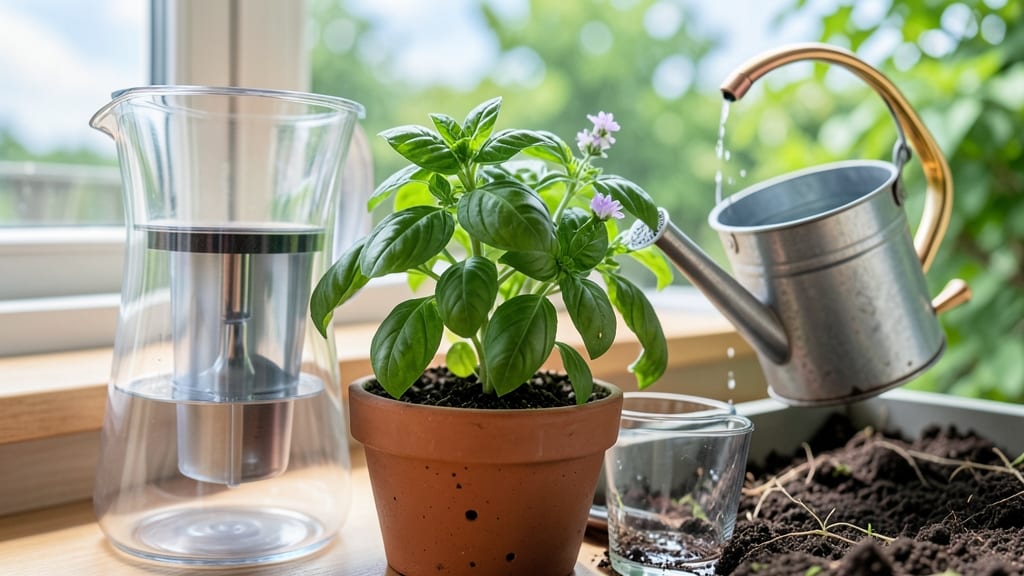
Using reverse osmosis water for plants demands careful mineral balancing by mixing it 1:1 with filtered tap water or supplementing with diluted fertilizer to replenish essential nutrients like calcium and magnesium for optimal soil health.
Reverse osmosis (RO) water lacks the natural minerals plants need to thrive, which is why mixing it with tap water creates a safer growing medium. 🌱 Without these essential nutrients, soil microbes struggle to function, and plants may develop deficiencies over time—even if they appear healthy at first.
I've seen firsthand how this affects foliage growth when using pure RO water long-term, so I always recommend testing soil pH after adjustments.
For container gardens or hydroponic systems, you can also add Epsom salt (1 teaspoon per gallon) or wood ash (1 tablespoon per gallon) to restore magnesium and potassium.
However, avoid RO water for acid-loving plants like blueberries or azaleas, as its neutral pH can disrupt their natural soil chemistry. Always monitor plant response after changes!
💡 In This Article
- Why RO Water Can Harm Plants Without Proper Adjustments
- Safe RO Water Mixing Ratios and Fertilizer Alternatives
Why RO water can harm plants without proper adjustments
Reverse osmosis (RO) water undergoes a rigorous filtration process that removes up to 99% of dissolved minerals, including calcium, magnesium, and potassium—nutrients plants rely on for cellular functions. These minerals aren't just passive ingredients; they act as catalysts for enzymatic reactions in plant metabolism.
For example, calcium strengthens cell walls, while magnesium is central to chlorophyll production. Without them, plants can't efficiently convert sunlight into energy or maintain structural integrity, even if they receive adequate water. 🌱
Soil microbes, which break down organic matter and make nutrients available to plants, also suffer. RO water's lack of nitrates and phosphates disrupts microbial communities by 30-50% within weeks, according to studies from the University of California.
These microbes produce vitamins like B12 that plants can't synthesize themselves. Over time, you'll notice stunted growth, yellowing leaves (chlorosis), or weak stems—symptoms that mimic nutrient deficiencies but stem from microbial imbalance rather than direct mineral shortages.
The pH shift is another critical factor. RO water typically has a neutral pH of 7.0, while most plants thrive in slightly acidic soil (pH 6.0-7.0).
For acid-loving species like hydrangeas or gardenias, this abrupt change can lock out essential nutrients like iron and manganese, even if they're present in the soil. The result? Brown spots on leaves or poor flowering, despite seemingly ideal growing conditions.
This is why I always recommend testing soil pH after switching water sources.
What makes this particularly insidious is the delayed reaction. Plants may appear healthy for weeks or even months while their root systems silently degrade. The damage accumulates in the vascular system, where mineral deficiencies cause blockages that restrict water and nutrient transport.
This is why professional hydroponic growers never use pure RO water—they understand that what you don't see underground is often more critical than what you observe above it. 🌿
Consider this comparison: Tap water contains about 50-100 ppm of dissolved minerals, while RO water drops to 1-5 ppm**. The difference isn't just quantitative—it's qualitative. Plants don't just need minerals; they need the right balance.
For instance, calcium and magnesium work synergistically, and removing one without replacing both creates an imbalance that's harder to correct than a simple deficiency. This is why simply adding fertilizer to RO water isn't always enough—you need to restore the entire mineral profile.
One telling example is my friend's tomato plants. After switching to pure RO water, the leaves developed a characteristic "cupping" at the edges—a classic calcium deficiency sign. The plants looked lush but produced misshapen fruit with poor shelf life.
The solution? Switching to a 50/50 mix of RO and tap water plus weekly Epsom salt treatments. Within three weeks, the new growth was normal, proving that mineral balance matters more than water purity alone. 🍅