
Flowers
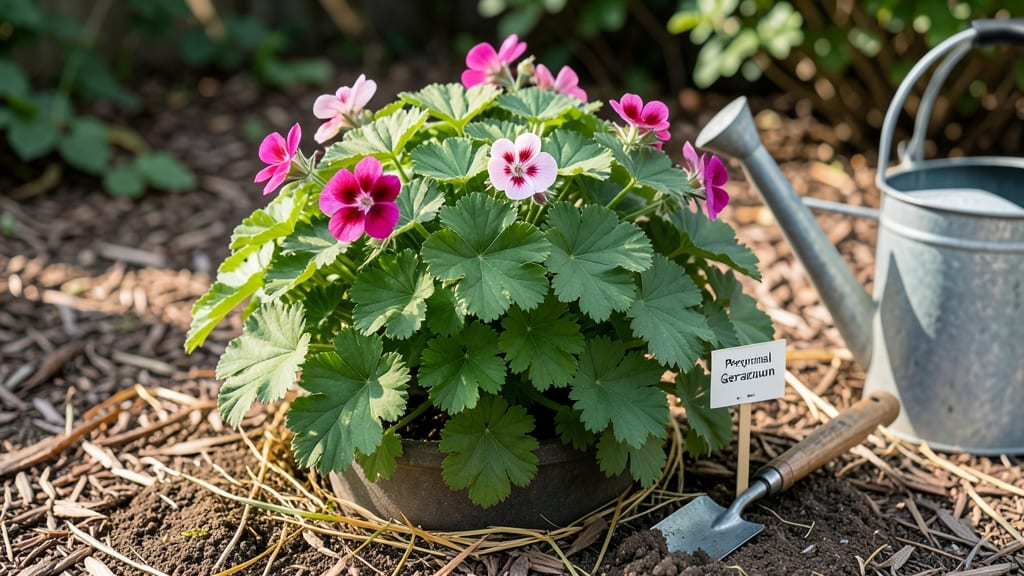
The perennial geranium care secrets are simple: these cold-hardy plants deliver months of blooms with minimal effort—once you know their needs. 🌿 I’ve grown these tough perennials through winters and droughts, and they’ve never complained (unlike my annuals).
The trick isn’t babying them; it’s giving them exactly what they crave: good drainage, occasional pruning, and just enough water to keep their roots happy—not soggy.
Start with well-draining soil—sandy loam or amended native soil—and plant them where they’ll get 6+ hours of sun daily. These aren’t fussy about soil richness, but they’ll reward you handsomely if you toss in a balanced 10-10-10 fertilizer once in spring and again after blooming.
Water deeply once a week (more in extreme heat), but never let them sit in wet soil—their roots rot faster than you can say “geranium.”
By mid-summer, you’ll see nonstop blooms in shades of pink, purple, and white, and the plants will stay compact and bushy if you deadhead spent flowers and trim leggy stems back by ⅓ in early spring.
The best part? They multiply underground, so you’ll have free plants to share with neighbors by fall. No green thumb required—just basic attention.
These perennials handle USDA Zones 3-9, making them perfect for almost any climate. In colder regions, their foliage may die back, but the roots survive to bounce back in spring.
For container growing, use a pot with drainage holes and a fast-draining mix—they’ll thrive on a balcony just as happily as in the ground. Here’s how to keep them looking their best all season.
📚 In This Guide
- What you need
- Instructions
- Tips and common mistakes
- Wrapping up and next steps
What you need
- ● Perennial geranium plants: Choose cold-hardy varieties like Geranium macrorrhizum (crawling geranium) or Geranium sanguineum (blood-red geranium). Buy 3–5 plants for a full, vibrant display.
- ● Well-draining potting mix: A 5-gallon bag of organic garden soil mixed with perlite or sand (1 part perlite to 3 parts soil) prevents root rot.
- ● Compost or slow-release fertilizer: A 5–10 lb bag of balanced 10-10-10 fertilizer or organic compost to nourish roots and blooms.
- ● Mulch: 2–3 cubic feet of wood chips or straw mulch to retain moisture and regulate soil temperature.
- ● Garden trowel or hand shovel: For planting and transplanting (medium-sized, 8–10 inches long).
- ● Pruning shears: Sharp, bypass-style shears for trimming dead blooms and shaping plants.
- ● Watering can or hose with a gentle spray nozzle: Perennial geraniums prefer deep but infrequent watering—aim for 1–1.5 gallons per plant weekly.
- ○ Gloves (optional): Heavy-duty gardening gloves to protect hands from thorny stems.
- ● Slow-release fertilizer spikes: For hassle-free feeding every 2–3 months.
- ● Drip irrigation system: Automates watering and saves time (especially for larger gardens).
- ● Epsom salt (magnesium sulfate): A handful sprinkled around plants boosts bloom production.
- ● Plant supports (if needed): Small stakes or rings for tall varieties like Geranium psilostemon.
Step-by-Step guide to perennial geranium maintenance
Here’s how I keep these cold-hardy beauties blooming year after year with almost no fuss.
🌱 Step 1: Choose the Right Location for Year-Round Success
Perennial geraniums thrive in full sun to partial shade, with at least 6 hours of direct sunlight daily. I plant mine where they’ll get morning sun and afternoon shade in hotter climates—this prevents leaf scorch while keeping blooms abundant. The key is well-draining soil; if your garden holds water, amend with compost or sand to improve drainage.
Watch for yellowing leaves or wilting stems—these are your signals that the location isn’t quite right. Perennial geraniums are tough, but they’ll tell you when conditions are off. I always test the spot by pressing my finger into the soil after rain; if it stays muddy for more than an hour, it’s too soggy.
☀️ Step 2: Water Deeply but Infrequently
These plants despise soggy roots but hate drought just as much. Water deeply once a week (or more in extreme heat), soaking the soil until it’s 6 inches deep. I use a long-handled trowel to check moisture—if the soil feels dry at that depth, it’s time to water. Overhead watering can lead to fungal issues, so I water at the base early in the morning to let foliage dry before evening.
You’ll know you’re doing it right when the soil between waterings feels dry to the touch at the surface but still slightly damp 4-6 inches down. Mulch with 2-3 inches of organic mulch (like shredded bark) to retain moisture and keep roots cool. Just don’t let the mulch touch the stems—this invites rot.
✂️ Step 3: Prune for Continuous Blooms and Healthy Growth
Deadhead spent blooms weekly to encourage nonstop flowering. I pinch off faded flowers with my fingers—no tools needed—right down to the first set of healthy leaves. This redirects the plant’s energy from seed production to making more blooms. If you let flowers go to seed, you’ll get fewer (but bigger) blooms later in the season.
In early spring, I give the plants a hard prune—cutting back one-third of the foliage—to stimulate fresh, bushy growth. Wait until after the last frost when new growth is already visible. Avoid pruning in fall; the plant needs all its energy to store up for winter. You’ll see new shoots emerge within 2-3 weeks of pruning.
⏰ Step 4: Prepare for Winter Survival
Perennial geraniums are cold-hardy, but they need a little help in harsh winters. Once temperatures drop below 20°F, I cut back the foliage to 2-3 inches above the ground and cover the crown with 4-6 inches of mulch. I use straw or shredded leaves—whatever’s available—because they break down and add organic matter to the soil as they decompose.
Remove the mulch in early spring before new growth appears. You’ll spot fresh shoots peeking through the soil in late April or early May, depending on your climate. This is your cue to trim back any dead stems and add a light layer of fresh mulch to protect new growth from late frosts.
🌿 Step 5: Fertilize Sparingly for Long-Lasting Blooms
Feed perennial geraniums once in early spring with a balanced, slow-release fertilizer (like 10-10-10). I sprinkle the granules around the base and water them in deeply. Too much fertilizer leads to lush foliage but fewer blooms—these plants prioritize flowers over leaves, so I keep it light. Avoid fertilizing in fall; it encourages tender new growth that won’t survive winter.
You’ll notice the difference in 3-4 weeks with brighter blooms and sturdier stems. If your plants look leggy or sparse, a half-strength liquid fertilizer mid-summer can give them a boost, but I only do this if the soil looks depleted. Always water after fertilizing to prevent root burn.
Tips & tricks for perfect perennial geranium maintenance
These simple secrets will help your cold-hardy geraniums flourish with minimal effort—no green thumb required!
Location Intelligence: The 6 hours of sunlight mentioned in Step 1 is non-negotiable for vibrant blooms, but here's the real trick: position your plants where they'll get morning sun and afternoon shade in hotter climates. I've seen geraniums in full afternoon sun develop crispy edges—like a steak left too long on the grill. Also, test your soil's drainage by pressing your finger into it after rain; if it stays muddy for more than an hour, you're dealing with soggy roots that invite rot.
Watering Wisdom: That 6-inch deep watering once a week is your golden rule, but timing matters just as much. Water in the morning so foliage has all day to dry—wet leaves overnight create the perfect fungal party. I use a long-handled trowel to check moisture at that depth because surface dryness can fool you. And here's a pro move: mulch with 2-3 inches of organic material creates a moisture reservoir while keeping roots cool, but keep it 2 inches away from stems to prevent rot.
Pruning Precision: The weekly deadheading in Step 3 works wonders, but I've found that pinching flowers back to the first set of healthy leaves (not just the base) encourages bushier growth. For that early spring hard prune, I cut back one-third of the foliage but leave at least 2-3 inches of stems—this prevents over-pruning that can stress the plant. And here's what nobody tells you: if your geraniums look leggy, they're actually telling you they need more light, not more fertilizer!
Winter Survival Strategy: When temperatures drop below 20°F, I don't just cut back foliage—I also remove any dead or diseased stems first. This prevents pests and diseases from hiding in debris over winter. For mulching, I use straw because it breaks down slowly and adds organic matter, but shredded leaves work too. The key is 4-6 inches of coverage—any less and you risk frost damage to the crown.
Pro Tips for Perennial Geranium Care
- These simple secrets will help your cold-hardy geraniums flourish with minimal effort—no green thumb required!
- I've seen geraniums in full afternoon sun develop crispy edges—like a steak left too long on the grill.
- Watering Wisdom: That 6-inch deep watering once a week is your golden rule, but timing matters just as much.
Frequently asked questions
Got questions about keeping your perennial geraniums happy? You’re not alone!
Here are answers to the most common concerns—from pruning to pests—so you can enjoy those vibrant blooms all season long.
How cold can perennial geraniums tolerate?
Most perennial geraniums (like Geranium macrorrhizum) are hardy down to USDA Zones 3-8. They thrive in cold winters but may need a light mulch (2-3 inches of straw or leaves) to protect roots in extreme freezes. In Zone 9+, they may struggle in intense heat—plant in partial shade for better resilience.
When and how should I prune perennial geraniums?
Prune twice a year:
- Early spring (before new growth): Cut back dead or woody stems by ⅓ to encourage fresh foliage.
- After flowering (late summer): Shear spent blooms and leggy stems to promote a bushier shape. Avoid heavy pruning in fall—it reduces winter hardiness.
Why are my geraniums getting holes in the leaves?
Those pesky holes? Likely leafhoppers or Japanese beetles. Spray infested plants with neem oil or a soapy water mix (1 tsp dish soap + 1 quart water) to deter pests. For severe cases, handpick beetles or use pyrethrin-based insecticide. Healthy plants are less tempting—ensure they get 6+ hours of sun and well-draining soil!
Can I grow perennial geraniums in containers?
Choose compact varieties like Geranium sanguineum (blood-red blooms) for pots. Use a 5-gallon container minimum with drainage holes, potting mix amended with perlite, and a slow-release fertilizer in spring. Water when the top inch of soil is dry—containers dry out faster than garden beds.
What’s the best fertilizer for perennial geraniums?
Feed lightly and infrequently—geraniums hate rich soil. Use a balanced, slow-release fertilizer (10-10-10 or 5-10-5) in early spring, then switch to a low-phosphorus option (like 10-0-10) after blooming to avoid leggy growth. Compost or worm castings work too—just avoid fresh manure!
Pro Tip:
If your geraniums flop over, they’re likely root-bound or need staking. Bury bamboo stakes near the center and gently tie stems with soft twine. For spreading types (like G. macrorrhizum), let them trail naturally—they’ll self-support with age!
Wrapping up and next steps
With just a little love and attention, your perennial geraniums can reward you with vibrant blooms year after year—even in colder climates! 🌿 From choosing the right spot and soil to mastering deadheading and winter prep, these hardy plants are perfect for gardeners who crave beauty with minimal fuss.
Ready to watch your garden flourish? Grab your gloves, pick a sunny patch, and start planting—your future blooms will thank you! For even more tips, explore our full geranium care guide or share your progress with the gardening community. Happy growing! 🌸