
Plants
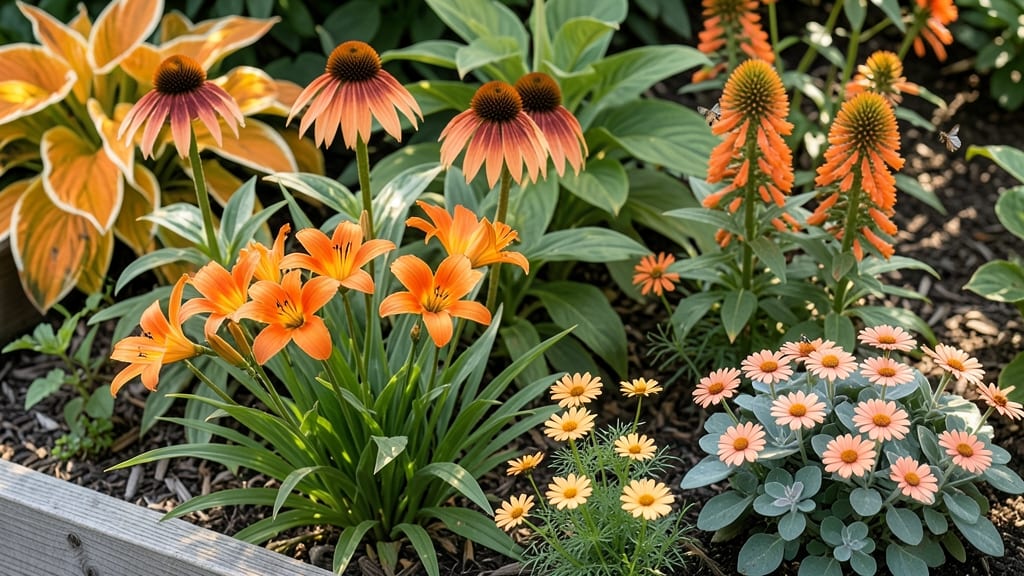
Brighten your Zone 5 garden with orange perennials that refuse to quit—these cold-hardy stars return year after year with bold color and effortless charm. 🌺 I’ve grown them through Chicago winters, and the right picks stay vibrant even when snow’s still on the ground.
The secret lies in choosing varieties bred for resilience, like Hydrangea paniculata ‘Limelight’ (yes, it turns orange in fall) or Coreopsis verticillata, which blooms from summer until frost.
Most thrive in full sun to partial shade and well-drained soil—no fancy amendments needed. Plant in early spring or fall, spacing them 18–36 inches apart depending on the variety. Mulch with 2–3 inches of shredded bark to protect roots in winter, and you’ll see them push new growth by May.
These aren’t just pretty faces; they attract pollinators and handle drought better than many annuals.
By late summer, your garden will burst with sunset-hued blooms and fiery foliage, like Berberis thunbergii ‘Orange Rocket’, which stays compact yet packs a punch. The best part?
They multiply over time, giving you free plants to share or relocate. Just deadhead spent blooms in fall to keep them tidy and encourage next year’s display.
Zone 5’s short growing season isn’t a limitation—it’s an opportunity to showcase perennials that outperform annuals in both beauty and reliability. Start with 3–5 varieties for a low-maintenance, high-impact garden that keeps giving, season after season. Here’s how to pick the perfect mix for your space.
📚 In This Guide
- What you need
- Instructions
- Tips and common mistakes
- Wrapping up and next steps
What you need
- ● Orange perennials: Choose from cold-hardy varieties like Helenium autumnale (Sneezeweed), Rudbeckia fulgida (Black-Eyed Susan), or Asclepias tuberosa (Butterfly Weed). Buy 3–5 plants (or seeds for direct sowing).
- ● Garden soil: Well-draining, enriched soil (amend with 2–3 inches of compost per planting area).
- ● Organic mulch: 2–3 inches of shredded bark, straw, or wood chips to retain moisture and protect roots.
- ● Garden gloves: A pair of durable, breathable gloves (e.g., Fiskars or Workrite brands).
- ● Hand trowel: A 5-inch stainless-steel trowel for digging small holes.
- ● Watering can or hose: With a gentle spray nozzle for even moisture distribution.
- ● Pruners: Bypass pruners (e.g., Felco) for trimming dead foliage.
- ● Plant tags: 5–10 biodegradable labels to track varieties.
- ● Slow-release fertilizer: 10–20 lb of 10-10-10 or 5-10-10 blend for nutrient boost.
- ● Plant stake or cage: For tall varieties like Helenium (e.g., 3–4 ft stakes).
- ● Drip irrigation kit: For automated watering in dry spells.
- ● Soil pH tester: To ensure slightly acidic to neutral (6.0–7.0) soil.
- ● Frost cloth: For early spring/fall protection in Zone 5’s chilly snaps.
Instructions for planting and maintaining orange perennials in Zone 5
Here’s how to establish vibrant orange perennials that survive harsh winters and reward you with bold color year after year.
🌱 Step 1: Select the Right Orange Perennials for Zone 5
Not all orange-flowering perennials tolerate Zone 5 winters. Focus on cold-hardy varieties like daylilies (Hemerocallis), bee balm (Monarda), and butterfly weed (Asclepias). These thrive in USDA Zone 5 with minimal winter protection. Avoid tropical species like cannas or hibiscus—they’ll die back to the ground but won’t return reliably.
Check your specific microclimate. A sheltered south-facing slope stays warmer than an exposed north side. If your winters dip below -10°F, group plants together to create a shared insulating effect. Mulch heavily in late fall to protect roots from freeze-thaw cycles.
🪴 Step 2: Prepare the Planting Site for Winter Survival
Orange perennials need well-draining soil to prevent root rot during spring thaws. Amend heavy clay with 2-3 inches of compost and a handful of perlite or sand to improve aeration. Test your soil’s pH—most orange perennials prefer a slightly acidic to neutral range (6.0-7.0).
Plant in early spring or fall, giving roots time to establish before extreme cold. Dig holes twice as wide as the root ball but no deeper. This encourages root spread into surrounding soil. Water deeply before planting to settle the soil and eliminate air pockets around roots.
☀️ Step 3: Plant and Mulch for Winter Protection
Place plants 12-18 inches apart, depending on the variety. Daylilies can handle closer spacing (12 inches), while butterfly weed needs more room (18-24 inches). Position them where they’ll get at least 6 hours of sunlight daily—orange blooms need strong light to develop vibrant color.
After planting, apply a 3-4 inch layer of mulch (straw or shredded leaves work best). This insulates roots in winter and retains moisture in summer. Replenish mulch annually in early spring. Avoid thick layers of wood chips—they can mat down and suffocate roots over time.
✂️ Step 4: Prune and Fertilize for Long-Term Health
Cut back dead foliage in early spring before new growth appears. For butterfly weed, trim spent flower stalks to the ground, but leave daylily foliage until it yellows naturally—it stores energy for next year’s blooms. Apply a balanced fertilizer (10-10-10) in early spring when shoots emerge, then again after flowering.
Watch for signs of stress: yellowing leaves often mean too much moisture, while crispy edges signal underwatering. In Zone 5, late-season watering matters more than summer irrigation. Roots need moisture to prepare for dormancy before winter sets in.
⏰ Step 5: Winterize and Prepare for Next Year
In late fall, apply a 4-6 inch layer of mulch over the planting area. This extra insulation helps perennials survive Zone 5’s harsh winters. If a particularly cold snap is forecasted, cover tender new growth with burlap or frost cloth—but remove it during the day to prevent overheating.
Take notes on which plants thrived and which struggled. Adjust planting locations or varieties next year based on performance. Orange perennials like daylilies often reward patience with longer bloom seasons after their second or third year in the ground.
Tips & tricks for perfect orange perennials in Zone 5
These cold-hardy perennials demand a few key strategies to ensure they thrive through Zone 5 winters and reward you with vibrant blooms.
Microclimate Matters: In Step 1, when selecting your planting location, pay close attention to your garden's microclimates. A south-facing slope can be 10-15°F warmer than a north-facing area during winter. I've seen daylilies survive -20°F in sheltered spots while struggling just 20 feet away in exposed areas. Grouping plants together creates a shared insulating effect that can make all the difference when temperatures drop below -10°F.
Soil Preparation Secret: The 2-3 inches of compost and perlite/sand mix in Step 2 isn't just about drainage—it's about creating the perfect environment for root development. I recommend adding a handful of worm castings to this mix for extra nutrients. The slightly acidic to neutral pH range (6.0-7.0) is crucial because orange perennials like daylilies actually become more cold-tolerant when their roots have optimal nutrition going into winter.
Planting Depth Technique: When you dig holes twice as wide as the root ball in Step 2, resist the urge to plant too deeply. The top of the root ball should sit just below soil level—any deeper and you'll suffocate the plant. I've made this mistake with butterfly weed and ended up with stunted growth for two seasons. The wide planting hole encourages roots to spread horizontally, which is actually more cold-resistant than deep vertical roots in Zone 5.
Mulching Strategy: The 3-4 inch mulch layer in Step 3 is your winter insulation blanket, but timing matters. Apply it after the first hard frost when soil temperatures drop below 40°F. I've found that straw mulch actually outperforms shredded leaves in Zone 5 because it breaks down more slowly. For the late fall 4-6 inch layer in Step 5, consider using a combination of straw and evergreen boughs—they provide both insulation and wind protection.
Pro Tips for Orange Perennials Zone 5
- These cold-hardy perennials demand a few key strategies to ensure they thrive through Zone 5 winters and reward you w...
- Microclimate Matters: In Step 1, when selecting your planting location, pay close attention to your garden's microcli...
- Soil Preparation Secret: The 2-3 inches of compost and perlite/sand mix in Step 2 isn't just about drainage—it's abou...
Frequently asked questions
about orange perennials in Zone 5—because even the hardiest plants need a little extra care! Here are answers to the most common queries to help you choose and grow with confidence.Which orange perennials are the easiest to grow in Zone 5?
Start with Hellebore (Helleborus) (for early spring blooms), Daylilies (Hemerocallis) (tough and low-maintenance), or Coral Bells (Heuchera) with orange foliage. These thrive in Zone 5 with minimal fuss—just ensure they get well-draining soil and partial shade if needed.
Do orange perennials survive Zone 5 winters?
Yes! Many orange perennials are cold-hardy, but mulching in late fall (with straw or shredded leaves) adds extra protection. Peony (Paeonia) and Russian Sage (Perovskia) are winter warriors—just avoid soggy soil to prevent rot.
When is the best time to plant orange perennials in Zone 5?
Plant in early spring (April–May) or early fall (September–October) for the best root establishment. Avoid extreme heat or frost—roots need time to settle before winter. Pro tip: Water deeply after planting to reduce transplant shock!
What if my orange perennial isn’t blooming?
Check these fixes:
- Light: Some (like Coral Bells) prefer shade, while others (e.g., Black-Eyed Susan) need full sun.
- Fertilizer: Feed in early spring with balanced 10-10-10 or compost.
- Deadheading: Remove spent blooms to encourage reblooming.
- Age: Some perennials (like Peonies) take 2–3 years to mature.
Can I replace a dying orange perennial with something similar?
Swap struggling plants with these Zone 5-friendly alternatives:
Original Plant
Replacement
Why It Works
Coral Bells (Heuchera)
Alum Root (Heuchera) or Foamflower (Tiarella)
Same shade tolerance + vibrant foliage.
Daylily (Hemerocallis)
Bee Balm (Monarda) or Coneflower (Echinacea)
Bright blooms + pollinator-friendly.
Peony (Paeonia)
Lungwort (Pulmonaria) or Bleeding Heart (Dicentra)
Early spring color + shade adaptability.
Wrapping up and next steps
Adding vibrant orange perennials to your Zone 5 garden is a fantastic way to bring lasting color and joy to your outdoor space! From hardy Hellebores to striking Daylilies, these cold-resistant plants prove that beauty thrives even in cooler climates.
With the right care and placement, you’ll enjoy their bold hues year after year—and who wouldn’t want that?
Ready to transform your garden? Start by sketching a quick layout of your space, then pick 2-3 perennials from this list to begin your planting journey. Happy gardening! 🌸🌿