
Pests
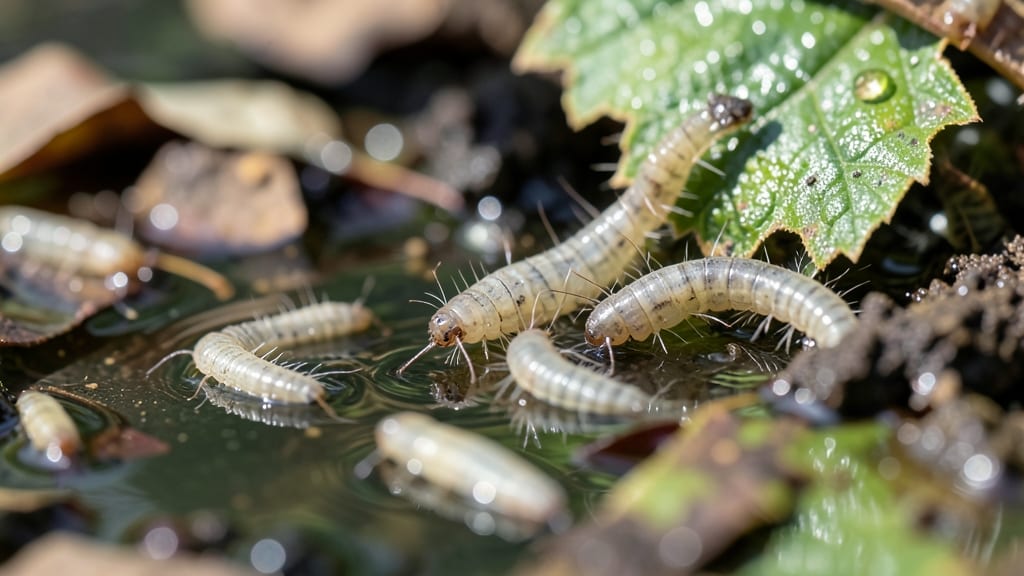
Mosquitoes breed in stagnant water because female mosquitoes lay eggs in still, warm water where larvae can thrive. Eliminate standing water in containers, gutters, and plant saucers to prevent breeding fast.
Female mosquitoes specifically seek out still water sources because their eggs need this environment to hatch successfully. 🔥 Larvae thrive in warm, shaded water that collects in forgotten corners like old tires, clogged drains, or even the saucers under potted plants.
The breeding cycle can complete in as little as 7-10 days during hot weather, which is why acting quickly is crucial. Unlike many pests, mosquitoes don't need deep water—just 1/4 inch of standing water is enough to become a breeding ground.
What makes this particularly frustrating is how quickly these breeding sites can form after rain. I've seen entire backyards transform into mosquito hotspots within 24 hours after a downpour if proper drainage isn't maintained.
The key is being proactive—regularly inspecting your property and eliminating these tiny water traps before they become major problems.
💡 In This Article
- Why Stagnant Water Attracts Mosquito Breeding
- Natural Ways to Eliminate Mosquito Breeding in Gardens
Why stagnant water attracts mosquito breeding
Female mosquitoes have evolved to seek out stagnant water because it creates the perfect conditions for their offspring's survival. The lifecycle begins when a female lays 100-300 eggs at the water's surface, where they immediately sink and become buoyant again when water levels rise.
These eggs hatch within 48 hours into larvae that feed on microorganisms in the water, transforming through four distinct stages over 7-14 days before emerging as adults.
The stillness of stagnant water prevents predators like fish from accessing the larvae, while the lack of current allows organic debris to accumulate—providing both food and shelter for developing mosquitoes.
The temperature of the water plays a crucial role in accelerating this process. Mosquito larvae develop fastest in water between 77-86°F, which is why containers left in sunlight or shaded areas become breeding hotspots. Even small amounts of water—just 1/4 inch in a bottle cap—can support a complete lifecycle.
This is why you'll often find breeding in overlooked spots like discarded tires, clogged gutters, or plant saucers where water collects but doesn't flow away. The presence of organic matter, like decaying leaves or algae, further enhances breeding success by providing additional nutrients for the larvae.
Sunlight exposure creates another critical factor. Shallow, sunlit water heats up faster, creating ideal conditions for rapid development.
In my own yard, I've noticed that water collecting in the bottom of flower pots left in full sun produces mosquitoes within 5 days, while identical pots kept in shade take 2 weeks or longer. This temperature difference of just 10°F can nearly double the breeding rate.
The combination of warmth, stillness, and organic enrichment makes stagnant water an irresistible breeding ground that mosquitoes have perfected over millions of years of evolution.
What makes this particularly insidious is how quickly these breeding sites can become established. A single female can lay multiple batches of eggs during her lifetime, and with the right conditions, those eggs can hatch into biting adults ready to reproduce within 10 days.
This exponential growth potential means that even small, overlooked water sources can quickly become major problems. The key insight is understanding that mosquitoes aren't just attracted to stagnant water—they've adapted to exploit it as their primary reproductive strategy, making prevention efforts all the more critical.
Interestingly, different mosquito species show preferences for specific water types. For example, Aedes aegypti (the yellow fever mosquito) prefers clean, clear water, while Culex species often breed in polluted or organically rich water.
This specialization means that even if you eliminate one type of breeding site, others might still thrive nearby. The most effective approach combines eliminating standing water with understanding these species-specific preferences to create a comprehensive prevention strategy.
One often overlooked aspect is how wind patterns affect breeding sites. While stagnant water is ideal, light breezes can actually help distribute mosquito eggs across larger areas, creating new breeding opportunities.
This is why you'll often see increased mosquito activity after windy days—eggs get carried to new locations where they can establish themselves in previously unaffected areas. Understanding these ecological connections helps explain why mosquito populations can seem to appear suddenly even when you've been diligent about water removal.