
Flowers
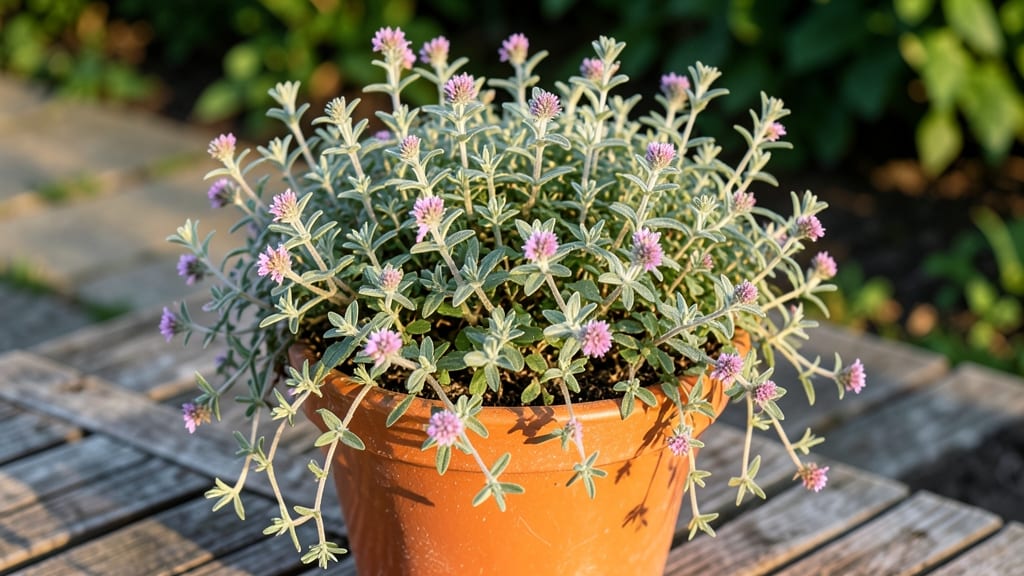
Yes, thyme is a perennial herb that thrives year after year by relying on its hardy root system to regrow after winter dieback. While most varieties handle cold climates well, some may require winter protection in colder zones to ensure strong regrowth each spring.
Thyme's secret to longevity lies in its woody stems and deep root system, which store nutrients and energy underground through winter. 🌱 Unlike annual herbs that die completely, thyme's roots remain dormant but alive, ready to sprout new growth as soon as temperatures rise.
This makes it perfect for gardeners who want low-maintenance herbs that come back stronger every year—just give it full sun and well-drained soil, and it'll reward you with fragrant foliage season after season.
What sets thyme apart is its adaptability: some varieties like common thyme stay semi-evergreen, while others like lemon thyme may lose all leaves in winter but rebound quickly.
The key is protecting young plants or those in harsh climates with mulch or frost covers—this simple step can make all the difference in spring regrowth.
💡 In This Article
- How Thyme’s Root System and Growth Habits Make It Perennial
- Caring for Thyme Over Winter: Pruning, Mulching, and Cold Protection
How thyme’s root system and growth habits make it perennial
Thyme's perennial nature stems from its unique underground structure, featuring a thick, woody crown and deep taproots that extend 12-18 inches below soil level. These roots act like a natural storage unit, accumulating starches and nutrients during the growing season to fuel regrowth.
Unlike annual herbs that rely solely on seeds, thyme's roots remain dormant but viable through winter, ready to sprout as soon as temperatures rise above 40°F. 🌱 This hardiness explains why thyme thrives in USDA zones 5-9, though some varieties like creeping thyme may need protection in zone 4.
The herb's semi-woody stems play a crucial role too. While they may appear brittle, these stems contain vascular bundles that transport stored nutrients back to the roots during dormancy.
Evergreen varieties like common thyme maintain some foliage year-round, while semi-evergreen types (like lemon thyme) lose leaves but keep their structural framework intact. This difference affects winter survival—evergreen types handle colder snaps better but may need protection from harsh winds, while semi-evergreen types often rebound faster in spring.
What makes thyme's survival strategy remarkable is its ability to regenerate from multiple points. Even if 70-80% of the plant's top growth dies back in winter, the root system can produce new shoots from dormant buds along the stems.
This contrasts sharply with annual herbs like basil, which must be replanted every year. The key factor is thyme's cold hardiness—its cells contain antifreeze proteins that prevent ice crystal formation in tissues, allowing it to tolerate -10°F to -15°F temperatures for short periods.
For gardeners, this means thyme can be planted once and enjoyed for 5-10 years with proper care. The plant's growth habit—forming low, spreading mats—also protects its crown from freezing temperatures by insulating it with its own foliage.
In contrast, upright annuals like dill have no such protective structure, making them vulnerable to winter kill. Thyme's ability to regrow from multiple points ensures it won't disappear completely even after heavy frost damage.
Consider this comparison: A thyme plant in zone 6 might lose all its leaves by February but still have its root system intact, ready to push new growth by April. Meanwhile, an annual herb planted in the same spot would be completely gone by spring.
This resilience makes thyme ideal for low-maintenance herb gardens—once established, it requires minimal intervention to return year after year.
The science behind thyme's perennial nature involves its secondary growth—the ability to produce new wood and increase stem thickness annually. This process, combined with its deep root system, creates a plant that's far more durable than most garden herbs.
Even when the above-ground parts die back completely, the roots remain alive and capable of regeneration, making thyme one of nature's most reliable perennial herbs. 💫