
Flowers
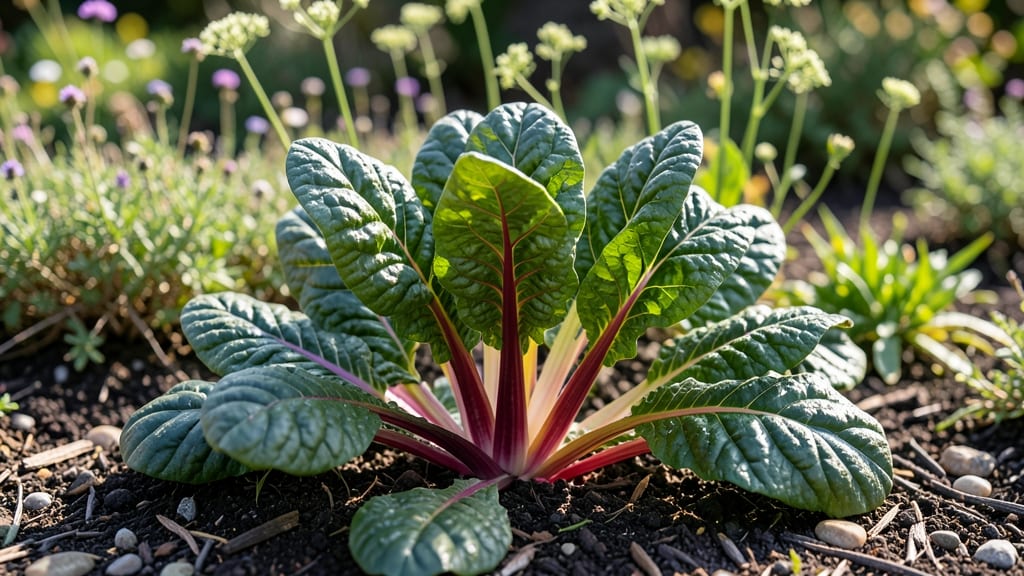
Swiss chard acts as a perennial in frost-free climates but behaves like a biennial or short-lived perennial in cooler regions, where it dies back each winter only to regrow from its hardy crown in spring. Its ability to persist depends on variety and cold resistance.
This behavior stems from Swiss chard's unique growth habit—it stores energy in its thick, woody crown at the base of the plant. 🌱 In warmer zones (USDA zones 7-10), this crown survives winter dormancy, allowing the plant to regenerate leaves year after year.
However, in colder climates, the crown often succumbs to frost unless protected with heavy mulch or row covers. The key difference lies in how each variety handles temperature extremes, with some 'Bright Lights' types proving more resilient than others.
For gardeners in transitional climates, the solution lies in strategic planning: plant in spring after the last frost, use black plastic mulch to insulate roots in winter, and avoid harvesting too aggressively in fall.
This approach turns what might seem like an annual into a reliable perennial performer over multiple seasons.
💡 In This Article
- Why Swiss Chard Survives Multiple Years Despite Dieback
- Growing Swiss Chard as a Perennial: Climate and Care Tips
Why Swiss chard survives multiple years despite dieback
Swiss chard's perennial nature hinges on its basal growth habit, where the plant stores carbohydrates in its thick, woody crown located just above the soil line. This crown acts like a biological battery, storing enough energy to regenerate leaves even after the above-ground foliage dies back.
In frost-free climates (USDA zones 8-10), the crown remains protected and can sprout new growth within 2-4 weeks after winter dormancy, proving its true perennial status. 🌱
The plant's cold tolerance varies dramatically by variety. For example, 'Bright Lights' types can withstand temperatures down to 15°F when protected, while other varieties may struggle below 25°F.
This difference occurs because hardier varieties develop thicker crowns with higher sugar content, which acts as an antifreeze-like compound in plant cells. The leaves themselves contain antioxidants that help prevent cellular damage from cold exposure, but it's the crown's survival that determines whether the plant returns the following season.
What makes Swiss chard unique is its dieback-and-regrow cycle. Unlike true perennials that maintain foliage year-round, Swiss chard enters dormancy in cooler climates, where the leaves yellow and die, but the crown remains alive underground.
This adaptation allows it to behave as a short-lived perennial in marginal climates, producing 2-3 harvestable seasons before eventually declining after 3-5 years without renewal. The key difference between perennial and biennial behavior lies in whether the crown survives winter—if it does, the plant continues its cycle.
Scientifically, this survival mechanism involves meristem protection. The crown contains protected growth points called meristems that remain dormant during cold periods. When temperatures rise above 40°F, these meristems activate, sending out new shoots.
This process is similar to how asparagus regrows each spring, but Swiss chard's crown is more sensitive to frost damage, which is why winter protection becomes critical in colder regions. 💫
Consider the contrast between Swiss chard and true perennials like rhubarb. While rhubarb maintains a robust root system that survives harsh winters, Swiss chard relies on its crown's ability to store energy and regenerate.
This makes it more vulnerable to extreme cold but also more adaptable to warmer climates where it can thrive as a true perennial.
The plant's ability to regrow from the crown explains why you might see Swiss chard in garden catalogs described as both a perennial and an annual—it's all about climate and care.
For gardeners, understanding this biology means recognizing that Swiss chard's perennial status is conditional. In ideal conditions, it can live for years, but in colder zones, it may only persist for one growing season before needing to be replanted.
This dual nature is what makes Swiss chard such a fascinating and versatile crop for different climates. 🌿