
Flowers
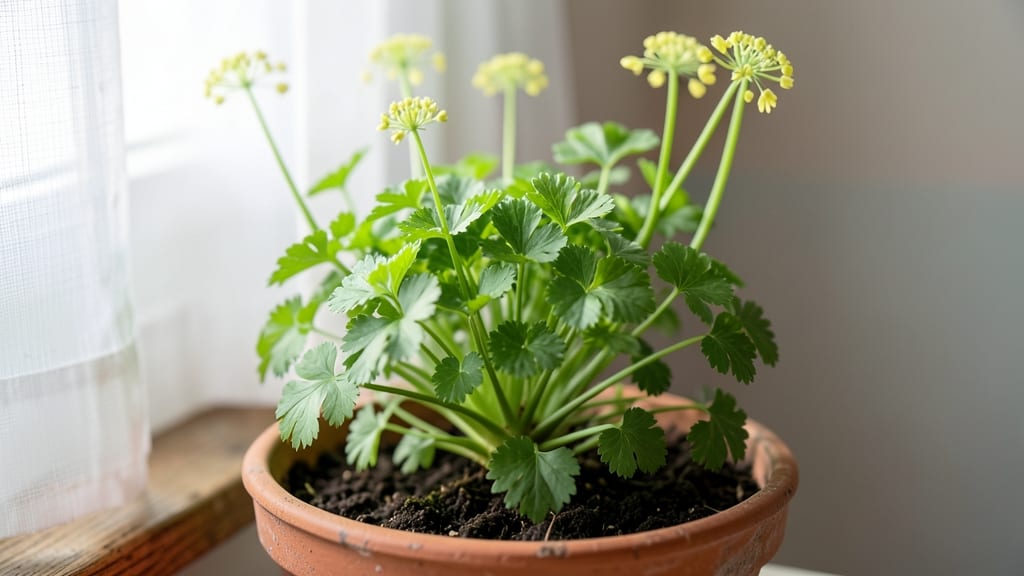
Parsley isn't a true perennial—it's a biennial herb that typically lives for two years, though it can regrow from its root system for 2-3 years in mild climates before eventually bolting. Cold-hardy varieties can survive winters in zones 3-9 with proper protection.
Parsley's lifecycle follows a biennial pattern, meaning it completes its growth cycle over two years. 🌱 In the first year, it focuses on building strong roots and leaves, while the second year is dedicated to flowering and seed production.
This natural progression is why parsley often appears perennial—it can regenerate from its root crown for several years, especially in frost-free or partially protected environments. The key to extending its lifespan lies in understanding its botanical triggers, particularly how temperature shifts and daylight changes influence its bolting behavior.
For gardeners in colder climates, the difference between a biennial and a true perennial becomes critical. While parsley won't return indefinitely like true perennials (such as thyme or oregano), proper winter care can significantly prolong its productivity.
Techniques like heavy mulching or using frost blankets create microclimates that mimic its native Mediterranean conditions, where parsley naturally thrives in cooler, temperate zones.
💡 In This Article
- Why Parsley Dies After 2-3 Years
- Extending Parsley’s Lifespan in Your Garden
Why parsley dies after 2-3 years
Parsley follows a biennial lifecycle, meaning its energy is split between two distinct phases: vegetative growth in year one and reproductive growth in year two. During its first year, parsley focuses on developing a robust root system and leafy foliage, storing energy in its thick taproot.
This root can reach depths of 12-18 inches, allowing it to access moisture and nutrients even in dry conditions. The key trigger for its second-year transformation is daylight exposure—specifically, shorter days in late summer or early fall stimulate hormonal changes that initiate bolting.
The bolting process begins when the plant's apical meristem (growth tip) shifts from producing leaves to forming flower stalks. This transition is triggered by a combination of temperature drops below 50°F and reduced daylight hours, both of which signal the plant that winter is approaching.
Once bolting starts, the plant's energy shifts entirely to seed production, causing the leaves to become bitter and less palatable. What's fascinating is how this lifecycle mirrors its wild ancestors in the Mediterranean, where parsley evolved to maximize seed production before harsh summers.
After the second year, parsley's energy reserves are depleted as the plant focuses on reproduction rather than leaf production. The root system, while still present, becomes less capable of supporting vigorous regrowth.
This decline is why parsley often appears perennial—it can regenerate from its root crown for 2-3 years in mild climates, but each year weakens the plant's ability to produce quality foliage.
The bitterness in older parsley stems from higher concentrations of psoralens, compounds that develop as the plant ages and prepares for seed production.
What makes parsley's lifecycle particularly interesting is how it responds to environmental cues. In colder climates (zones 3-5), parsley may not complete its second-year bolting cycle until the following spring, extending its leaf production phase.
This delayed response allows gardeners in these regions to harvest parsley for 3 years or more with proper winter protection.
The plant's ability to sense temperature changes through specialized proteins in its cells means it can "wait" for optimal conditions to bolt, rather than doing so immediately when exposed to cold.
For comparison, true perennials like rosemary or lavender maintain their growth centers throughout winter, allowing them to regenerate year after year. Parsley lacks this persistent growth habit because its energy storage system is geared toward a two-year cycle.
The root crown may remain dormant for brief periods, but without careful management, it eventually exhausts its stored energy reserves. This is why gardeners often find parsley plants that have survived multiple winters but produce increasingly sparse and bitter foliage.
Understanding this lifecycle helps explain why parsley often declines after its third year. The plant's genetic programming prioritizes seed production over leaf growth, and without human intervention (like cutting back flower stalks), it will inevitably shift its energy toward reproduction.
This natural progression is why parsley is classified as biennial rather than perennial—its survival strategy depends on completing this two-year cycle rather than maintaining continuous growth.