
Flowers
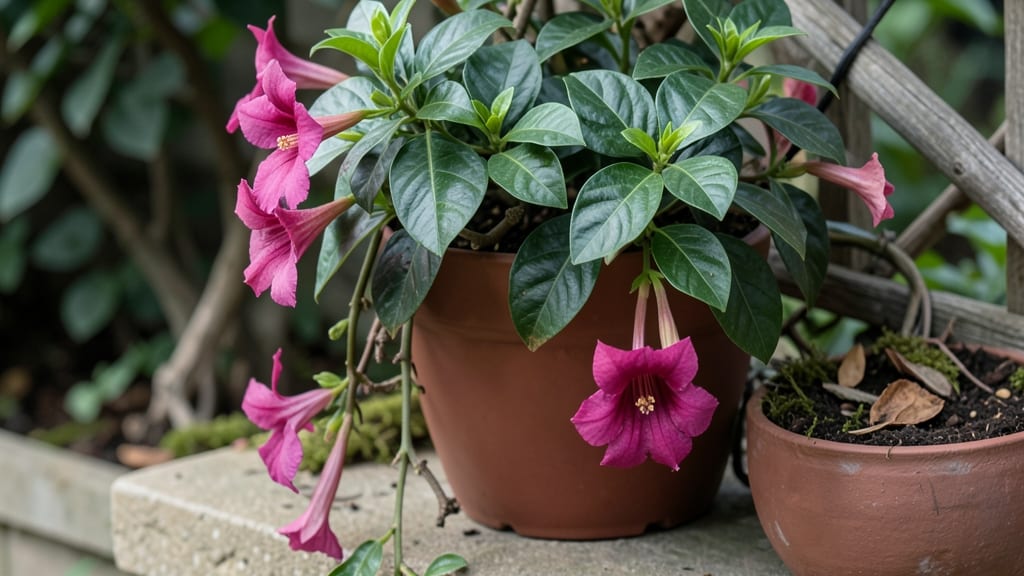
Mandevilla behaves as a perennial only in USDA Zones 9-11, where it survives year-round as a frost-sensitive evergreen. In colder regions, it dies back to the ground when temperatures fall below 30°F (-1°C), though roots often persist for regrowth when conditions warm again.
This tropical plant's cold sensitivity explains why it thrives as a year-round bloomer in warm climates but requires special care elsewhere. 🌿 The key difference lies in its root system—while above-ground growth freezes in colder zones, the roots often remain viable, allowing regrowth when spring arrives.
Gardeners in Zones 7-8 can still enjoy mandevilla by overwintering it indoors or protecting it with mulch, though it won't survive outdoors year-round without intervention.
What's fascinating is how this behavior varies by region. In Florida and Southern California, mandevilla grows like a robust shrub with minimal care, while Northern gardeners must treat it more like an annual or container plant.
The 30°F threshold acts as a natural trigger for dormancy, helping the plant conserve energy until warmer weather returns.
💡 In This Article
- Mandevilla’s Perennial Behavior Across USDA Hardiness Zones
- How to Overwinter Mandevilla in Cold Climates
Mandevilla’s perennial behavior across USDA hardiness Zones
The mandevilla's perennial status hinges on its native tropical origins, where temperatures rarely dip below 50°F (10°C). This frost-sensitive plant has evolved without cold-hardiness adaptations found in true perennials like hostas or daylilies.
When temperatures fall to 30°F (-1°C), the above-ground growth freezes completely, but the root system often remains viable in well-drained soil. 🌱 This explains why it thrives as a true perennial in USDA Zones 9-11—where winter lows rarely reach freezing—while requiring special care in colder regions.
Botanically, mandevilla's survival strategy involves a form of dormancy rather than true cold resistance. The roots contain stored carbohydrates that sustain the plant until spring warmth triggers regrowth. In Florida or Southern California, this process happens naturally year after-year, with the plant maintaining its evergreen appearance.
However, in Zones 7-8, even a single hard freeze can kill back the foliage, though the roots may survive if protected by 3-4 inches of mulch or container insulation.
What sets mandevilla apart from cold-hardy perennials is its lack of cold acclimation. Plants like peonies or coneflowers undergo physiological changes in fall to withstand freezing temperatures, but mandevilla remains metabolically active until frost hits.
This is why gardeners in colder climates must treat it as a seasonal plant rather than a true perennial—it won't survive winter exposure without protection. The 30°F threshold acts as a biological switch, halting growth and redirecting energy to root storage.
Interestingly, mandevilla's cold sensitivity varies slightly between cultivars. Some varieties like 'Alice du Pont' show marginally better cold tolerance than 'Amabilis', but none reliably survive below 25°F (-4°C) without protection.
This variation explains why some gardeners in Zone 8 report limited success with mulch protection, while others achieve full regrowth through container overwintering. The key difference lies in how quickly roots can re-establish growth when temperatures rise above 50°F (10°C) in spring.
In warm zones, mandevilla's perennial behavior becomes apparent through its continuous blooming cycle. Unlike temperate perennials that have distinct growing seasons, mandevilla produces flowers nearly year-round when conditions are ideal. This tropical growth habit is what makes it so prized in landscapes where winter freezes never occur.
The plant's ability to maintain foliage and bloom continuously is directly tied to its lack of cold dormancy requirements—it simply grows whenever temperatures stay above 40°F (4°C).
For gardeners in transition zones (Zones 8-9), this behavior creates a fascinating middle ground. While not truly perennial, mandevilla often regrows from roots each spring if protected, blurring the line between annual and perennial classification.
This semi-perennial characteristic is what makes it so adaptable—with proper care, it can function as both a seasonal container plant and a long-lived landscape feature in marginal climates. 🌿