
Flowers
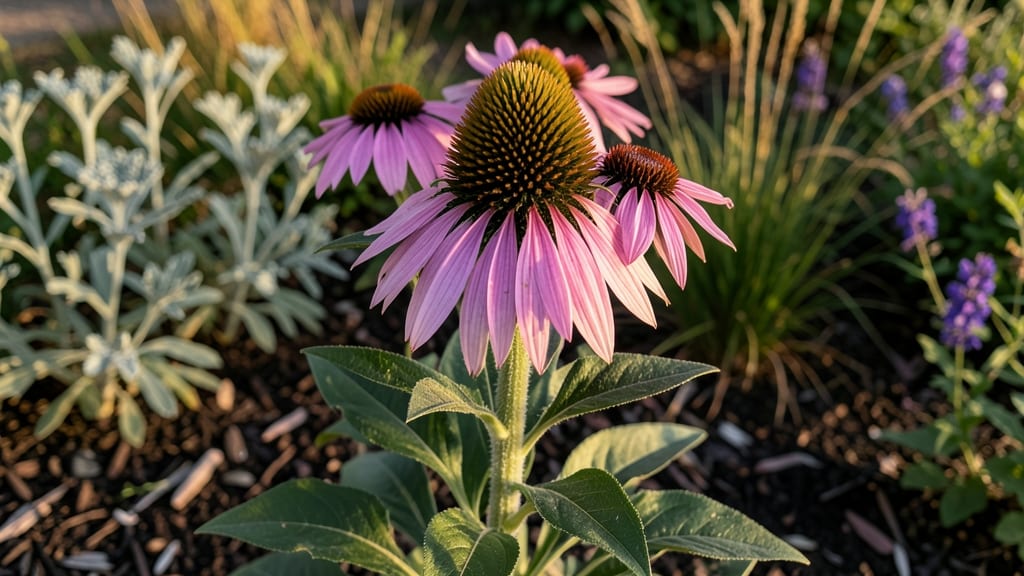
Echinacea is indeed a perennial, thriving through multiple growing seasons in hardiness zones 3-9 with proper care, though some varieties may decline after 3-5 years without division or renewal.
Echinacea earns its reputation as a hardy plant thanks to its deep taproot system, which stores nutrients and allows it to rebound each spring. 🌱 Unlike annuals that complete their life cycle in one season, echinacea enters dormancy during winter, conserving energy until temperatures rise.
This cold resistance lets it flourish in northern climates while still thriving in milder zones—just give it well-draining soil and full sun for optimal performance.
What many gardeners don't realize is that while echinacea lives for years, its flowering power can fade over time. That's why dividing mature clumps every 3-5 years is key—it rejuvenates growth and prevents disease.
I've found that adding compost to the soil during division gives plants a fresh start, often resulting in even more vibrant blooms the following season.
💡 In This Article
- How Echinacea Survives Winter as a Hardy Perennial
- Extending Echinacea’s Lifespan in the Garden
How echinacea survives winter as a hardy perennial
Echinacea's winter resilience comes from its specialized taproot system, which can extend 3-5 feet deep into the soil. This root structure acts like a natural storage unit, accumulating nutrients and moisture during the growing season to fuel regrowth in spring.
Unlike shallow-rooted plants, echinacea's deep roots avoid freeze-thaw damage by staying below the frost line, even in zones 3-5 where temperatures can drop to -30°F. 🌱 The plant's ability to enter dormancy—where metabolic activity slows dramatically—allows it to survive months without water or sunlight.
What sets echinacea apart is its anti-freeze proteins that protect cellular structures during freezing temperatures. These proteins, similar to those found in cold-hardy crops like winter wheat, prevent ice crystal formation that could rupture cell walls.
In zone 6, for example, echinacea can handle 10-15°F temperatures without damage, while varieties like 'Magnus' (zone 4) tolerate even harsher conditions. The plant's woody stems also develop thicker bark over time, providing additional insulation against winter winds.
Zone-specific survival requires understanding your local climate patterns. In northern zones (3-4), echinacea benefits from a 3-4 inch mulch layer of straw or shredded leaves to protect the crown from extreme cold snaps.
In warmer zones (7-9), the challenge shifts to preventing heat stress during summer dormancy—providing afternoon shade can extend the plant's lifespan by 2-3 years. The key is matching the variety to your zone: 'White Swan' thrives in zone 4 while 'Green Envy' prefers zone 6 and above.
Echinacea's survival strategy also includes its leaf structure, which contains high levels of antioxidants that protect against oxidative damage during dormancy. The plant's ability to photosynthesize even at 32°F allows it to maintain minimal energy reserves.
This is why you'll often see new growth emerging in early spring before many other perennials—its deep roots and efficient nutrient storage give it a head start on the growing season. 💛
What most gardeners overlook is how echinacea's flowering cycle affects its winter hardiness. Plants that bloom heavily in their first year store more carbohydrates in their roots, making them better prepared for winter.
This is why dividing established clumps (which have more root mass) results in plants that survive winter more reliably. The trade-off is that heavily flowering plants may need 20-30% more water during the growing season to build these reserves.
For optimal winter survival, focus on these three factors: proper soil drainage (echinacea hates soggy roots), full sun exposure (6-8 hours daily), and seasonal pruning.
Cutting back foliage in early spring (before new growth appears) removes dead material that could harbor fungal diseases, while leaving some stems provides insulation for the crown. This simple routine can extend your echinacea's lifespan by 50% or more compared to neglected plants.