
Flowers
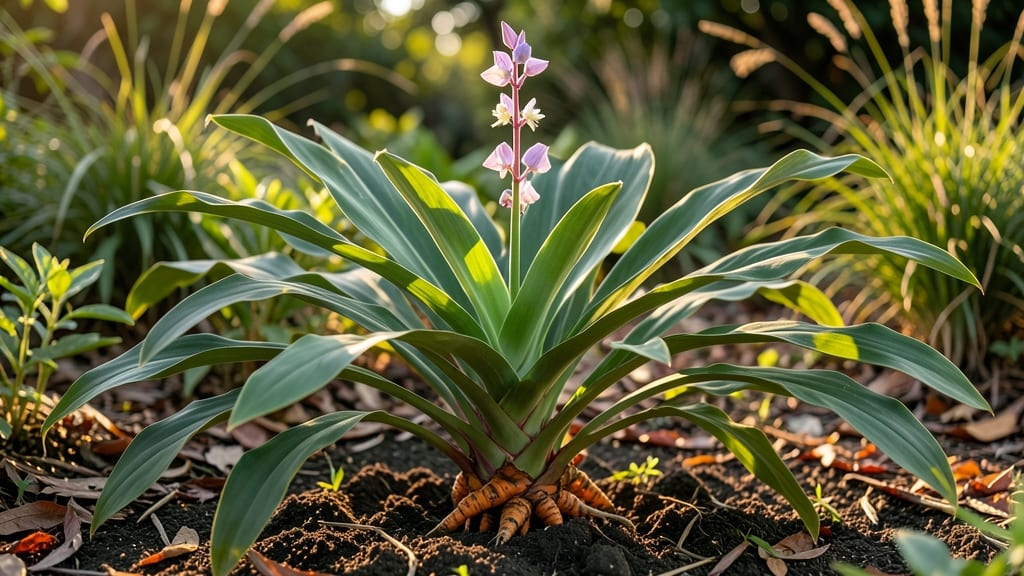
Yes, curcuma ginger is a perennial plant that survives through winter dieback, with its underground rhizomes storing energy to regrow fresh shoots each spring. This natural cycle makes it a hardy, long-lived addition to gardens.
This perennial behavior sets curcuma ginger apart from annuals, which die completely after one growing season. 🌱 The rhizomes—thick, knobby roots—act like natural batteries, storing nutrients and moisture to fuel regrowth when conditions improve.
Unlike tropical plants that struggle in cold climates, curcuma ginger adapts by going dormant, making it surprisingly resilient even in USDA zones 7-10 with proper winter protection.
What's fascinating is how this mirrors its close relative, turmeric (also a rhizome-based perennial). Both plants "trick" gardeners by appearing dead in winter, only to surprise with vibrant new foliage when spring arrives.
The key to maximizing its perennial potential? Mulching heavily before frost and protecting the soil surface—this simple step can mean the difference between a plant that revives and one that struggles.
💡 In This Article
- Understanding Curcuma Ginger’s Rhizome-Based Perennial Growth
- Year-Round Care for Curcuma Ginger: Mulching and Winter Protection
Understanding curcuma ginger’s rhizome-based perennial growth
Curcuma ginger thrives as a perennial thanks to its specialized underground rhizomes, which function like nature's energy storage system. These thick, knobby roots store carbohydrates, proteins, and moisture—think of them as the plant's survival kit.
During winter dormancy, the above-ground foliage yellows and dies back, but the rhizomes remain alive, maintaining their cellular structure to regenerate when temperatures rise. This process mirrors that of turmeric, its close relative, where both plants enter a state of metabolic slowdown rather than complete death.
The rhizomes' ability to survive stems from their high starch content—up to 30% of their dry weight—which fuels regrowth. Studies show these roots can tolerate temperatures down to 20°F (-7°C) when properly mulched, though their natural tropical origins make them sensitive to prolonged freezing.
The key difference from annuals is their persistent root system: while annuals die completely after seed production, curcuma ginger's rhizomes remain viable for years, producing new shoots each spring from the same underground network. 🌱
This perennial cycle explains why curcuma ginger often looks "dead" in winter—it's not! The rhizomes continue respiring at reduced rates, maintaining their viability. When spring arrives, hormonal signals trigger bud formation at the rhizome nodes, which then push through the soil to form new leaves.
This regeneration process typically begins when soil temperatures reach 55-60°F (13-15°C), about 2-4 weeks before last frost dates in most temperate zones.
What makes this particularly interesting is how curcuma ginger's growth cycle compares to other tropical perennials. Unlike bananas (which die after fruiting) or coffee plants (which require tropical climates year-round), curcuma ginger's rhizome-based system allows it to "cheat" the cold season.
The trade-off is slower growth in cooler months, but with proper care, these plants can live for 5-10 years or more, continuously producing new shoots from the same root system. This longevity makes them an excellent investment for gardeners seeking low-maintenance, long-term plants.
One fascinating adaptation is the rhizomes' ability to produce new growth points even after being divided. Gardeners often propagate curcuma ginger by cutting rhizomes into 2-3 inch (5-7 cm) sections with at least one growth bud, which can then be replanted to form entirely new plants.
This cloning capability demonstrates how robust the rhizome system truly is—each section contains all the genetic information needed to regenerate a complete plant. 💫
The biological mechanism behind this perennial behavior involves complex hormonal regulation. During dormancy, the rhizomes accumulate high levels of abscisic acid (a stress hormone) while reducing growth-promoting hormones like gibberellins. When temperatures rise, ethylene levels increase, signaling the resumption of cell division at the growth nodes.
This precise hormonal dance explains why curcuma ginger can "wait" for optimal conditions before regrowing, rather than forcing growth in unfavorable conditions.