
Companion Plants
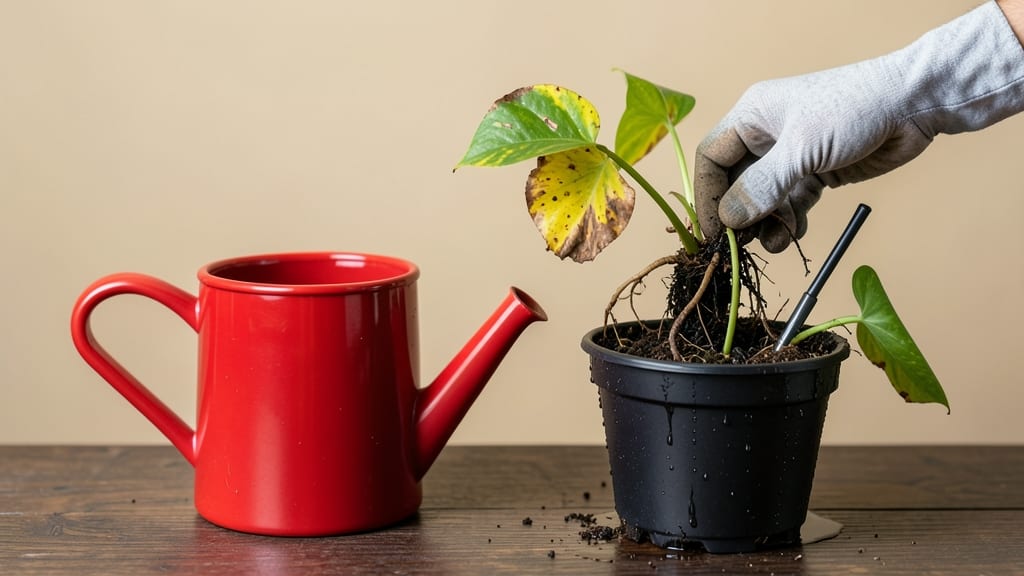
To know if you overwatered a plant, watch for yellowing leaves, soft stems that collapse when pressed, and drooping foliage even when soil feels damp. Fungal growth at the base or a foul, wet smell confirms the problem.
Your plant might be drowning more than it's drinking. 🌱 Overwatering disrupts the root system by cutting off oxygen, which triggers anaerobic bacteria that rot roots and spread decay.
Even if the topsoil feels dry, compacted layers below can trap excess moisture, creating the perfect breeding ground for mold and mildew. I've seen this happen most often with container plants, where water pools at the bottom without proper drainage holes.
What saves many plants is acting fast—stop watering immediately and let the soil dry out completely. For severe cases, gently remove the plant, trim any blackened roots, and repot it in fresh, well-draining soil mixed with perlite or sand.
This isn't just about saving the plant; it's about preventing a chain reaction that could kill your entire garden.
💡 In This Article
- Root Rot and Soil Conditions in Overwatered Plants
- Quick Fixes for Overwatered Houseplants and Gardens
Root rot and soil conditions in overwatered plants
When you overwater, roots suffocate because excess moisture displaces oxygen in the soil pores. Healthy roots need about 10-20% air space in well-draining soil to respire properly—when this drops below 5%, roots begin to drown.
This triggers anaerobic bacteria like Pythium and Phytophthora, which thrive in waterlogged conditions and break down root cell walls, turning them black and mushy within 2-5 days of prolonged saturation. 🌱
The visual signs start subtly: leaves yellow first (chlorosis) because roots can't absorb nutrients, then stems soften when pressed. Check the soil 1-2 inches down—if it feels like a damp sponge or smells sour, that's your warning.
Fungal growth at the base looks like fuzzy white or gray mold, while bacterial rot creates slimy, dark lesions. These conditions create a perfect storm for secondary infections that spread to healthy roots.
What's happening at the cellular level? Waterlogged roots can't transport oxygen efficiently, causing ethylene gas buildup—a plant stress hormone that accelerates decay. The root tips (where new growth occurs) are most vulnerable, often turning brown and collapsing first.
This is why even drought-tolerant plants like succulents or cacti show sudden wilting when overwatered—their shallow roots can't handle prolonged moisture.
Consider this: a 1-gallon container of soil can hold up to 30% of its volume in water before drainage becomes critical. Without proper holes, water pools at the bottom, creating a waterlogged "dead zone" where roots rot while the topsoil may appear dry.
This is why many gardeners mistake overwatering for underwatering—what you see isn't always what's happening below the surface.
For container plants, weight is your enemy: a 20-pound pot of saturated soil stays wet for 3-5 days longer than a 5-pound pot. This explains why larger containers often lead to overwatering—what feels like "just enough" water can create hidden pockets of saturation.
The key is checking moisture at multiple soil depths with your finger, not just the surface layer.
Here's what most people miss: even if your plant perks up after a drink, the damage may already be irreversible. Roots can take 2-4 weeks to show visible signs of rot, by which time the plant may be beyond saving.
That's why immediate action—like adjusting your watering schedule or repotting—is critical before the problem spreads to the entire root system. 💫