
Blooming
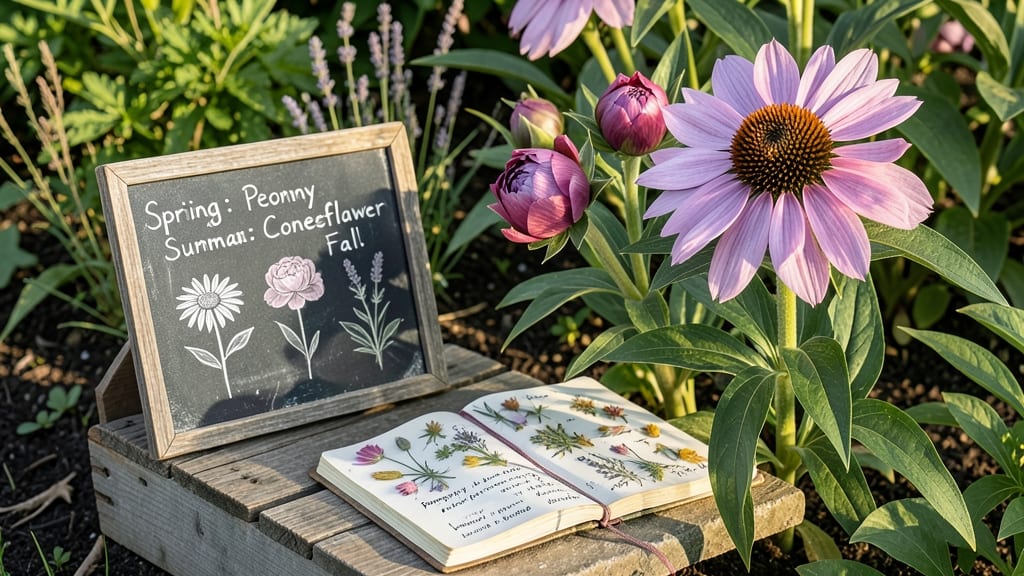
Perennials bloom with varying regularity based on their type—some like coneflowers produce flowers yearly, while others such as peonies may bloom just once every 2-3 years. Their flowering patterns also depend heavily on local climate, sunlight exposure, and soil quality.
Understanding bloom frequency starts with recognizing that perennials store energy in their roots during dormancy, which determines how often they'll flower. 🌿 Plants like daylilies and black-eyed Susans are known for their frequent blooming because they've adapted to store enough energy to support multiple cycles.
Meanwhile, peonies and hostas often take longer breaks between blooms because they allocate more energy to leaf and root growth. Your local climate plays a huge role too—warmer zones might see more frequent blooms, while colder regions could experience delayed or less frequent flowering.
To maximize bloom frequency, focus on selecting perennials that match your climate and sunlight conditions. For example, black-eyed Susans thrive in full sun and can bloom continuously with proper care, while bleeding hearts prefer partial shade and may bloom just once per year.
Regular pruning after flowering also helps redirect energy toward next season's blooms. I've found that amending soil with compost in early spring gives perennials the nutrients they need to store energy efficiently for future blooms.
💡 In This Article
- Perennial Bloom Cycles: Annual vs Biennial vs Multi-Year Patterns
- Optimizing Perennial Bloom Frequency by Plant Selection and Care
Perennial bloom cycles: annual vs biennial vs multi-year patterns
Perennial bloom frequency is fundamentally tied to how plants store and allocate energy in their roots. Annual bloomers like coneflowers (Echinacea) and black-eyed Susans (Rudbeckia) produce flowers every year because they've evolved to maximize reproductive output annually.
Their deep root systems store starches during dormancy, which converts to sugars needed for rapid spring growth and flowering. In contrast, multi-year bloomers like peonies and hostas prioritize root and leaf development, storing energy for 2-5 years before flowering again.
This difference stems from their evolutionary trade-offs between survival and reproduction.
The biological clock of perennials is regulated by photoperiod (day length) and temperature cues. For example, daylilies (Hemerocallis) bloom in early summer when day lengths exceed 14 hours, while bleeding hearts (Dicentra spectabilis) rely on spring temperatures rising above 50°F consistently.
Biennials like foxgloves (Digitalis) follow a strict two-year cycle: the first year builds leaf mass and root reserves, while the second year diverts energy to flower production before dying. This pattern explains why you might see foxgloves bloom spectacularly one year, then disappear entirely the next.
Plant families exhibit distinct bloom rhythms due to genetic adaptations. Grasses (like ornamental grasses) often bloom annually but may produce seed heads that persist through winter, while shrubby perennials (like butterfly bush) can bloom multiple times per season if given proper care.
The key difference lies in their growth habits: grasses grow from the base (monocots), while shrubs grow from buds (dicots), affecting how they allocate energy. For instance, Russian sage (Perovskia) can produce multiple flushes of blooms throughout summer because its woody stems store energy differently than herbaceous perennials.
Climate zones dramatically alter bloom timing through their effect on dormancy periods. In USDA Zone 5, peonies might bloom in late May, while in Zone 9, they could flower as early as March due to milder winters.
The length of winter chilling hours (typically 400-1,000 hours below 45°F) acts as a trigger for many perennials to break dormancy. This explains why some perennials struggle in warmer climates—they may not receive sufficient chilling periods to initiate flowering.
For example, columbines (Aquilegia) often bloom earlier in Zone 6 than in Zone 8 because the latter lacks the necessary winter cold snap.
Soil health plays a surprising role in bloom frequency through nutrient availability. Perennials need consistent access to phosphorus (for root growth) and potassium (for flower production).
A soil test revealing low phosphorus (20 ppm) can delay flowering by up to 2 weeks because the plant prioritizes root development over blooms. I've observed that amending soil with bone meal (3-4-0 NPK) in early spring can advance bloom times by 5-7 days in nutrient-poor soils.
The texture also matters: sandy soils drain too quickly, while clay holds moisture but may suffocate roots, both of which stress plants and reduce bloom frequency.
What most gardeners don't realize is that even within a species, individual plants can vary by 20-30% in bloom frequency due to microclimates. A single peony bush in full sun might bloom annually, while one in partial shade could take 3 years between cycles.
This variability is why professional gardeners recommend planting 3-5 plants of the same type—it increases the chances of reliable blooms by averaging out these natural variations. The lesson here? Bloom frequency isn't just about the plant type—it's a complex interplay of genetics, environment, and care that unfolds over seasons.