
Watering
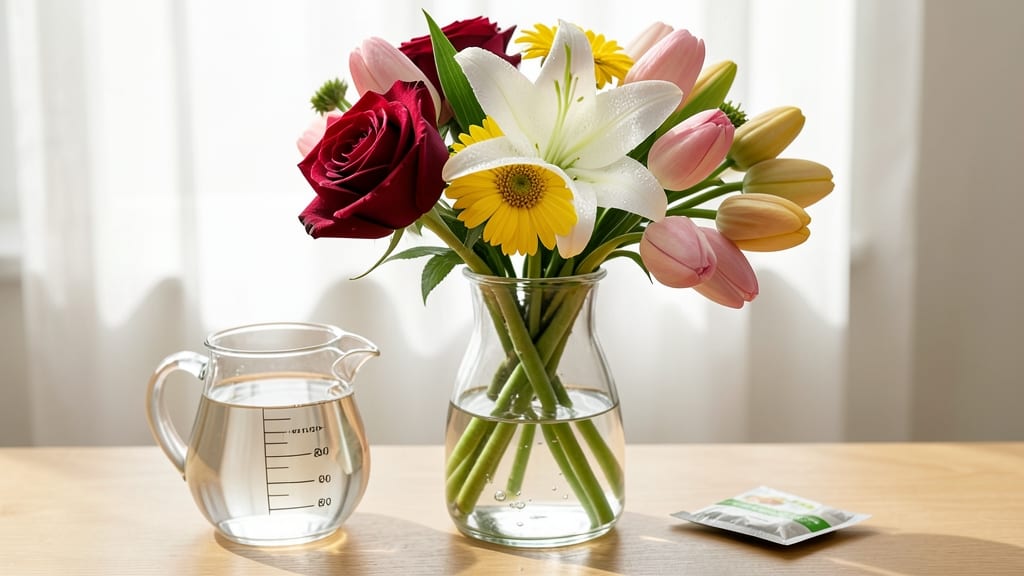
Determining how much water to put in a flower vase depends on stem thickness and bloom type: use 1 inch of water for every 1 inch of stem thickness, ensuring stems are submerged by 2-3 inches. Delicate flowers like roses need deeper immersion, while hardy stems like alstroemeria require less.
This simple ratio works because stems absorb water through capillary action, and thicker stems need proportionally more liquid to stay hydrated. 🌸 For example, a bouquet with 3-inch stems would need at least 3 inches of water, while a single roses arrangement might require 4-5 inches to keep blooms fresh longer.
Always refresh the water every 2-3 days and trim stems at an angle to maximize absorption.
Beyond stem thickness, flower types play a key role. Delicate blooms like peonies or hydrangeas wilt faster if stems aren't fully submerged, while sunflowers or snapdragons tolerate shallower water. Adding a floral preservative (like sugar and bleach mix) extends vase life by 3-5 days, regardless of water level.
💡 In This Article
- Water Requirements by Flower Stem Thickness and Type
- Step-by-Step Guide to Filling Flower Vases Correctly
Water requirements by flower stem thickness and type
Flower stems absorb water through tiny tubes called xylem vessels, which rely on capillary action to draw liquid upward. Thicker stems have larger xylem vessels that require more water to create sufficient suction pressure.
For instance, a 1-inch-thick stem (like a sunflower) needs at least 1 inch of water to stay hydrated, while a ½-inch stem (like a carnation) only needs ½ inch.
The key is ensuring stems are submerged by 2-3 inches—this depth creates the ideal negative pressure for water absorption. 🌿
Different flower types have varying hydration needs due to their natural biology. Delicate blooms like roses or peonies have thinner, more porous stems that wilt quickly if not fully submerged.
Their stems can absorb up to 8 ounces of water per day when properly hydrated, but only 2-3 ounces if stems are barely touching the surface. Hardy stems like alstroemeria or snapdragons, however, have thicker, waxier coatings that reduce water loss, allowing them to thrive in shallower water.
The science behind this involves osmosis—the movement of water from higher to lower concentration. When stems are cut, the xylem vessels open, creating a vacuum that pulls water upward. If stems aren't submerged enough, air bubbles can block these vessels, starving the flower.
This is why recutting stems at a 45-degree angle every 2-3 days exposes fresh xylem, ensuring continuous hydration. 💧
Overfilling a vase isn't ideal either—excess water can cause bacterial growth, which clogs stems faster than the flowers can absorb. A good rule of thumb is to fill the vase to ⅔ capacity for most bouquets, leaving room for added preservatives.
For example, a 12-inch vase holding stems with an average thickness of ¾ inch should contain about 6-8 inches of water, plus 1 teaspoon of sugar and 2 drops of bleach per quart to extend freshness.
Temperature also plays a role—cooler water (60-65°F) slows bacterial growth, while warm water (75°F+) accelerates spoilage. This is why floral designers often use chilled water and change it every 48 hours.
The combination of proper submersion, fresh cuts, and temperature control can extend a bouquet's life by 50-70%, making the right water level a game-changer for longevity. ✨
Consider these exceptions: tropical flowers like orchids or anthuriums often prefer shallower water (just enough to cover the base) because their stems are adapted to humid environments.
Conversely, dried flowers like roses or baby's breath can sit in water for weeks without wilting, as they've already lost most of their moisture content. Always research your specific blooms before filling the vase. 🌸