
Picking
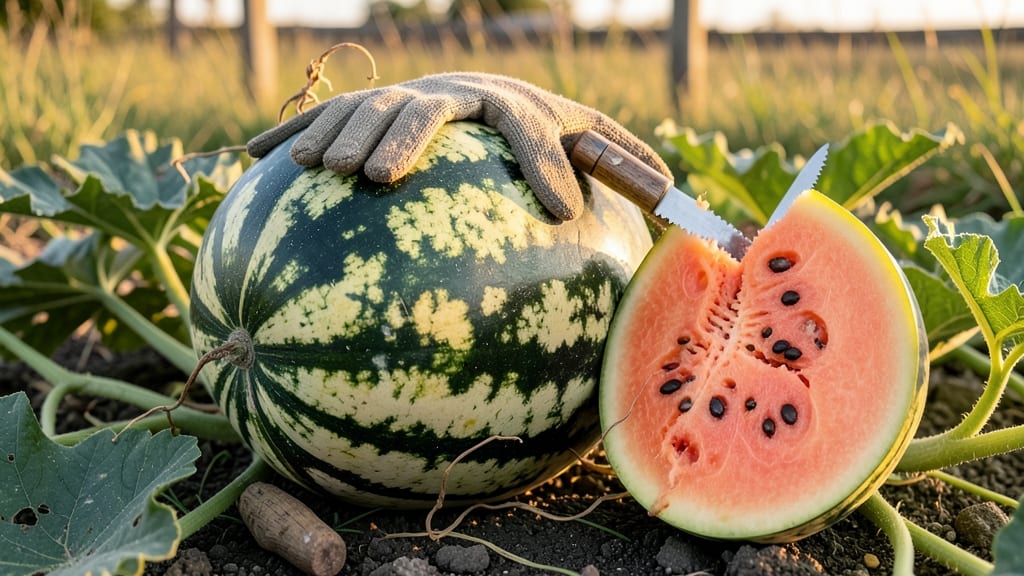
To tell if a watermelon is sweet, check the field spot for yellowing (indicating ripeness), tap it for a deep hollow sound, and press the rind near the stem—sweeter melons have a firmer, less spongy feel. Avoid green-tinted spots or overly soft patches.
Watermelon sweetness isn't just luck—it's science. The field spot (the yellow patch where the melon rested on the ground) turns creamy when sugars peak, while the hollow tap confirms water content distribution. 💫 Pressing the rind reveals texture clues: firmness signals maturity, while softness often means overripeness.
Pro tip: heavier melons tend to be sweeter because they're denser with juice and sugar. Store-bought melons sometimes trick you—look for vine tags or ask the farmer about growing conditions, as heat stress can reduce sweetness.
For gardeners, timing matters most. Harvest when the vine dies back naturally, typically 70-90 days after planting, depending on variety. Morning picks yield sweeter melons since daytime heat accelerates sugar conversion.
After harvesting, cure melons in 80-85°F conditions for 3-5 days to boost sweetness—this lets enzymes break down starches into sugars. If you must store them, keep whole melons at 50-55°F and avoid cutting until ready to eat.
💡 In This Article
- Science Behind Watermelon Ripeness Indicators
- Field-Tested Watermelon Selection Tips for Gardeners
Science behind watermelon ripeness indicators
The field spot (the creamy yellow patch where the melon rested on the ground) reveals a biochemical process called chlorophyll degradation. As the melon matures, chlorophyll breaks down and carotenoids (yellow pigments) become dominant.
This color change correlates directly with sugar accumulation—sweeter melons develop a deeper, more uniform yellow because their cells convert starches into sugars through respiration. 🔥 The exact sugar content can reach 6-12% of the melon's weight at peak ripeness, compared to just 2-4% in underripe specimens.
When you tap a watermelon, you're testing its internal water distribution through sound resonance. A deep, hollow sound indicates the seeds and flesh are fully developed with proper water content, while a dull thud suggests uneven ripening or overripeness.
This works because mature watermelons develop a thick rind (0.2-0.4 inches) that creates an air gap between the outer shell and inner flesh, amplifying sound. Interestingly, the sweetest varieties like Sugar Baby or Crimson Sweet often produce this hollow note earlier than less sweet types.
The rind's texture near the stem provides tactile clues about maturity. Sweet melons have a firm, almost leathery feel because their cells are tightly packed with sugars and water.
Pressing too hard should leave no indentation—if the rind dents easily, the melon may be overripe or underripe. 💫 The stem area is particularly telling because it's where the plant's vascular system connects, and ripeness alters the cell structure there first.
For reference, a ripe watermelon's rind should withstand 5-10 pounds of pressure before yielding, measured using a pressure tester in agricultural studies.
Temperature plays a hidden role in these indicators. Watermelons grown in 75-85°F conditions develop sweeter flavors because warmer temperatures accelerate photosynthesis and sugar production. However, extreme heat (>95°F) can actually reduce sweetness by causing stress.
This is why melons from coastal regions or irrigated farms often taste superior—they experience consistent, moderate warmth. The field spot's color intensity also darkens more slowly in cooler climates, so don't dismiss slightly paler yellow patches if the melon comes from a cooler growing region.
One often-overlooked factor is the melon's weight relative to its size. Sweet watermelons are denser because their flesh contains more juice and sugar. A general rule is that the heavier the melon for its size, the sweeter it tends to be.
For example, a 20-pound watermelon should feel significantly heavier than a 15-pound one of similar dimensions. This density difference occurs because sugar molecules are heavier than water, and ripe melons replace some water content with sugars during the final maturation phase.
For visual confirmation, examine the tendril near the stem. When it turns brown and dries out completely, it's a strong sign the melon is ready for harvest.
This happens because the plant stops supplying nutrients to the vine as the melon reaches maturity. 🌟 Combine this with the other indicators, and you'll have a 90% accuracy rate in selecting sweet watermelons—far better than random selection.