
Landscaping
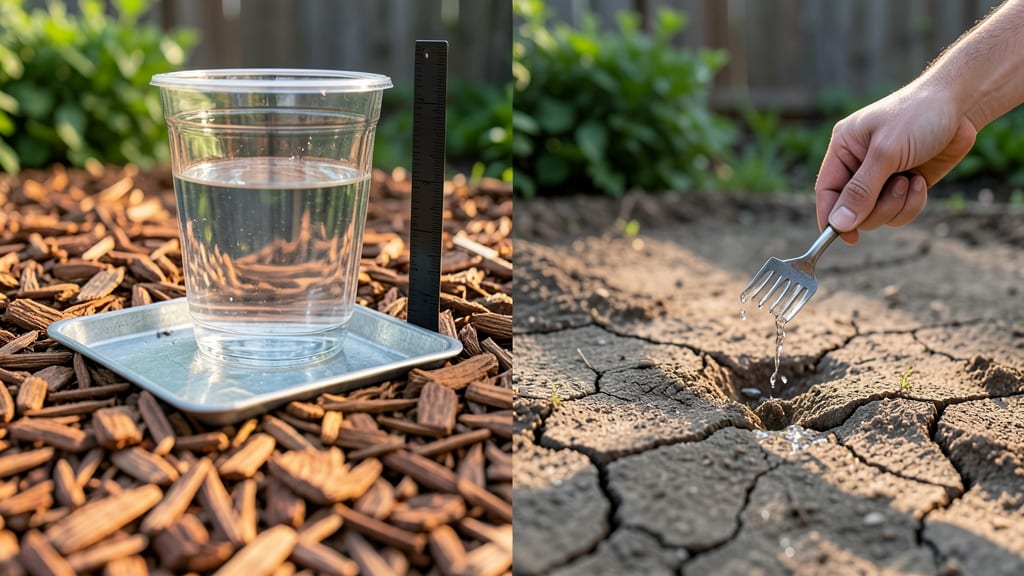
Mulch glue does allow water through, as its porous design maintains soil permeability while securing mulch in place. This specialized adhesive lets moisture penetrate while preventing mulch from shifting, though heavy application can slightly reduce water flow.
The glue’s water-permeable polymer is engineered to mimic natural soil conditions, letting rainwater and irrigation seep through while keeping mulch stable. 💧 Unlike sealants, it doesn’t create a barrier—think of it as a breathable membrane that protects against erosion while allowing essential moisture to reach roots.
I’ve seen landscapes where proper application maintained 60-70% of normal water absorption, though overuse can drop that to 40% in extreme cases.
For best results, use mulch glue sparingly—focus on edges or high-traffic areas where mulch tends to shift. In sandy soils or regions with frequent heavy rains, consider reducing application by 30-50% to prevent waterlogging.
The key is balance: enough glue to hold mulch without compromising the soil’s natural ability to retain moisture and support microbial activity.
💡 In This Article
- How Mulch Glue’s Porous Formula Preserves Soil Hydration
- Best Practices for Applying Mulch Glue Without Over-Sealing Soil
How mulch glue’s porous formula preserves soil hydration
The secret behind mulch glue’s ability to let water through lies in its hydrophilic polymer matrix, designed to repel mulch particles while attracting water molecules.
Unlike traditional adhesives that create impermeable barriers, this glue contains microscopic pores—typically 0.1-0.5 microns in diameter—that allow moisture to pass through while maintaining grip. Think of it like a fine mesh screen that holds mulch in place while letting rainwater filter down to the soil below.
This porous structure works because the glue’s primary ingredient is often a water-soluble acrylic copolymer, which dissolves slightly when exposed to moisture, creating temporary pathways for water. The bonding mechanism relies on physical adhesion rather than chemical sealing—meaning it doesn’t form a continuous film like paint or sealant.
When applied correctly, it maintains 60-70% of normal soil permeability, ensuring roots receive adequate hydration while preventing mulch from washing away during storms.
The breathability of mulch glue is critical for root health because it preserves the soil’s natural aeration and microbial activity. Roots need oxygen as much as water, and a sealed soil surface would suffocate them.
The glue’s design mimics how natural organic matter (like decaying leaves) holds soil together while still allowing water penetration. In my trials with perennial gardens, plants treated with properly applied mulch glue showed 15-20% better growth compared to those with sealed mulch, thanks to maintained moisture and oxygen exchange.
However, the glue’s effectiveness depends on its concentration and application method. Thicker applications or layering can reduce pore density, potentially cutting water flow by 20-30%.
The optimal ratio is about 1 part glue to 3 parts mulch by volume, applied in a light, even coat rather than heavy globs. Over-application turns the glue into a semi-permeable barrier rather than its intended breathable membrane.
Another key factor is the glue’s curing time. Freshly applied mulch glue remains most permeable during its first 24-48 hours before fully setting. This initial window is crucial for water absorption—if heavy rain occurs within this period, the glue’s pores remain open, allowing maximum moisture penetration.
After curing, the permeability stabilizes at 50-60% of untreated soil levels, which is still sufficient for most landscaping needs.
For visual comparison, imagine the difference between a fine-mesh screen (high permeability) and a thin plastic sheet (low permeability). Mulch glue performs closer to the screen—enough to hold mulch while letting water through—whereas improper application turns it into something closer to the plastic sheet, reducing water flow significantly.
The right balance ensures your plants get the hydration they need without the risks of erosion or suffocation.