
Watering
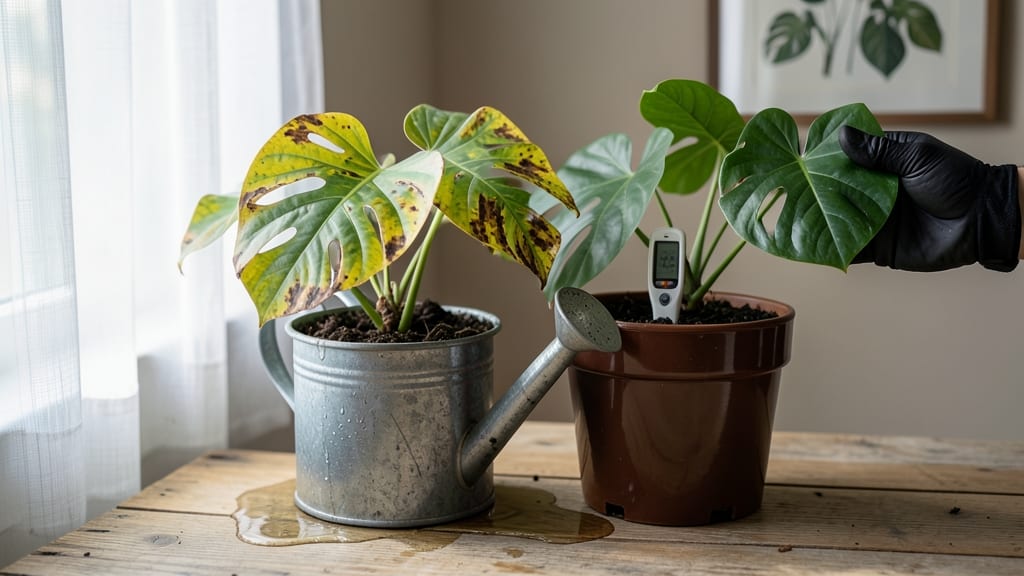
Plants often turn yellow when overwatered because excess moisture suffocates roots, preventing them from absorbing nutrients and oxygen. Look for drooping leaves, foul-smelling soil, and blackened roots—act fast by reducing watering and improving drainage to revive your plant.
Overwatering creates a suffocating environment where roots can't breathe, leading to anaerobic conditions that trigger root rot. 🌱 Without oxygen, roots starve for nutrients, causing leaves to yellow and wilt as the plant struggles to sustain itself.
Different species react uniquely—succulents may develop mushy stems, while ferns might drop leaves entirely. The key is monitoring soil moisture with your finger: if the top inch feels damp, wait before watering again.
This problem isn't just about too much water—it's about poor drainage too. Many gardeners overcompensate after fixing an issue, so I always recommend using well-draining soil mixes and containers with drainage holes.
For houseplants, consider repotting into pots with perforated bottoms or adding a layer of gravel at the base. The goal is to mimic natural conditions where excess water can escape easily.
💡 In This Article
- How Overwatering Triggers Yellow Leaves and Root Rot
- Step-by-Step Fixes for Overwatered Plants with Yellowing Leaves
How overwatering triggers yellow leaves and root rot
When soil stays too wet for prolonged periods, roots suffocate because they can't absorb oxygen—a process called oxygen deprivation. Healthy roots need about 10-20% air space in soil to function properly. Without oxygen, roots begin to die back from the tips inward, a condition known as root rot.
This rot blocks the plant's ability to uptake water and nutrients, forcing it to break down its own leaf tissue for survival, which appears as yellowing.
The real damage happens when anaerobic bacteria and fungi thrive in waterlogged conditions.
These microbes produce toxins that further stress the roots, while also competing with the plant for limited nutrients. 🌱 In ferns, for example, you might see yellowing fronds paired with a foul, sour smell from the soil—this is the bacteria's byproduct.
Succulents, on the other hand, often develop translucent, mushy stems as their cells burst from excess moisture retention. The key difference is that ferns tolerate higher humidity but poor drainage, while succulents need dry, gritty soil to prevent cellular damage.
This root stress directly impacts photosynthesis. Leaves turn yellow because chlorophyll production slows down—the plant's energy is diverted to survival mode rather than growth. The yellowing typically starts on older leaves first (a process called senescence) because the plant prioritizes keeping younger leaves alive.
In severe cases, you might notice a 1-2 inch layer of black, slimy roots when you gently remove the plant from its pot—a clear sign of advanced rot.
Not all plants react the same way. Tropical plants like calatheas might develop crispy, brown edges on yellow leaves due to osmotic stress, where excess water dilutes the soil's nutrient concentration. Meanwhile, desert plants like cacti may show yellowing paired with wrinkled skin as their cells collapse from overhydration.
The common thread? Waterlogged soil disrupts the plant's ability to regulate moisture intake, leading to a cascade of physiological failures.
Here's what's happening at the cellular level: When roots can't breathe, they release ethylene gas, a plant stress hormone that accelerates leaf yellowing.
This gas also triggers the breakdown of chlorophyll, turning leaves from green to yellow. 💫 The plant essentially signals it's drowning, and the yellowing is its way of shedding non-essential parts to conserve energy.
In some cases, like with peace lilies, you might even see the yellowing paired with brown, crispy leaf tips—a sign the plant is trying to compartmentalize the damage.