
Plants
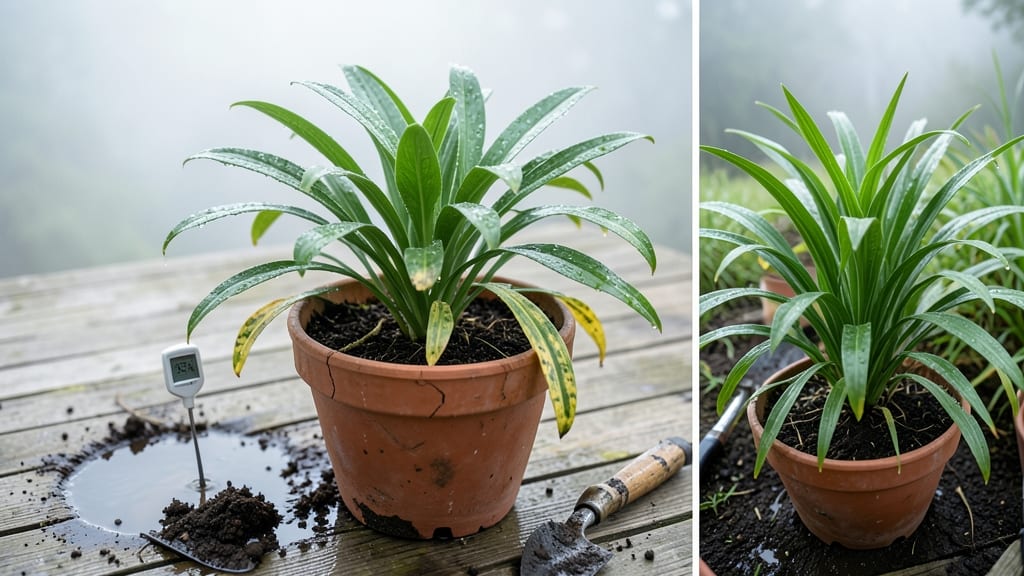
Plants can get overwatered by rain when soil stays saturated for days, suffocating roots and blocking oxygen. Yellowing leaves, wilting, or moldy soil are key signs to watch for after heavy downpours.
Too much rain creates the same problems as overwatering—roots drown when they can't access oxygen, leading to rot and fungal infections. 🌧️ I've seen this happen after weeks of consistent rainfall, where the soil stays soggy even days after the rain stops.
The real damage starts when roots can't breathe, cutting off nutrients and causing leaves to turn yellow or drop. Container plants are especially vulnerable since they have no deep soil layers to absorb excess moisture.
This isn't just about wilting—it's a slow decline. Waterlogged soil also washes away essential nutrients, leaving plants starved even when they look hydrated. The key is monitoring soil moisture between storms. If your thumb sinks more than an inch into the soil and stays damp, your plants are in trouble.
For severe cases, improving drainage with organic matter or switching to raised beds can make all the difference.
💡 In This Article
- How Excess Rainwater Damages Plant Roots
- Fixing Rain-Overwatered Plants: Drainage and Recovery Steps
How excess rainwater damages plant roots
When rain saturates soil for days, it creates anaerobic conditions—meaning roots suffocate without oxygen. This happens because water fills soil pores, pushing out the air roots need to respire.
Studies show roots need at least 10-15% air space in soil to stay healthy, but prolonged saturation can reduce this to near zero. 🌱 The moment oxygen levels drop below 5%, roots start dying from a condition called hypoxia, similar to how humans suffocate underwater.
This oxygen deprivation triggers a cascade of problems. First, beneficial soil microbes that help roots absorb nutrients die off, leaving plants starved even when soil looks wet. Second, anaerobic bacteria thrive, producing toxic byproducts like ethanol and methane that further damage roots.
You'll often see a foul, sour smell from waterlogged soil—this is your warning sign. 💨 The roots also become soft and mushy, losing their ability to anchor the plant or transport water and nutrients upward.
Nutrient leaching is another major issue. Heavy rain washes away essential minerals like nitrogen, phosphorus, and potassium, which are critical for plant growth. A single downpour can flush away 30-50% of available nutrients in sandy soils, leaving plants weak and yellow.
This is why plants often look overwatered but nutrient-starved—they're drowning in one problem while starving from another. The roots' ability to uptake water also declines, creating a vicious cycle where the plant can't recover even after the rain stops.
Soil compaction makes matters worse. Wet soil particles stick together, creating a dense, clay-like texture that blocks water and air movement. This is especially problematic in clay-heavy soils, where compaction can reduce porosity by upstrong>50%.
Even plants with deep root systems struggle when their roots can't penetrate compacted layers. 🌧️ The result? Stunted growth, weak stems, and leaves that turn yellow or brown at the edges—a classic sign of root stress.
Fungal infections often follow waterlogged conditions. Pathogens like Phytophthora and Pythium thrive in saturated soil, causing root rot that spreads quickly. These fungi attack weakened roots, creating lesions that ooze a dark, slimy liquid.
Once established, they can kill plants in as little as 7-10 days, making early intervention crucial. The worst part? Many gardeners don't realize the damage until it's too late, mistaking fungal symptoms for simple overwatering.
Even drought-resistant plants aren't immune. While some species like succulents or lavender handle dry conditions well, they can still suffer from prolonged saturation.
The key difference is their ability to recover once soil dries out—but if the cycle repeats, roots weaken permanently. 🌿 This is why monitoring soil moisture between storms is critical, especially in regions with frequent heavy rainfall.