
Advice
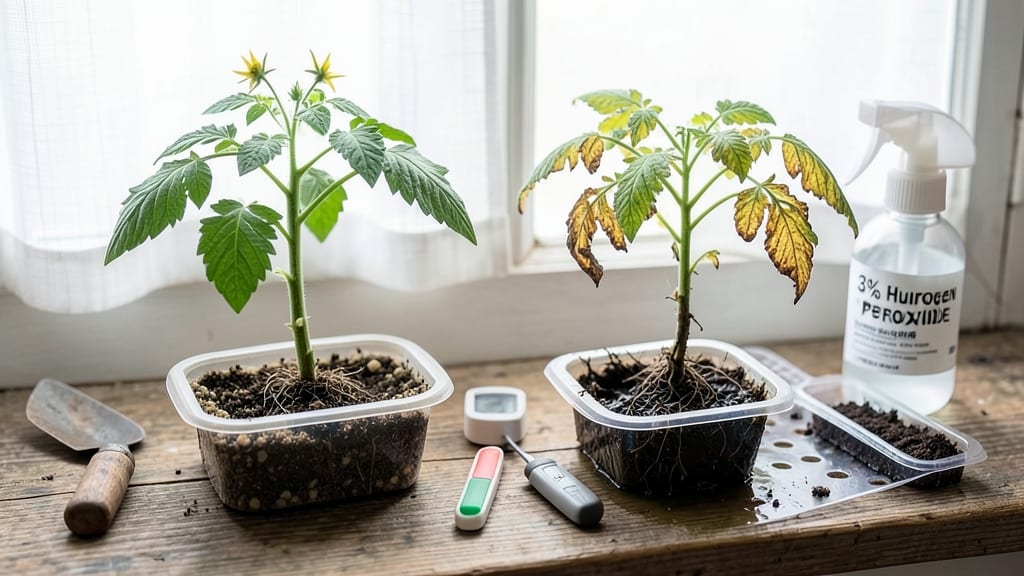
Overwatered seedlings can recover if you act fast, but prolonged soggy conditions cause root rot or fungal infections. Drain excess moisture immediately, improve airflow around roots, and adjust your watering routine to prevent further stress.
Seedlings are surprisingly resilient when you catch the problem early.
The key is preventing anaerobic conditions—when roots suffocate from lack of oxygen—which turns soil into a breeding ground for harmful bacteria. 🌱 I’ve seen seedlings bounce back within days when I gently lift them from soggy soil, let excess moisture evaporate, and replant in well-draining mix.
The first 24 hours are critical: if leaves start yellowing or wilting, that’s your signal to intervene before permanent damage sets in.
For the best recovery, I recommend mixing in perlite or vermiculite (about 20% of your soil volume) to break up compacted roots and improve drainage. A light misting schedule—only when the top inch feels dry—works wonders for rebuilding root health.
And here’s a pro tip: if your seedlings are in trays, prop them up slightly to encourage airflow at the base.
💡 In This Article
- How Overwatering Damages Seedling Roots and Leaves
- Step-by-Step Guide to Reviving Overwatered Seedlings
How overwatering damages seedling roots and leaves
When seedlings sit in soggy soil, their roots suffocate because water displaces the oxygen they need to breathe. This creates an anaerobic environment where harmful bacteria and fungi thrive, breaking down root tissues.
You’ll notice leaves turning yellow or wilting as the plant struggles to transport nutrients—this is your first warning sign that roots are drowning. 🌱 The damage starts within 24-48 hours of constant moisture, with young roots becoming mushy and blackened from rot.
Root cells require oxygen to produce energy through respiration, but waterlogged soil forces them into survival mode. This triggers the production of ethylene gas, a plant stress hormone that accelerates leaf drop and stunts growth.
The worst offenders are compacted soils or containers without drainage holes, where excess water pools instead of draining away. For example, a 1-inch-thick layer of standing water can kill seedlings in just 3-5 days by cutting off oxygen entirely.
Leaves react visibly to this stress: yellowing between veins (chlorosis) signals nutrient starvation, while drooping stems indicate the plant can’t absorb enough water. The roots themselves may develop a foul odor from anaerobic bacteria like Pythium, which attacks weakened seedlings.
What’s surprising is how quickly roots can recover if you intervene early—sometimes within 3-7 days—but only if the root structure hasn’t completely collapsed.
Here’s what’s happening at the cellular level: waterlogged roots can’t absorb oxygen through their surfaces, forcing them to rely on internal air channels.
When these fill with water, the plant’s ability to transport sugars and nutrients grinds to a halt. 💧 This is why seedlings often appear "thirsty" even when sitting in water—their roots are effectively dead, unable to uptake moisture despite the excess around them.
To prevent permanent damage, check soil moisture by pressing your finger 1 inch deep. If it feels damp but not soggy, your seedlings are safe. The critical threshold is when soil stays wet for more than 48 hours—that’s when anaerobic conditions take over.
Even organic soils can become deadly when waterlogged, as decomposing matter consumes oxygen faster than roots can replenish it.
Consider this comparison: healthy roots in well-draining soil have a 1:1 oxygen-to-water ratio, while waterlogged roots drop to less than 10% oxygen availability. This drastic shift explains why seedlings can go from thriving to dying in just 2-3 days of overwatering.
The good news? With proper drainage and airflow, roots can regenerate new growth within 7-14 days.