
Featured
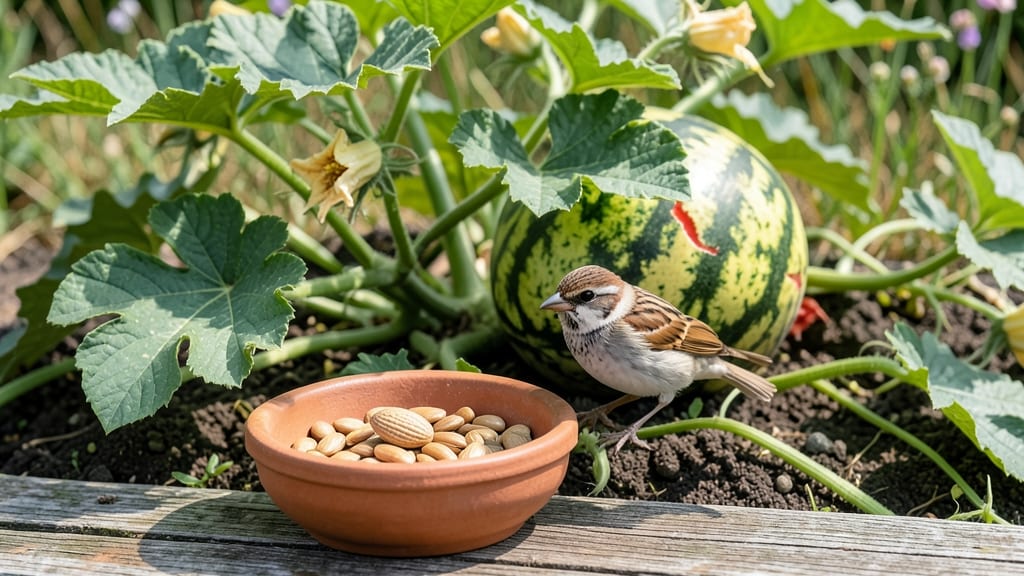
Watermelon seeds are safe for birds to eat in moderation, offering healthy fats, fiber, and protein. However, serve them carefully to prevent digestive issues or choking, particularly for small bird species.
Watermelon seeds pack a nutritional punch for birds, containing healthy fats that support energy levels and magnesium for muscle function. 🌱 The seeds also provide zinc, which boosts their immune system—though the real benefit comes when you offer them in the right form.
For larger birds like pigeons or doves, whole seeds work fine, but small species like finches need crushed seeds to avoid choking. Always rinse seeds thoroughly to remove any pesticide residue that might linger from store-bought watermelons.
When feeding watermelon seeds, start with just a few as a treat rather than a staple.
I’ve found that mixing them with other bird-safe seeds like sunflower or millet creates a balanced snack. 🌿 Place seeds on flat surfaces or shallow dishes rather than deep feeders, so even small birds can access them easily.
If you notice any signs of discomfort—like vomiting or lethargy—remove seeds from their diet immediately and offer fresh water.
💡 In This Article
- Nutritional Value of Watermelon Seeds for Birds
- Safe Ways to Feed Watermelon Seeds to Birds
Nutritional value of watermelon seeds for birds
Watermelon seeds are a powerhouse of nutrients for birds, containing approximately 46% healthy fats by weight, which provide concentrated energy—similar to how sunflower seeds fuel wild birds during migration. These fats include omega-6 and omega-9 fatty acids, crucial for feather maintenance and overall vitality.
The seeds also contain 1.5g of protein per tablespoon, supporting muscle development, while their fiber content aids digestion, much like how chia seeds benefit humans.
The mineral profile is equally impressive: watermelon seeds are rich in magnesium (156mg per 100g), which helps regulate nerve function, and zinc (3.5mg per 100g), a key immune booster.
For comparison, sunflower seeds contain 268mg of magnesium and 6.7mg of zinc per 100g—nearly double the zinc but less magnesium than watermelon seeds. The seeds also provide small amounts of iron and potassium, though in lower concentrations than bird-safe alternatives like millet.
However, the seed's size and hardness present risks. Whole watermelon seeds measure about 0.5-0.7cm in length, which is too large for small birds like finches (whose beaks measure just 1cm) and can cause choking.
The seeds' tough outer shell requires significant chewing, which may strain delicate digestive systems. This is why crushing seeds into smaller pieces is essential for tiny species—similar to how bird owners grind larger seeds for canaries.
Another critical factor is moisture content. Fresh watermelon seeds contain about 10% water, which can soften their texture and increase the risk of mold growth if left exposed. Drying seeds at 160°F (71°C) for 2-3 hours reduces moisture to safe levels while preserving nutrients.
Store dried seeds in an airtight container to prevent spoilage, just as you would with birdseed mixtures.
While watermelon seeds offer these benefits, they should never replace a bird's primary diet of seeds, grains, and insects. Think of them as a supplement—like offering a handful of pumpkin seeds to humans—as part of a varied menu.
For example, a house sparrow might enjoy 2-3 crushed seeds daily, while a pigeon could safely consume up to 5 whole seeds without issue.
The key takeaway is balance: watermelon seeds are a nutritious treat, but their benefits depend on proper preparation and portion control. Always observe your birds after introducing new foods to ensure they tolerate them well. 💫