
Watering
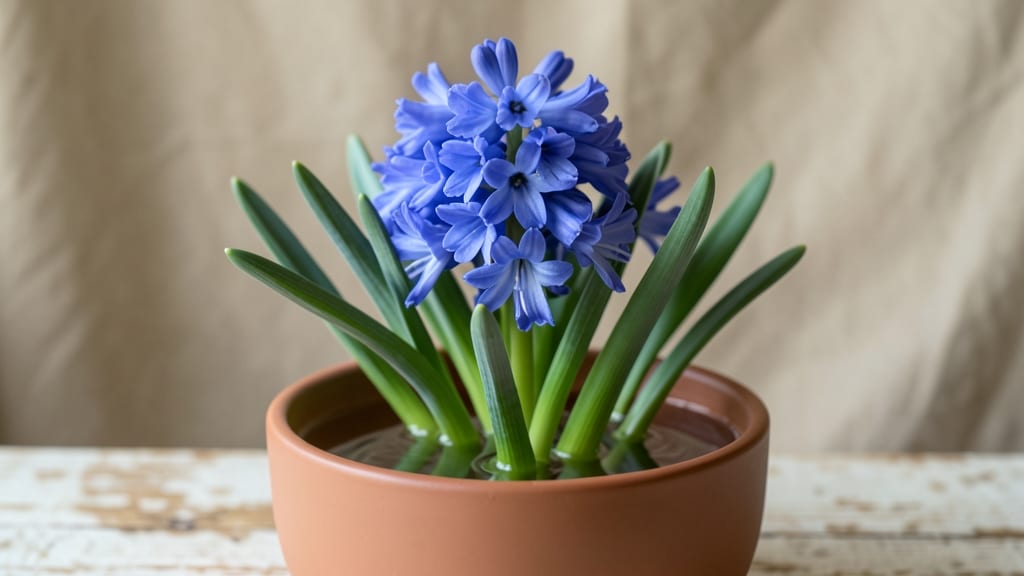
Blue hyacinth grows beautifully in water by producing rich foliage and stunning flowers within 6–12 weeks, as long as it receives bright indirect light for at least 6 hours daily and gets liquid fertilizer every 2–4 weeks. Prevent root rot by avoiding overcrowding and keeping water fresh.
Growing blue hyacinth in water is all about balancing light and nutrients. 🌿 The plant’s roots absorb oxygen directly from water, so proper aeration is key—think of it like giving your hyacinth a mini underwater garden.
I’ve found that using a small container with just 1–2 plants per gallon prevents competition for nutrients and keeps growth strong. The flowering timeline varies based on light intensity, but most varieties reward patience with vibrant blooms by week 8 or 9.
What often trips people up is the water quality. 💫 Tap water left to sit for 24 hours removes chlorine, which can harm delicate roots, while distilled water works best for sensitive varieties.
I always test my water’s pH—blue hyacinth prefers a neutral range (6.0–7.5)—and adjust with a few drops of liquid fertilizer if needed. The key is consistency: stagnant water or sudden temperature swings will stress the plant faster than you’d expect.
💡 In This Article
- Blue Hyacinth Growth Stages in Aquatic Conditions
- Critical Mistakes That Kill Water-Grown Blue Hyacinths
Blue hyacinth growth stages in aquatic conditions
The journey from bulb to bloom in water follows a predictable timeline that reveals how this aquatic plant adapts to its submerged environment. In the first 2–3 weeks, you'll notice the bulb swelling slightly as it absorbs water and begins sending out fine, white rootlets.
These roots are incredibly sensitive to oxygen levels—think of them like tiny straws drawing in dissolved oxygen from the water, which is why stagnant conditions can suffocate them. The roots grow fastest in 68–75°F water, which is why cooler temperatures slow this early stage.
By week 4–5, the first leaves emerge—long, strap-like blades that unfurl from the bulb's center. These early leaves are typically a deep green and grow rapidly as the plant shifts its energy from root development to photosynthesis.
Here's where light becomes critical: plants with 6+ hours of bright indirect light develop leaves that are thicker and more vibrant than those in low-light spots, which may appear pale or leggy.
The foliage also helps stabilize the bulb in the water, preventing it from floating to the surface where it could dry out.
Between weeks 6–8, the plant enters its pre-flowering phase, where you'll see the emergence of flower stalks. These stalks grow quickly—sometimes 2–3 inches per week—and support the iconic blue or purple blooms.
The science here is fascinating: submerged planting actually intensifies the flower color because the plant's energy isn't wasted on supporting heavy blooms above water. In contrast, semi-submerged plants (with bulbs partially above water) may produce slightly fewer but larger flowers, as they allocate more resources to structural support.
The flowering peak occurs at weeks 8–12, where each stalk can produce 10–20 individual flowers that open sequentially. Each bloom lasts 3–5 days before wilting, but new buds continue to open. The flowers are delicate—almost like tiny orchids—and their scent is subtle but sweet, reminiscent of honey.
What's less obvious is how the plant's growth slows after flowering. This is its way of conserving energy, similar to how land plants enter dormancy after blooming. During this time, you'll notice older leaves yellowing, which is natural and not cause for concern.
After flowering, the plant enters a resting phase that lasts 4–6 weeks. This is when the roots shrink slightly and the leaves may reduce in size. Many growers mistakenly think the plant is dying, but it's actually preparing for next year's growth cycle.
The key during this phase is to maintain consistent water quality and reduce fertilizer to half-strength. I've found that plants given a 2-week break from fertilizer during this time often produce even more vigorous growth the following season.
What most people don't realize is how the plant's growth cycle mirrors its natural aquatic habitat. In the wild, blue hyacinth grows in shallow water bodies where it experiences seasonal temperature fluctuations and varying light conditions.
Recreating these natural conditions—like providing cooler water in winter months—can significantly extend the plant's lifespan in your aquatic setup. The result? A plant that not only blooms reliably but also develops a stronger root system year after year.