
Flowers
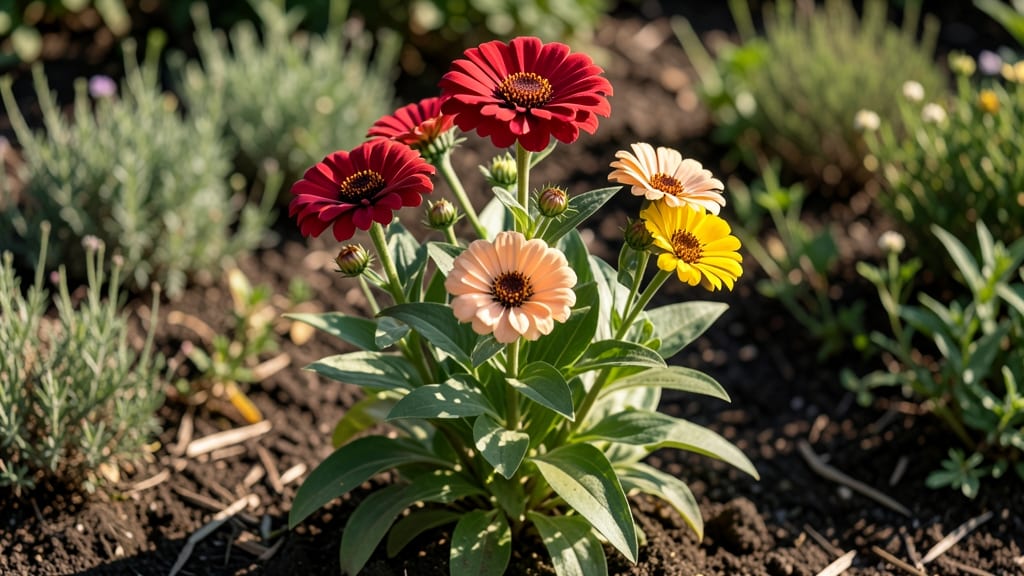
Zinnias are not perennials—they're annuals that complete their life cycle in just one growing season, requiring replanting each year. However, in warmer climates, they may self-seed and return naturally for multiple seasons.
Zinnias thrive as annuals because they can't survive freezing temperatures, which kill their tender stems and foliage. 🌱 Unlike true perennials like coneflowers, zinnias don't develop woody stems or underground storage structures to carry them through winter.
Their bright blooms and vibrant colors make them a favorite, but their seasonal nature means gardeners must plan for annual replanting—or rely on self-seeding in frost-free areas to get free regrowth.
What this means for gardeners is that while zinnias won't come back year after year in most climates, their seeds often scatter naturally, creating new plants the following season. This self-seeding habit is why some gardeners consider zinnias "semi-perennial" in mild regions—though technically, they're still annuals by botanical standards.
💡 In This Article
- Why Zinnias Die Back After One Season
- How to Extend Zinnia Growth Beyond One Season
Why zinnias die back after one season
Zinnias behave as annuals because their tender stems and foliage cannot tolerate freezing temperatures—any frost below 28°F will kill them outright. Unlike true perennials like coneflowers or black-eyed Susans, zinnias lack hardy underground structures (like rhizomes or tubers) to store energy for regrowth.
Their entire life cycle is compressed into a single growing season, typically 90-120 days from seed to flower, depending on the variety.
The key difference lies in their cellular makeup. Zinnia cells contain high moisture content and delicate membranes that rupture when exposed to freezing. True perennials, however, develop specialized tissues that can survive winter dormancy.
For example, coneflowers produce woody stems that act as insulation, while zinnias remain soft and vulnerable. 🌱 This biological limitation explains why zinnias bloom profusely in summer but vanish with the first frost—nature's way of ensuring their seeds disperse before winter arrives.
Another factor is their native habitat. Zinnias originated in Mexico and the southwestern U.S., where winters are mild. In these regions, they naturally self-seed and return each year, but their ability to survive freezing temperatures remains limited.
When grown in colder climates, zinnias behave strictly as annuals because their genetic makeup hasn't evolved to withstand prolonged cold exposure.
What most gardeners don't realize is that zinnias prioritize reproduction over survival. Once they produce seeds, their energy shifts from maintaining foliage to seed development. This is why you'll often see zinnias bolt (shoot up quickly) and flower within weeks—they're racing against time to complete their life cycle before frost.
True perennials, on the other hand, allocate resources to both flowering and root systems for long-term survival.
Consider the contrast with black-eyed Susans: these perennials develop deep taproots that store starches, allowing them to regrow from the same root system year after year. Zinnias, however, rely entirely on annual seed germination.
Their bright blooms are a seasonal spectacle, but their biology is hardwired for one-and-done growth. 🌿 This is why gardeners in colder zones must replant zinnias annually unless they collect seeds for the next season.