
Plants
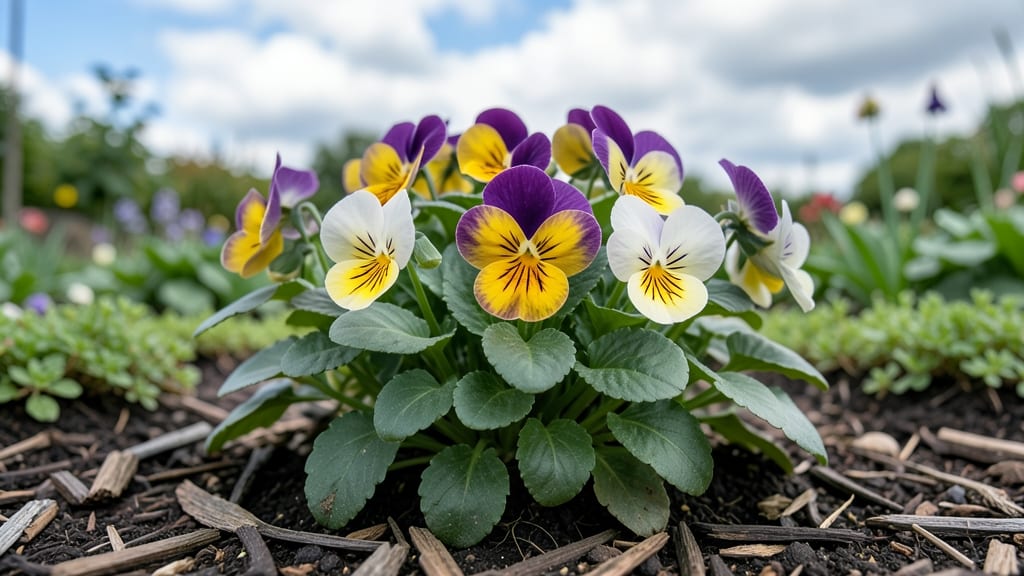
Yes, violas are perennials in most climates, thriving through winter in USDA Zones 4-8, though they often self-seed prolifically. In colder regions (Zones 3 and below), they may die back but regrow from seeds the following spring. Proper mulching and winter protection can extend their lifespan naturally.
Violas are cold-hardy plants that adapt their growth cycle to survive winter, making them true perennials in many regions. 🌱 In Zones 4-8, their roots and crowns remain dormant but alive underground, ready to burst back into bloom when temperatures rise.
The self-seeding habit in colder climates is actually a survival strategy—when frost kills the above-ground parts, the seeds buried in the soil wait for warmer conditions to sprout anew.
This resilience means you can enjoy violas year after year with minimal effort, as long as you provide basic winter care like mulch or protective coverings.
What sets violas apart is their ability to thrive in partial shade, which many gardeners appreciate for extending their blooming season. Their frost tolerance varies by species, with some varieties handling light freezes better than others.
For example, Viola cornuta (horned violet) often survives colder winters than Viola wittrockiana (garden pansy). The key to maximizing their lifespan is understanding your local microclimate—windy areas may need extra protection, while sheltered spots can support violas through harsher winters.
💡 In This Article
- Viola Lifespan by USDA Hardiness Zones
- Natural Techniques to Prolong Viola Growth in Cold Climates
Viola lifespan by USDA hardiness Zones
Violas exhibit true perennial behavior in USDA Zones 4-8 because their root systems and crowns can withstand winter temperatures down to -20°F to -30°F. The secret lies in their deep taproots, which store carbohydrates during dormancy—similar to how dandelions survive harsh winters.
These roots act as a biological battery, converting stored starches into energy when spring arrives. In Zone 4, violas often enter a semi-dormant state where growth slows dramatically but doesn't stop completely, allowing them to bloom earlier than many perennials.
The self-seeding phenomenon in colder climates (Zones 3 and below) is actually a frost-adaptation strategy. When temperatures drop below 28°F, the above-ground foliage dies back, but the plant's reproductive cycle shifts into overdrive.
Violas produce abundant seeds that remain viable in the soil for years, waiting for ideal germination conditions. This process is triggered by temperature fluctuations—seeds typically germinate when soil temperatures reach 50-55°F in spring. The result? A natural renewal system that ensures violas return year after year with minimal gardener intervention.
What most gardeners don't realize is that violas have a built-in frost resistance mechanism called "antifreeze proteins." These proteins, similar to those found in winter wheat, prevent ice crystal formation in plant cells during freezing temperatures.
This biological adaptation explains why violas can survive light frosts even when their leaves show damage. In Zone 5, for example, violas might lose their foliage at 15°F but regrow from the crown when temperatures climb above 40°F.
Zone differences create distinct growth patterns. In Zones 6-8, violas maintain continuous growth with only brief dormancy periods, while in Zone 4 they enter deeper dormancy but still bloom reliably.
The critical threshold appears to be -25°F—below this, most viola varieties will die back completely, though their seeds often survive. This explains why gardeners in Zone 3 sometimes see violas return from self-seeded plants rather than from overwintering crowns.
Consider these zone-specific survival strategies:
- Zones 4-8: Crown and root survival through winter dormancy
- Zone 3: Above-ground dieback with seed-based regeneration
- Zone 2 and below: Annual treatment due to extreme cold
For gardeners pushing violas into colder zones, the key measurement is soil temperature at the root zone. Violas begin active growth when soil reaches 45°F, which typically occurs 2-4 weeks before air temperatures stabilize above freezing.
This timing difference explains why violas often bloom earlier than many spring perennials in transitional climates.