
Plants
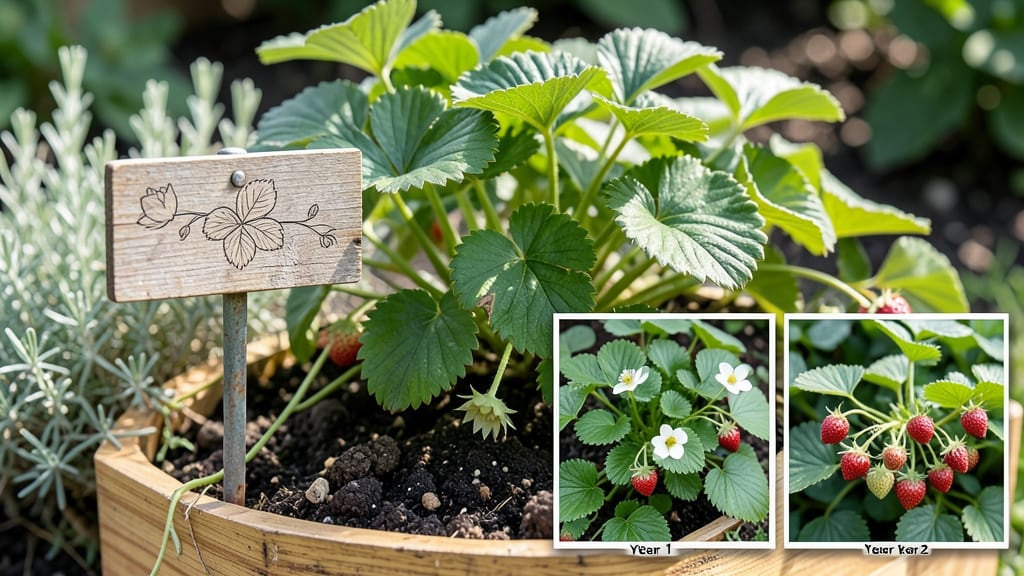
Strawberries are perennials that survive multiple growing seasons but die back to the ground each winter in cold climates, regrowing from their crowns in spring with proper care and protection.
Strawberries may look like annuals when their leaves turn brown and disappear in winter, but they're actually hardy perennials with clever survival strategies. 🌱 The plant's crown—the thickened base where leaves and roots meet—stays alive underground even when temperatures drop below freezing, storing energy for spring regrowth.
This dormancy period is essential for their long-term productivity, as they can live for 5-6 years (or longer) with the right conditions.
What sets strawberries apart from true annuals is their ability to rebuild above-ground growth from those dormant crowns once temperatures warm. The roots remain active beneath the frost line, ready to sprout new leaves and flowers when conditions improve.
This cycle explains why you might see strawberries returning year after year in your garden—even when they look completely dead in winter.
💡 In This Article
- How Strawberry Plants Survive Winter Dieback
- Extending Strawberry Growth in Cold Regions
How strawberry plants survive winter dieback
The strawberry plant's winter survival strategy begins with a biological process called dormancy, triggered by shortening daylight and dropping temperatures. When nighttime temperatures consistently fall below 40°F for several weeks, the plant's crown (the thick, woody base between roots and stems) enters a state of metabolic slowdown.
This isn't true death—it's a carefully regulated shutdown where the plant redirects energy from leaf production to root maintenance and crown storage.
What makes this fascinating is how the roots continue functioning even when above-ground growth appears dead. The fibrous root system, which can extend 12-18 inches deep, remains active below the frost line, drawing on stored carbohydrates in the crown.
These roots maintain a minimal metabolic rate, allowing the plant to survive temperatures as low as -20°F for short periods. The crown itself contains specialized cells that act like a biological battery, storing starches that fuel spring regrowth.
Here's where the science gets interesting: strawberries produce a natural antifreeze protein in their cells during dormancy. This protein, similar to what you'd find in cold-hardy fish, prevents ice crystals from forming within plant tissues.
Without this protection, the plant's cells would rupture from internal ice formation—a process called freeze-thaw damage. The leaves die back because they're the plant's most expendable parts, containing less critical stored energy than the crown and roots.
This survival mechanism explains why you might see strawberry plants returning with vigor after what appeared to be total winter kill. The crown can remain viable for 1-2 years underground even without visible growth, waiting for the right conditions.
What most gardeners don't realize is that the plant's ability to regrow depends entirely on protecting this crown during winter—exposing it to freezing temperatures can kill it completely.
Consider this comparison: while annual plants like tomatoes complete their entire life cycle in one season, strawberries use their perennial nature to invest energy in long-term survival.
The trade-off is that they produce fewer flowers and fruits in their first year, reserving energy for establishing strong roots and crowns that will support multiple harvests in subsequent years.
The timing of this dormancy is also precise. Strawberries typically enter dormancy when day lengths drop below 12 hours of sunlight, which usually occurs in late fall. This photoperiodic response ensures the plant shuts down at the optimal time before winter's harshest conditions arrive.
The entire process is a remarkable example of plant adaptation to seasonal changes.