
Flowers
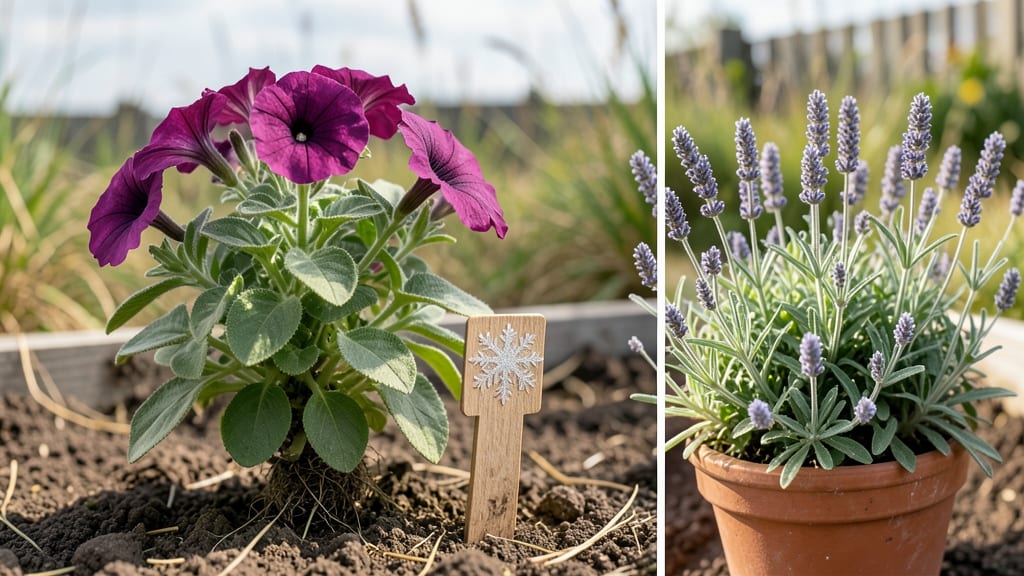
Petunias aren't true perennials—they die back when frost hits and return from seed or cuttings the following spring. In warmer areas (USDA zones 10-11), they can act as tender perennials with proper winter care like mulching or container protection, though cold-hardy varieties remain uncommon.
Botanically speaking, petunias are classified as tender perennials, meaning they can't survive freezing temperatures. 🌱 The moment frost hits, their foliage turns brown and dies, but the roots often remain dormant underground. This is why gardeners in cooler climates treat them as annuals—planting fresh seeds or cuttings each year.
What's fascinating is how some gardeners in milder zones successfully overwinter petunias by digging up tubers or using heavy mulch to insulate the soil.
For those in colder regions, the key to extending petunia life lies in strategic overwintering techniques. You can dig up mature plants before the first frost, trim them back, and store the tubers in a cool, dry place until spring.
Alternatively, using thick mulch or even moving potted petunias indoors can help protect them through winter. The goal is to preserve the root system so it can regrow when temperatures warm up again.
💡 In This Article
- Why Petunias Act Like Annuals in Most Gardens
- How to Overwinter Petunias in Cold Climates
Why petunias act like annuals in most gardens
Petunias belong to the tender perennial category, meaning they thrive in warm climates but cannot tolerate freezing temperatures. Their foliage freezes and dies at 32°F or below, which is why they behave like annuals in most gardens.
The key difference between petunias and true perennials (like lavender or coneflowers) lies in their root systems: while perennials have hardy roots that survive winter dormancy, petunias' roots are sensitive to frost and require protection or removal to persist.
When frost hits, petunias undergo a rapid dieback process. The leaves turn brown and crisp within 24-48 hours, but the roots often remain viable underground.
This is why you might see new growth emerging from the same spot next spring—it's not a true perennial's return, but rather regrowth from surviving root fragments or seeds.
In contrast, hardy perennials like Russian sage or black-eyed Susan can withstand -20°F temperatures because their roots are adapted to cold dormancy.
The confusion arises because petunias can self-seed prolifically, creating the illusion of perennial behavior. Their lightweight seeds disperse easily, and new plants sprout from these seeds the following season. However, these seedlings aren't genetically identical to the parent plant, so they may exhibit different colors or growth patterns.
This natural propagation is one reason gardeners often assume petunias are perennials when they see them returning year after year.
In warmer climates (USDA zones 10-11), petunias can indeed act as perennials with proper care. The key is maintaining soil temperatures above 40°F and protecting plants from occasional light frosts.
Gardeners in these zones often use heavy mulch layers (4-6 inches) or grow petunias in containers that can be moved indoors during cold snaps. Varieties like 'Wave' petunias or 'Supertunia' series are particularly resilient in these conditions.
What's particularly interesting is how petunias' growth cycle mirrors that of tropical plants. Their inability to handle cold is similar to how hibiscus or plumbago behave—they thrive in heat but must be protected from frost.
This tropical nature explains why petunias are such popular container plants: they can be easily moved to sheltered locations when temperatures drop, extending their growing season significantly.
For gardeners in colder zones, the annual treatment is actually more practical. Starting fresh each year ensures stronger, more uniform plants since you can select specific varieties and healthy seedlings.
The trade-off is that you miss out on the natural charm of self-seeding petunias, which can create beautiful, spontaneous color displays in subsequent years.
Understanding this lifecycle helps explain why petunias are often recommended as "easy" plants—they forgive mistakes better than true perennials. Their ability to bounce back from seeds or cuttings makes them incredibly resilient, even if they don't fit the traditional perennial definition. 🌿