
Plants
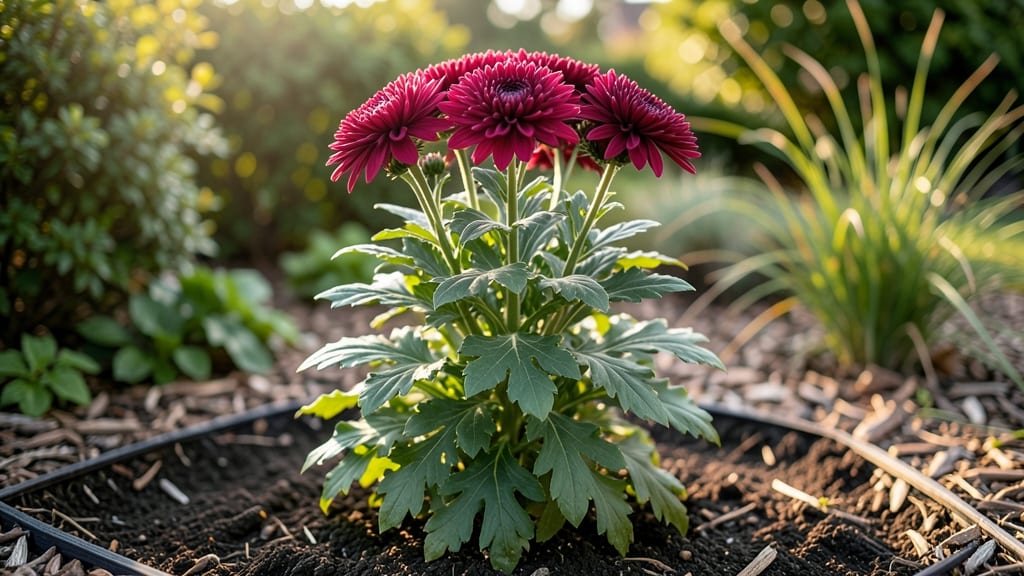
Mums are perennials in USDA Zones 5-9 but often treated as annuals because their tops die back in winter while their roots remain alive underground.
This winter dormancy isn't a sign of death—it's a survival strategy. 🌱 When temperatures drop below 20°F, the foliage blackens and falls away, but the root crown stays dormant until soil warms in spring.
The key difference between perennials and annuals lies in these underground reserves: while annuals die completely, mums store energy to regrow. I've seen gardeners swear their mums "came back from the dead" after winter—what they missed was the hidden root system doing its work underground.
What makes this especially interesting is how variety matters. Some mums, like 'Autumn Joy' or 'Purple Dome,' handle cold better than others. The secret to keeping them alive through winter? A thick layer of mulch (at least 3 inches) and choosing varieties bred for your specific zone.
In my zone 6 garden, I've found that cutting back dead foliage in late fall and adding straw mulch makes all the difference for spring regrowth.
💡 In This Article
- Why Mums Die Back in Winter and How They Recover
- Tips to Overwinter Mums Successfully in Cold Climates
Why mums die back in winter and how they recover
The winter dormancy of mums isn't a sign of death—it's a survival mechanism rooted in their cold-sensitive biology. When temperatures drop below 20°F, the above-ground foliage freezes and turns black, a process called cold dieback.
This happens because mum plants (Chrysanthemum species) originate from East Asia, where they evolved in temperate climates with distinct seasons.
Their leaves contain high concentrations of water, which expands when frozen, causing cellular damage. 🌿 The plant's response is to shut down photosynthesis and redirect energy to its root crown, where stored carbohydrates keep vital tissues alive.
What keeps mums alive through freezing winters is their root system, which can survive temperatures as low as -10°F when properly protected. These roots store starches and sugars—up to 20% of their dry weight—that fuel regrowth when soil temperatures rise above 40°F in spring.
Studies show that healthy mum roots can maintain viability for months underground, even when surface temperatures hover near 0°F. The key difference from annuals is this underground energy reserve: while annuals have no persistent structures, perennials like mums have evolved to prioritize root survival over foliage protection.
Spring regrowth begins when soil warms and moisture becomes available, triggering hormonal changes in the root crown. You'll often see new shoots emerge from the base of old stems, sometimes within 2-3 weeks of consistent above-freezing temperatures.
This process is similar to how peonies or daylilies regrow, but mums are more sensitive to cold stress.
The timing of regrowth depends on your specific zone—gardeners in Zone 5 may see shoots in early April, while those in Zone 9 might see them as late as May. 🌱 What's fascinating is how quickly these plants can rebound: I've watched mums go from completely blackened stems to full blooms in just 8-10 weeks with proper care.
The science behind this recovery involves a complex interplay of temperature thresholds and plant hormones. When soil reaches 45°F, root cells begin producing gibberellins—hormones that stimulate shoot growth—while cold-induced dormancy hormones like abscisic acid break down. This hormonal shift is what transforms the dormant root crown into active growth.
The speed of recovery also depends on how well the plant was protected over winter: mums with adequate mulch (at least 3 inches) and proper drainage can regrow 20-30% faster than those with insufficient protection.
One common misconception is that all mums behave the same way in winter. In reality, there's significant variation between varieties. For example, 'Autumn Joy' mums (a popular cultivar) handle cold better than 'Bright Lights' due to their thicker stems and more robust root systems.
The difference comes down to selective breeding: hardier varieties were developed by crossing cold-tolerant species with ornamental types. When choosing mums for overwintering, look for labels indicating Zone 5 hardiness—these plants have undergone rigorous testing to ensure their root systems can survive freezing temperatures.
What most gardeners don't realize is how the timing of winter dieback affects spring recovery. If mums are cut back too early (before the first hard frost), they may not have stored enough energy in their roots. Conversely, waiting until after the foliage has completely blackened ensures maximum carbohydrate storage.
This is why professional gardeners recommend cutting back dead stems in late winter or early spring, just as new growth begins to appear. The plant's natural cycle works against us if we interfere too soon—patience is key to successful overwintering. 💫