
Plants
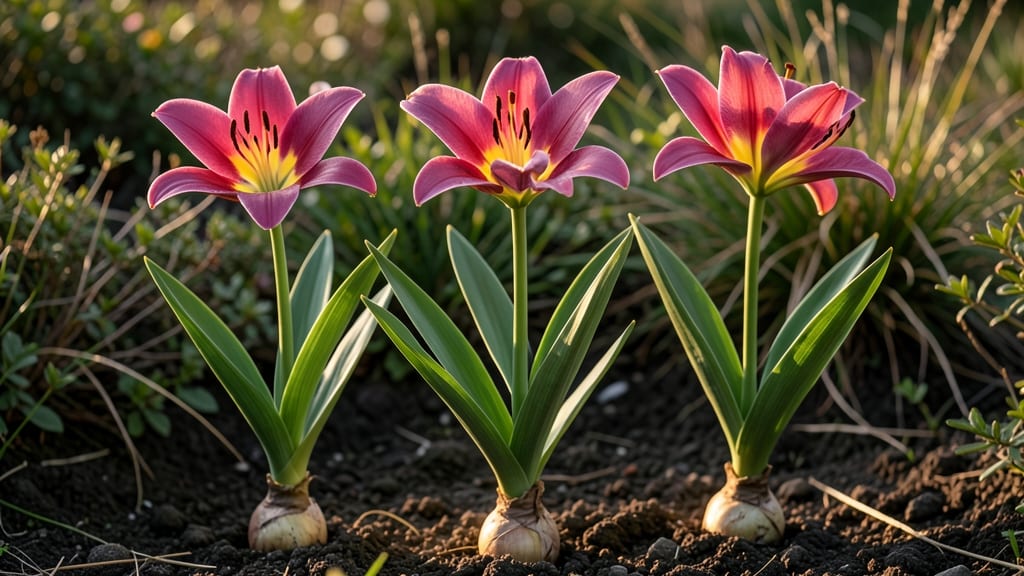
Lilies are perennials because they return each year from underground bulbs, even though they lose their leaves in winter. With proper care, many varieties can live for decades, while their lifespan hinges on bulb health, climate conditions, and seasonal maintenance.
This dieback behavior isn't a sign of death—it's how lilies conserve energy during colder months. 🌱 Their bulbs store nutrients like a natural battery, allowing them to push fresh growth when temperatures rise.
What's fascinating is how different lily types handle winter: hardy varieties like Asiatic lilies can survive down to 10°F, while tropical types need winter protection. The key to long-term growth is mimicking their natural dormancy cycle through proper soil prep and mulching.
Think of it like a hibernation strategy—lilies aren't just surviving winter, they're preparing for their next bloom. The bulbs actually strengthen during this dormant phase, which is why well-cared-for plants often produce more dramatic flowers each subsequent year.
This is why gardeners who divide their clumps every few years see renewed vigor—it's not just about space, but about giving each bulb its own energy reserves.
💡 In This Article
- How Lily Bulbs Survive Winter Dieback
- Lily Lifespan: Care Tips to Extend Their Perennial Growth
How lily bulbs survive winter dieback
The secret to lilies' perennial nature lies in their specialized underground bulbs, which function like biological survival kits. These bulbs store carbohydrates, proteins, and water in specialized cells called parenchyma, creating a nutrient reserve that sustains the plant through winter.
When temperatures drop below 50°F, lilies trigger a dormancy response where growth hormones like abscisic acid accumulate, signaling the foliage to wither while the bulb remains metabolically active but dormant. 🌱 This process is similar to how onions or tulips survive winter—except lilies often have thicker, more robust bulbs capable of deeper dormancy.
Not all lilies handle cold equally: hardy varieties like Asiatic lilies (e.g., 'Lilium asiatic hybrids') can tolerate temperatures down to -10°F thanks to their thick, papery bulb coats that insulate against frost.
In contrast, tender types such as Stargazer lilies (Lilium 'Stargazer') need protection below 20°F, as their thinner bulbs lack natural cold resistance.
The key difference is in their bulb structure—hardy lilies develop a tunicate bulb with overlapping scales, while tender types often have scaly bulbs that dry out more easily in freezing conditions.
Regrowth begins when soil temperatures rise above 55°F, prompting the bulb to produce auxin hormones that break dormancy. You'll notice the first shoots emerging from the soil's surface, often within 2-4 weeks of consistent warmth.
This timing varies by region—lilies in Zone 5 may sprout in late April, while those in Zone 8 might not emerge until early March. The bulb's stored energy fuels this early growth, which is why well-fed bulbs produce more vigorous shoots and larger blooms. 🌿
What's often misunderstood is that this dieback isn't a sign of weakness—it's an evolutionary adaptation. Lilies native to temperate climates (like those in Asia and Europe) developed this cycle to conserve energy during resource-scarce winter months.
The withering foliage actually protects the bulb by reducing water loss through transpiration, while the brown stems act as a natural mulch layer. This is why you'll see gardeners intentionally leave dead foliage until spring—it's not neglect, but a strategic part of the plant's survival mechanism.
Consider the contrast between lilies and annuals: while annuals complete their entire life cycle in one season, lilies "bank" their energy underground. The bulb's meristem cells (growth centers) remain protected in a state of suspended animation, ready to reactivate when conditions improve.
This biological strategy explains why a single lily bulb can produce flowers for 5-10 years or more with proper care—it's not just growing, it's strategically preparing for the future.
The most critical factor in this process is soil temperature, not air temperature. Even if your thermometer shows 32°F above ground, the soil might remain 45°F—warm enough to trigger premature sprouting.
This is why gardeners in colder climates often use mulch blankets or straw insulation to maintain consistent soil temps. The goal is to protect the bulb's delicate root system while allowing it to complete its dormancy cycle naturally. 💛