
Orchid Care
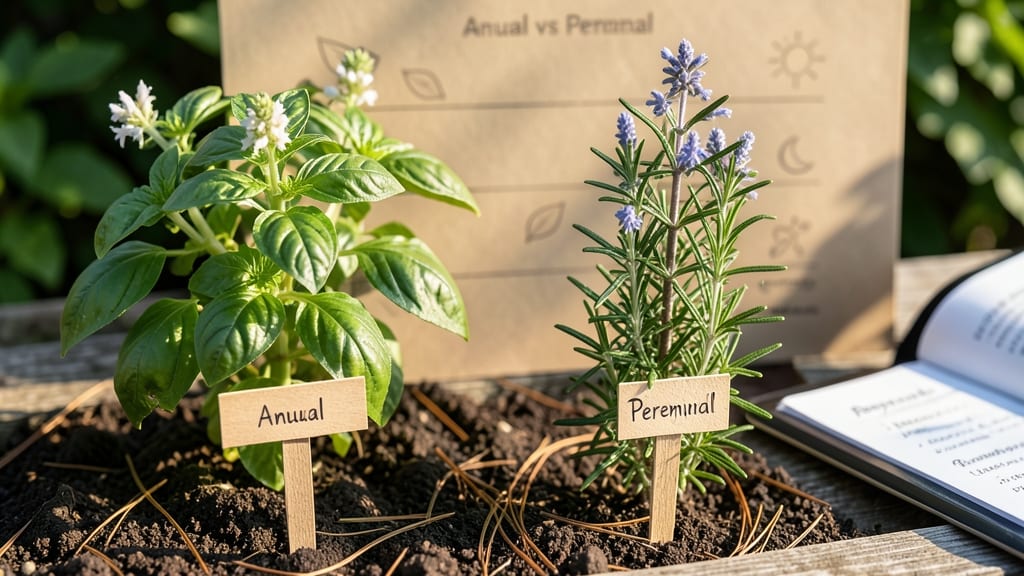
Herbs can be annuals, perennials, or even biennials, depending on the type: annuals like basil complete their lifecycle in one season, while perennials such as rosemary regrow yearly from the same root system.
Whether herbs are annuals or perennials depends entirely on their natural growth cycles and your local climate. 🌱 Annual herbs like basil thrive for one season, then bolt or die when frost hits, while hardy perennials like thyme or oregano survive winters underground, returning stronger each spring.
The key difference lies in their root systems—perennials develop deep, woody roots that store energy, while annuals focus all their energy on rapid above-ground growth. Even within the same herb family, varieties can differ: cilantro is an annual in warm climates but behaves as a biennial in cooler regions.
Understanding these distinctions helps gardeners plan better. For example, I always plant basil as an annual in my zone 7 garden, knowing it won't survive winter, while my rosemary bushes return reliably year after year.
The secret to success lies in matching each herb's native growing conditions—perennials need well-draining soil and protection from harsh winters, while annuals appreciate consistent warmth and regular harvesting to encourage bushier growth.
💡 In This Article
- How Herb Lifespans Differ by Type and Climate
- Gardening Tips for Extending Herb Lifespans
How herb lifespans differ by type and climate
Herb lifespans are fundamentally determined by their biological classification and native growing conditions. Annual herbs like basil (Ocimum basilicum) complete their entire lifecycle—germination, flowering, and seed production—in just one growing season, typically lasting 60-90 days from seed to maturity.
Their energy focuses on rapid above-ground growth rather than root development, which is why they're so sensitive to frost—temperatures below 32°F trigger rapid bolting and seed production.
In contrast, perennial herbs like rosemary (Rosmarinus officinalis) develop extensive root systems that store carbohydrates and nutrients, allowing them to regenerate above-ground growth each spring from the same rootstock.
The key biological difference lies in their response to temperature shifts. Annual herbs originate from warm climates where frost never occurs, so they've evolved to prioritize seed production before any potential cold stress.
Perennials, however, often come from Mediterranean or temperate regions where winters are present but not extreme—rosemary, for example, thrives in zones 7-10 but can survive brief freezes down to 15°F with proper mulching.
Even within herb families, you'll find variations: cilantro (Coriandrum sativum) acts as an annual in warm climates but behaves as a biennial in cooler regions, producing seeds in its second year when exposed to cold temperatures.
Climate plays an equally crucial role in determining herb behavior. In tropical zones (like Florida or Hawaii), herbs that are annuals in temperate climates may actually behave as perennials—take dill (Anethum graveolens), which grows continuously in warm winters but dies back in northern climates after producing seeds.
The USDA hardiness zones provide a useful guide: herbs rated for zones 5-6 (like thyme) can handle -10°F winters, while those for zones 9-10 (like Mexican tarragon) won't tolerate any frost.
This is why your local growing conditions can completely change how an herb behaves—what's an annual in New York might be a perennial in California.
Another fascinating factor is photoperiodism—the plant's response to daylight length. Many annual herbs (like basil) begin flowering when daylight hours shorten, triggering their natural lifecycle completion. Perennials, however, have more flexible flowering cues, often blooming in spring to attract pollinators while conserving energy for root growth during winter.
This biological difference explains why you can sometimes coax annual herbs to last longer by providing consistent warmth and light, while perennials naturally enter dormancy when days grow shorter.
Consider these practical examples to understand the variations better:
- Annual herbs: Basil, cilantro, dill, parsley (in cold climates), and chives (when treated as annuals)
- Perennial herbs: Rosemary, thyme, oregano, sage, mint, and lavender (with proper winter care)
- Biennial herbs: Cilantro in cooler climates, parsley in some regions
The most reliable way to determine an herb's lifespan is to examine its native habitat. Mediterranean herbs (like rosemary and oregano) evolved with dry summers and mild winters, making them excellent perennials in similar climates.
Tropical herbs (like basil and cilantro), however, can't survive freezing temperatures and must be treated as annuals in most gardens. Understanding these natural origins helps you match herbs to your specific growing conditions for maximum success. 🌿