
Plants
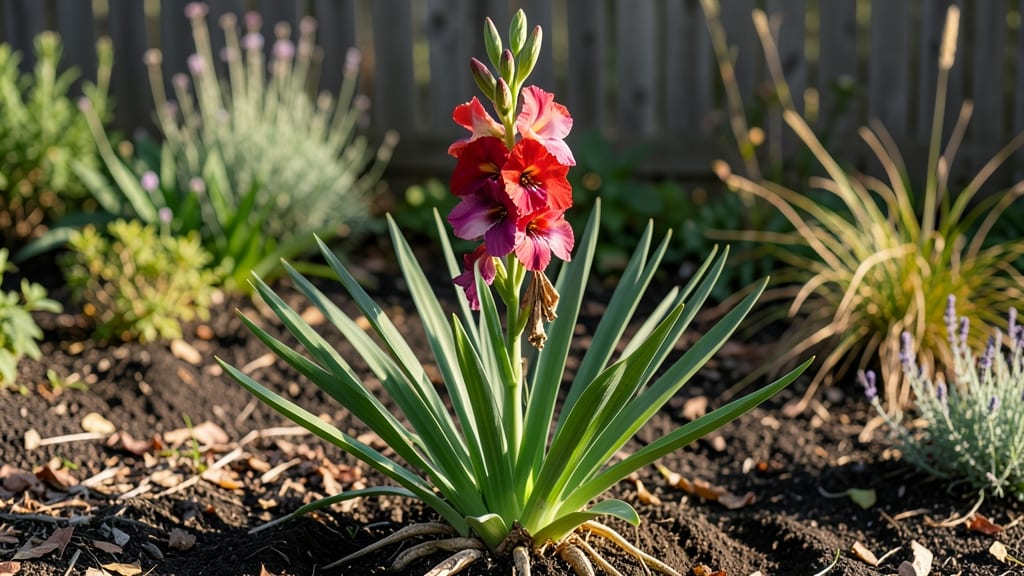
Gladiolus aren't true perennials in most regions—their underground corms die back when frost arrives, forcing gardeners to dig them up each fall. But in warm climates (USDA zones 8+) with consistent temperatures, they can grow continuously as long as soil conditions and care remain optimal.
This distinction comes down to their biological structure: gladiolus store energy in corms, which are sensitive to freezing temperatures. 🌱 Unlike hardy perennials like daylilies, these corms rot when exposed to frost, making annual digging essential in colder areas.
The good news? With proper storage—typically in dry sand or peat moss at 40-50°F—you can revive them each spring for multiple seasons. In frost-free zones, they'll even self-propagate over time if given well-draining soil and regular fertilization.
What sets gladiolus apart from true perennials is their seasonal dormancy cycle. While plants like hostas regrow from roots year after year, gladiolus rely entirely on their corms' ability to survive winter conditions.
This makes them more like tender perennials—plants that can't tolerate freezing but can live multiple years with proper care. The key difference? True perennials regenerate from living tissue underground, while gladiolus corms must be protected from cold to persist.
💡 In This Article
- Why Gladiolus Act Like Annuals in Cold Climates
- How to Overwinter Gladiolus Corms for Year-Round Growth
Why gladiolus act like annuals in cold climates
Gladiolus rely on corms—thick, underground storage organs—to survive between growing seasons, unlike true perennials that regenerate from roots or rhizomes. These corms contain concentrated energy reserves, but their structure makes them highly sensitive to freezing.
When temperatures drop below 32°F, the corm tissues begin to break down, a process called cold-induced decay. This happens because the corm's cells lack the protective compounds found in hardy perennials like daylilies, whose roots produce antifreeze proteins to withstand winter.
The key difference lies in their biological adaptation: gladiolus evolved in South Africa's temperate climate where winters are mild. Their corms are designed to dry out slightly during dormant periods, a process called curing, which prevents microbial growth.
However, in colder climates, this natural drying isn't enough—the combination of moisture and freezing creates an ideal environment for fungal infections. 🌱 For comparison, daylilies can survive -20°F because their rhizomes store energy differently and have protective bark-like layers, while gladiolus corms simply can't handle sustained cold.
What makes this even more interesting is how quickly the decay process happens. Within just 48-72 hours of exposure to 28°F temperatures, corm tissues start to soften and develop off-white, mushy spots—a clear sign of irreversible damage.
This rapid deterioration explains why gardeners in colder zones must act quickly when first frost arrives, typically between October and November depending on location. The corms' inability to regenerate from frozen tissue means they must be treated like annuals unless carefully stored.
Another critical factor is the corm's moisture content. Freshly dug corms contain about 60-70% water, which makes them vulnerable to freezing. During storage, this moisture level must drop to 20-30% through proper curing—a process that takes 1-2 weeks in dry conditions.
This reduction in moisture prevents ice crystal formation within the cells, which would otherwise rupture their structure. Without this preparation, even a single night below 32°F can render the corms unusable for the following season.
Consider this comparison: while true perennials like peonies have root systems that continue growing slowly even in winter, gladiolus corms enter a state of complete metabolic dormancy. Their energy reserves are locked away until spring warmth triggers new growth.
This dormancy is actually a survival mechanism, but one that becomes problematic when winter arrives too early or stays too cold. The corms lack the protective insulation found in other perennial structures, making them particularly vulnerable to temperature fluctuations.
Here's what's actually happening at the cellular level: gladiolus corms contain high concentrations of starches that convert to sugars during dormancy. These sugars act as natural antifreeze agents, but only up to a point.
When temperatures drop below 30°F, the sugars can't prevent ice crystal formation in the corm's vascular tissues. The resulting cellular damage creates pathways for pathogens, leading to the characteristic rot that makes gladiolus act like annuals in colder climates. 💫
Understanding this biological limitation helps explain why gladiolus thrive in frost-free zones (USDA 8+) where they can grow continuously. In these warm climates, the corms never experience the temperature stress that triggers decay, allowing them to persist year after-year with minimal intervention.
The same plants that must be carefully stored in colder regions can simply remain in the ground, continuing their growth cycle uninterrupted.