
Flowers
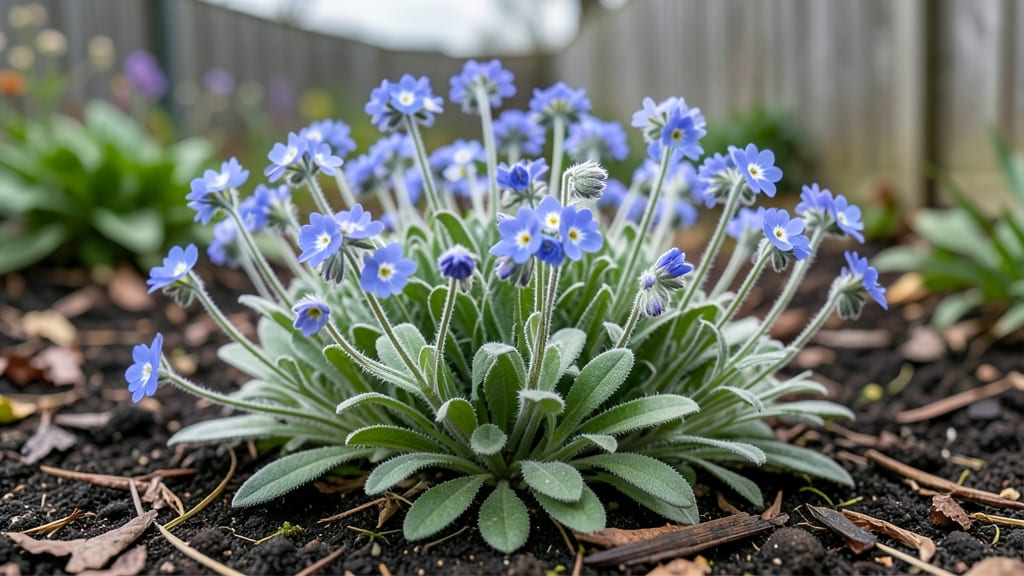
Forget-me-nots are not true perennials but behave as annuals or biennials in most climates, dying back after flowering and often requiring replanting yearly for consistent blooms. Their hardiness varies by species, with some tolerating cooler zones as short-lived perennials.
Forget-me-nots (Myosotis species) typically complete their life cycle in just one to two seasons, which is why they're often treated as annuals or biennials. 🌱 The confusion arises because some varieties—especially those from alpine regions—might persist for a few extra years under ideal conditions, but they rarely return reliably like true perennials.
I've found that even cold-hardy types like Myosotis sylvatica often fade after their first major bloom unless given perfect growing conditions.
What sets them apart is their rapid growth pattern: they bolt quickly to produce those iconic blue flowers, then decline just as fast. This makes them perfect for seasonal color but less ideal for long-term garden planning unless you're prepared to replant.
Their short-lived nature also means they're excellent for cut flowers, as they'll keep their vibrancy for weeks in vases.
💡 In This Article
- Forget-Me-Not Growth Cycle: Annual vs Biennial vs Short-Lived Perennial
- Best Hardiness Zones for Forget-Me-Not Cultivation
Forget-me-not growth cycle: annual vs biennial vs short-lived perennial
The botanical classification of forget-me-nots (Myosotis species) hinges on their rapid life cycle. Most varieties follow an annual pattern, completing their entire growth—from seed germination to flowering—in just 60-90 days. This includes the 10-14 days needed for seeds to sprout, followed by 4-6 weeks to reach maturity and bloom.
The key difference lies in their energy allocation: forget-me-nots prioritize reproduction over root development, which is why they rarely store enough energy to survive winter.
Biennial varieties, like Myosotis sylvatica, take a slightly different approach. They spend their first year building a 2-3 inch rosette of leaves close to the ground, storing energy in their roots. In their second year, they bolt (rapidly send up a flowering stalk) and produce seeds before dying.
However, this process is highly sensitive to temperature—if winters are too mild, they may bolt prematurely and fail to survive the next season. 🌿 The confusion with perennials arises because some alpine forget-me-nots can persist for 3-5 years in ideal conditions, but this is rare in typical garden settings.
What makes forget-me-nots unique is their self-pruning mechanism after flowering. Once they've produced seeds, the plant's energy shifts entirely to seed maturation, causing the leaves to yellow and die back within 2-4 weeks.
This is why you'll often see forget-me-nots in gardens for just one season unless you're growing them from fresh seed each year. The trade-off is their prolific seed production—each plant can release thousands of seeds, ensuring natural propagation even if the parent plant doesn't return.
Here's what happens under the microscope: forget-me-nots have a fibrous root system that spreads horizontally rather than deeply. This structure allows them to absorb moisture quickly but doesn't provide the structural support needed for long-term survival.
Compare this to true perennials like hostas, which develop a thick rhizome system that stores nutrients for years. The forget-me-not's roots simply lack the sturdiness to withstand freeze-thaw cycles or compete with weeds over multiple seasons.
For gardeners, this means forget-me-nots thrive best when treated as seasonal plants. They'll give you vibrant blooms in spring or early summer, but don't expect them to return the following year unless you're in a USDA Zone 3-4 with perfect conditions.
Even then, their lifespan rarely exceeds 3 years. The good news is their short life cycle makes them perfect for cut flower arrangements—they'll stay fresh for 7-10 days in water, longer than many true perennials.
One exception worth noting is Myosotis alpestris, which can persist for 4-5 years in alpine conditions. These varieties develop slightly more robust root systems, allowing them to survive light frosts. However, they still require well-draining soil and partial shade to prevent the roots from rotting during wet winters.
This is why alpine forget-me-nots often do better in rock gardens where moisture doesn't pool around their roots.