
Plants
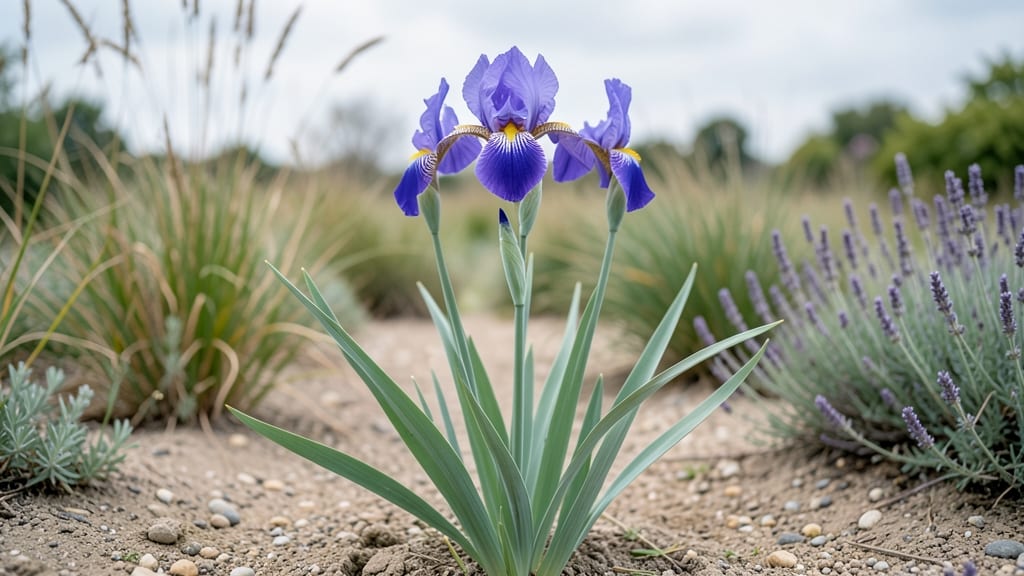
Dutch irises are not true perennials—they’re rhizomatous plants that die back annually in cold climates (USDA Zones 3-8) but regrow from their underground stems each spring. Their hardiness depends on winter protection and soil conditions.
Dutch irises might look like perennials because they return year after year, but their biology is different. 🌱 Unlike true perennials that maintain foliage through winter, Dutch irises go dormant, relying on their thick rhizomes to survive underground.
This makes them more like "hardy annuals" in colder regions—they complete their life cycle each season but regrow from the same root system. Their ability to bounce back depends heavily on how well you protect those rhizomes during freezing months.
What sets them apart is their rhizome storage system, which stores nutrients and energy for spring regrowth. This adaptation allows them to thrive in USDA Zones 3-8, but without proper winter care, they may not make it back.
I’ve found that adding a thick layer of mulch and choosing well-draining soil makes all the difference in their survival rate.
The key takeaway? Dutch irises aren’t perennials in the traditional sense—they’re more like plants that reboot annually from their roots. This explains why they sometimes struggle in harsh winters or poor soil conditions, even though they’re beloved for their vibrant blooms.
Understanding this helps gardeners provide the right care for reliable spring returns.
💡 In This Article
- Why Dutch Irises Die Back in Winter (And How It Differs from Perennials)
- How to Overwinter Dutch Irises for Reliable Regrowth
Why Dutch irises die back in winter (and how it differs from perennials)
Dutch irises enter a state of rhizome dormancy each winter, which is fundamentally different from how true perennials survive. While perennials like hostas or peonies maintain some above-ground growth or evergreen foliage through winter, Dutch irises completely shut down their leaf production.
Their thick, fleshy rhizomes (underground stems) become their sole survival mechanism, storing up to 90% of their energy reserves for spring regrowth. This dormancy is triggered by temperatures dropping below 50°F for extended periods, which signals the plant to conserve resources.
The rhizomes themselves are the key to their survival. These horizontal, tuber-like stems grow just below the soil surface and contain specialized cells that store starches and sugars. When temperatures fall below freezing, the rhizomes' outer layer hardens slightly, creating a natural protective barrier against frost penetration.
This adaptation explains why Dutch irises can thrive in USDA Zones 3-8—their rhizomes can tolerate temperatures as low as -30°F when properly protected, though extreme cold or wet conditions can still damage them.
What most gardeners don't realize is that Dutch irises aren't true perennials because they don't maintain any persistent above-ground structure through winter. Instead, they function more like hardy annuals—completing their entire life cycle each year but relying on their rhizome system to regenerate.
This is why they often struggle in regions with poor drainage or heavy clay soils, as excess moisture can cause the rhizomes to rot before they've stored enough energy for spring.
The trade-off is their stunning 2-3 week bloom period in early spring, which makes their annual return worthwhile for many gardeners.
Here's where the biology gets interesting: Dutch irises actually produce new rhizomes each year, which gradually push older ones outward. This outward growth is why you often see Dutch iris clumps spreading in the garden.
The oldest rhizomes (typically 3-4 years old) eventually die off, while the younger ones store more energy. This cycle explains why Dutch irises sometimes appear to "disappear" after a few years—they're not dying, they're simply replacing their root systems.
In colder climates, this process can be disrupted if winter conditions aren't ideal, leading to reduced spring blooms.
One critical factor in their winter survival is the timing of leaf dieback. Unlike true perennials that may keep some foliage through winter, Dutch irises completely yellow and wither their leaves by late summer or early fall. This isn't a sign of death—it's part of their preparation for dormancy.
The plant redirects all its energy into the rhizomes during this time, which is why you should never cut back foliage until it's completely brown and crispy. Removing leaves too soon deprives the rhizomes of their final energy boost before winter.
The classification of Dutch irises as "not true perennials" comes from their lack of persistent above-ground growth through winter. True perennials like daylilies or coneflowers maintain some living tissue above ground, which allows them to photosynthesize early in the season.
Dutch irises, however, emerge from complete dormancy in spring, relying entirely on their stored energy reserves. This biological difference explains why they require such specific growing conditions—particularly well-draining soil and proper winter protection—to ensure their rhizomes survive until spring.
Understanding this mechanism helps explain why Dutch irises might fail to return in certain climates. For example, in Zone 4 or colder, gardeners often need to provide additional insulation (like extra mulch or straw) to protect the rhizomes.
The science shows that even a 5°F temperature difference in winter can mean the difference between successful regrowth and complete failure. This is why many gardeners in colder regions treat Dutch irises more like tender perennials—with careful winter protection rather than assuming they'll survive on their own. 🌱