
Plants
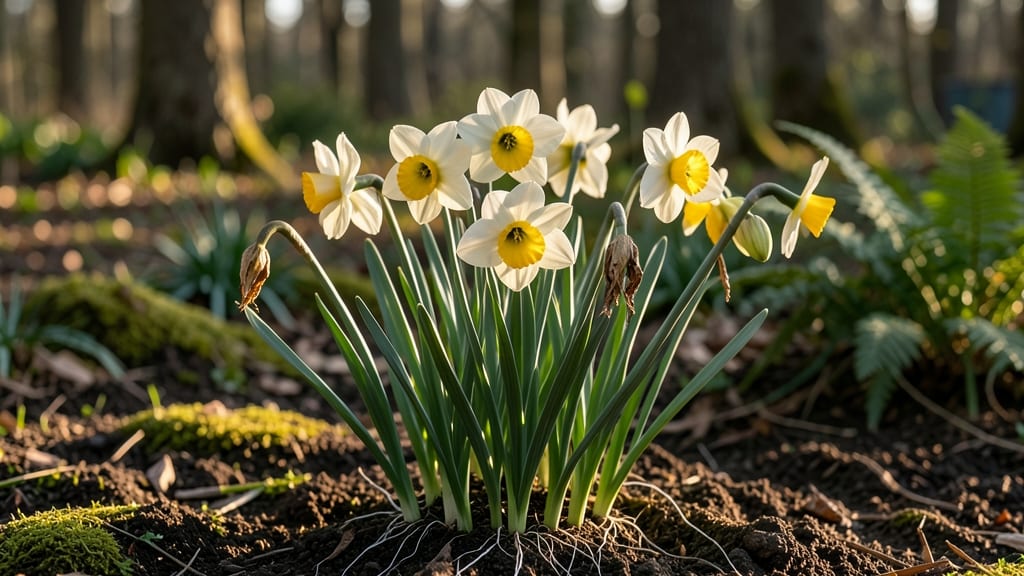
Daffodils are perennials that return year after year with vibrant spring blooms thanks to their resilient underground bulbs, which store nutrients and energy for regrowth—making them low-maintenance plants that thrive with minimal care.
Daffodils earn their perennial reputation because their bulbs act like nature's storage units. 🌱 These underground structures hold moisture and nutrients through winter, fueling new growth when temperatures rise.
Unlike annuals that complete their life cycle in one season, daffodils' bulbs remain dormant underground, ready to push up fresh foliage and flowers each spring with just sunlight and well-drained soil. This built-in resilience makes them ideal for gardeners who want reliable color without constant replanting.
What sets daffodils apart is their ability to outlast many other flowers. Their deep root systems access water and nutrients deep in the soil, while their toxic sap deters pests and diseases.
This hardiness means once established, daffodils often multiply naturally, creating dense patches of cheerful blooms that return year after year with virtually no effort from you.
💡 In This Article
- Why Daffodils Survive as Perennial Flowers
- Planting and Care Tips for Long-Lasting Daffodils
Why daffodils survive as perennial flowers
The secret behind daffodils' perennial success lies in their specialized bulb structure. Unlike annuals that rely on seeds for reproduction, daffodils store all their energy in modified underground stems called tunicated bulbs.
These bulbs contain layers of fleshy scales packed with starches, sugars, and proteins—essentially nature's energy bars that fuel regrowth each spring.
The outer papery tunic acts as protective armor against rot and pests, while the inner layers remain dormant through winter at temperatures as low as -20°F, depending on the variety.
What makes this system so efficient is the bulb's ability to balance growth and dormancy. During summer, daffodils photosynthesize through their green foliage, converting sunlight into stored nutrients that replenish the bulb for next year's blooms.
This process creates a closed nutrient cycle—the plant doesn't need annual replanting because it's already self-sufficient. 🌱 Even when the flowers fade, the bulb remains underground, conserving energy until temperatures rise again in spring.
This contrasts sharply with annuals that must complete their entire life cycle in one season before dying back.
The deep root systems of daffodils add another layer of resilience. Their roots can extend 12-18 inches below the surface, accessing moisture and nutrients that many other plants can't reach. This depth also helps them avoid competition with shallow-rooted weeds.
Their natural toxicity—containing compounds like lycorine—acts as a built-in pest deterrent, making them far less vulnerable to deer, rabbits, and even squirrels that might dig up other bulbs. This chemical defense system is why daffodils often thrive where other perennials struggle.
Seasonal dormancy is where daffodils truly excel as perennials. After blooming, they enter a 6-8 week rest period where all above-ground growth dies back, allowing the bulb to focus on storing energy. This natural cycle prevents overgrowth and ensures the plant conserves resources.
Unlike annuals that must start from scratch each year, daffodils emerge from dormancy with all the tools they need to produce 2-6 flowers per stem (depending on variety) with minimal additional care.
Consider the comparison between daffodils and tulips—both are bulb plants, but daffodils have a clearer advantage in perennial performance. While tulips may decline after 3-5 years due to bulb rot or pest damage, daffodils often thrive for decades with proper care.
Their ability to naturalize (spread and establish new bulbs) means a single planting can create a self-sustaining display that grows more vibrant each year. This built-in propagation system is what makes daffodils the ultimate low-maintenance perennial for gardeners.