
Plants
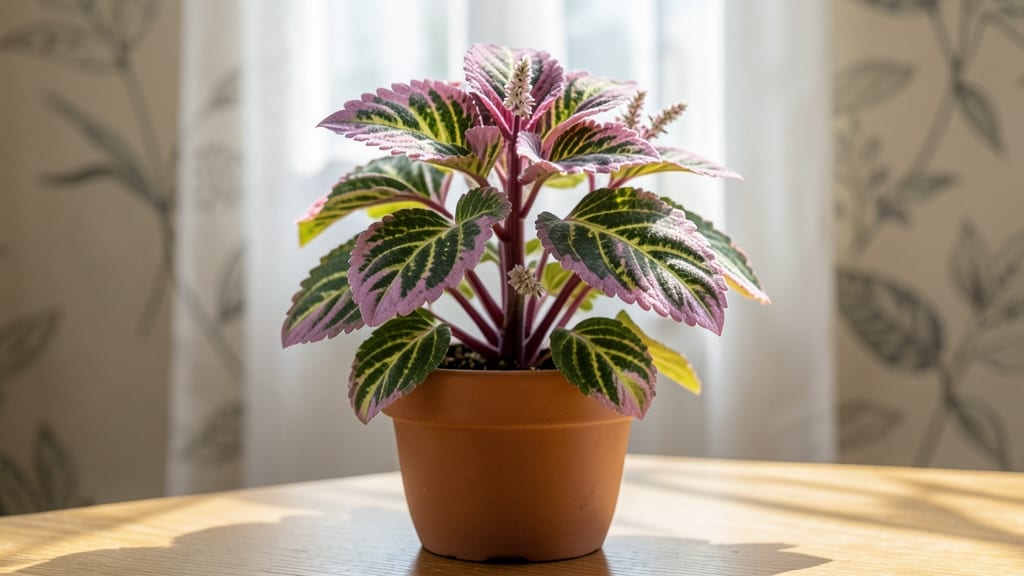
Coleus plants are not true perennials in cold climates, dying back to the ground in frost but often regrowing from roots if protected or overwintered indoors. In warmer zones (9-11), they thrive year-round as perennials with proper care.
Whether your coleus survives winter depends entirely on your climate zone. 🌱 In colder regions (zones 1-8), these vibrant plants behave more like annuals—their above-ground growth freezes, but their roots often survive underground, ready to sprout again when temperatures rise.
The key difference comes in zones 9-11, where consistent warmth lets coleus maintain active growth throughout the year without dormancy. This explains why gardeners in Southern California can enjoy their coleus as permanent garden fixtures while Northern gardeners must treat them as seasonal plants.
What makes this interesting is how coleus adapt: their root systems are surprisingly resilient, storing energy for regrowth even after frost damage. This is why many gardeners successfully overwinter cuttings indoors or move potted plants to protected areas.
The real secret lies in understanding your local microclimate—even within the same zone, a sheltered spot might let your coleus survive winter when an exposed area would kill it.
💡 In This Article
- How Climate Zones Determine Coleus Lifespan
- Year-Round Coleus Care for Cold Regions
How climate zones determine coleus lifespan
Coleus plants exhibit a fascinating growth pattern influenced by temperature thresholds. Their tropical origins mean they lack cold hardiness, with foliage typically dying when temperatures drop below 32°F (0°C).
However, their root systems can survive much colder conditions—down to 20°F (-7°C)—thanks to stored starches that fuel regrowth when spring arrives. This dual behavior explains why coleus behave as perennials in warm climates but as annuals in colder ones.
The USDA hardiness zones play a critical role in determining coleus lifespan. In zones 9-11, where winter temperatures rarely fall below 25°F (-4°C), coleus maintain active growth year-round, making them true perennials.
The plant's natural dormancy cycle is suppressed, allowing continuous foliage production. In contrast, zones 1-8 experience freezing temperatures that kill above-ground growth, though roots often persist in well-drained soil.
What's particularly interesting is how coleus adapt to seasonal changes. During cooler months, they enter a semi-dormant state where growth slows dramatically but doesn't completely stop—unlike true perennials that go fully dormant.
This explains why you might see stunted growth in fall but not complete die-back. The plant's ability to photosynthesize at 50-60°F (10-15°C) allows it to maintain some energy reserves through winter.
Soil temperature plays an equally important role. Coleus roots require soil temperatures above 55°F (13°C) to actively grow, which is why spring planting often fails if done too early. In colder zones, gardeners must wait until soil warms to this threshold before transplanting, typically 2-4 weeks after last frost.
This timing ensures roots can establish before summer heat arrives.
Consider this comparison: A coleus in Zone 10 might grow continuously for 12 months, while one in Zone 5 would complete its lifecycle in 6 months before winter kills the foliage. The difference lies in whether the plant experiences true dormancy (zones 9-11) versus seasonal die-back (zones 1-8).
This explains why Southern gardeners can enjoy perennial coleus while Northern growers must treat them as annuals.
The plant's natural growth cycle reveals another fascinating adaptation: coleus produce more vigorous regrowth from roots when subjected to cold stress. This survival mechanism explains why many gardeners successfully overwinter cuttings by burying them in 3-4 inches of mulch—the cold shock actually stimulates root development for spring.