
Plants
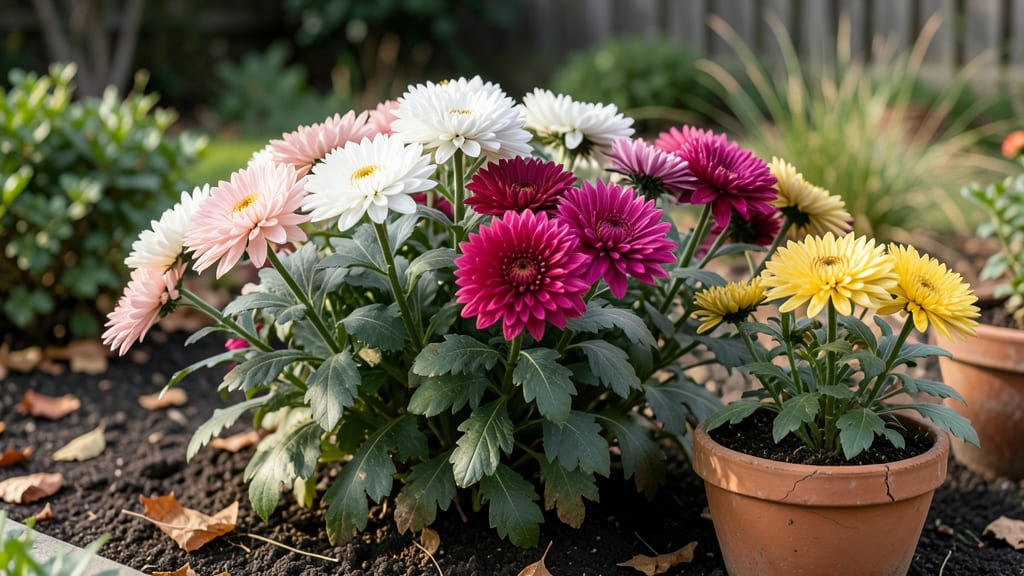
Chrysanthemums are perennials in USDA hardiness zones 5-9, where they naturally return each year with proper care, though they may go dormant in winter before regrowing from their roots in spring. In colder regions, gardeners must treat them as tender perennials or store tubers to survive.
Whether your chrysanthemums come back year after year depends entirely on your climate zone. 🌱 In warmer zones (5-9), these hardy plants establish deep root systems that survive winter dormancy, often returning with even more vigor than the previous season.
The key difference comes in colder regions—below zone 5, the roots can't always withstand freezing temperatures, which is why many gardeners in zones 1-4 opt to dig up and store tubers over winter.
What's fascinating is how these plants adapt: their growth cycle naturally slows in cooler months, conserving energy until spring. This built-in resilience makes them perfect for gardeners in milder climates, but those in colder areas need to get creative with winter protection or tuber storage to maintain their perennial nature.
💡 In This Article
- Chrysanthemum Lifespan by USDA Hardiness Zones
- Winterizing Chrysanthemums in Cold Climates
Chrysanthemum lifespan by USDA hardiness zones
The perennial nature of chrysanthemums hinges on their ability to survive winter dormancy, a process governed by temperature thresholds. These plants develop deep root systems that store energy as starches, allowing them to withstand freezing temperatures down to 20°F in zones 5-9.
The key mechanism is their natural cold acclimation—when nighttime temperatures consistently drop below 50°F for 2-3 weeks, the plant undergoes physiological changes that increase its frost tolerance by up to 50%.
This adaptation explains why chrysanthemums thrive as true perennials in these zones, returning each spring with minimal intervention.
In zones 5-9, chrysanthemums enter a state of winter dormancy where growth halts, but roots remain alive just below the soil surface. The roots contain meristematic tissues (growth cells) that remain protected by insulating soil and natural mulch.
For example, in zone 7, where winters average 15-20°F, chrysanthemums might lose their above-ground foliage but preserve their root systems, ready to sprout new growth when soil temperatures reach 55°F in spring. This biological process is similar to how peonies or hostas survive winter in comparable climates.
The critical threshold occurs when temperatures drop below 20°F for extended periods. In zones 4 and below, the root systems often fail to survive because the ground freezes deeper, and the protective layer of organic mulch becomes insufficient.
This is why gardeners in zone 4 (where winters average 0-10°F) must take extra precautions—either through heavy mulching or tuber storage. The science here involves cellular dehydration: as temperatures fall, plant cells lose water to prevent ice crystal formation, but prolonged exposure to extreme cold disrupts this protective mechanism.
What most gardeners don't realize is how soil composition affects cold hardiness. Sandy soils drain quickly and don't insulate as well as loamy or clay-based soils, which retain moisture and moderate temperature fluctuations.
In zone 5, where winters average 10-15°F, adding a 4-6 inch layer of straw or shredded leaves over the root zone can raise soil temperatures by 5-10°F, making the difference between survival and dieback.
This mulch acts like a thermal blanket, similar to how thick snow covers protect forest floors during winter.
For gardeners pushing the limits in zones 4-5, selecting cold-hardy varieties like 'Hardy Bonanza' or 'Rubellum' makes a significant difference. These cultivars have been bred to tolerate temperatures down to 10°F with proper care, while more tender varieties may require additional winter protection.
The choice of cultivar affects not just survival but also bloom time—hardier varieties often flower 2-3 weeks later in spring to avoid late frosts that can damage new growth.
Understanding these zone-specific behaviors helps explain why chrysanthemums can be perennials in some climates but require annual replanting in others. The transition point between zones 4 and 5 is particularly critical, as it represents the boundary where natural root hardiness meets the need for human intervention.
In colder regions, the perennial growth habit becomes more of a seasonal cycle managed through storage rather than in-ground survival.