
Flowers
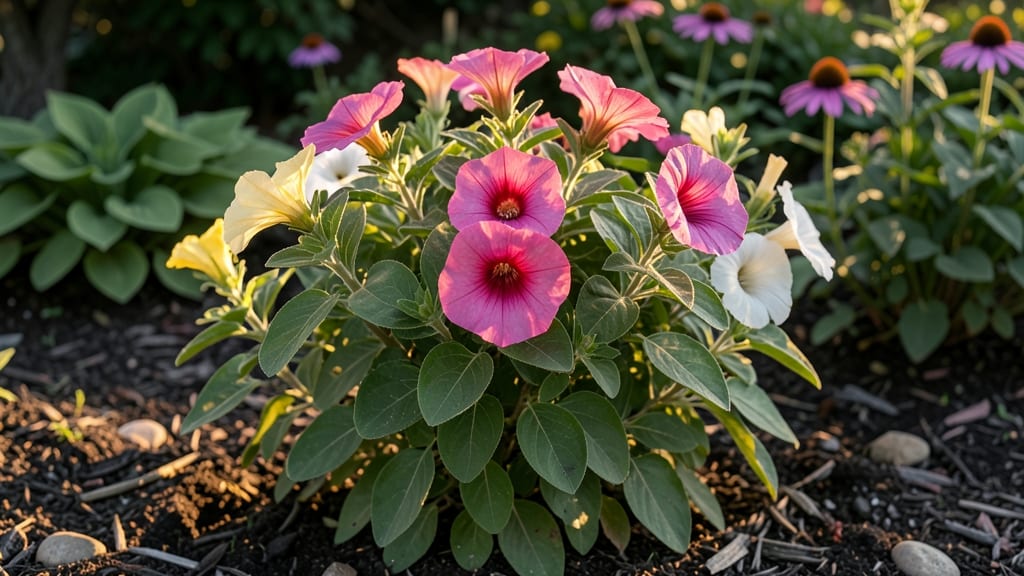
Deciding whether the four o'clocks are perennials or annuals depends on your climate: they thrive as perennials in warm regions but are typically treated as annuals where frost kills their tubers. With proper care, their hardy roots can regenerate each spring even in colder areas.
Whether the four o'clocks are perennial or annual depends on your climate.
In USDA zones 8-11, where winters stay above 20°F, these plants naturally overwinter as perennials, sending up new shoots from their dormant tubers each spring. 🌱 However, in colder zones (5-7), gardeners often dig up and store the tubers indoors or protect them with thick mulch to encourage regrowth.
The key difference lies in how well the tubers survive winter temperatures—if they freeze, the plant acts like an annual, but with the right protection, they can return year after year.
What's fascinating is how these plants adapt. Their tubers store energy like a natural battery, allowing them to bounce back even after frost damage.
I've seen gardeners in zone 6 successfully overwinter them by covering the soil with 6+ inches of straw mulch, which insulates the tubers through freezing temperatures. This makes them technically perennials in those areas too—just with extra effort!
💡 In This Article
- Climate Zones Where Four O'Clock Plants Survive as Perennials
- Tips to Encourage Four O'Clock Plants to Return Year After Year
Climate zones where four o'clock plants survive as perennials
The four o'clock plant's (Mirabilis jalapa) perennial nature hinges on its tuber's ability to survive winter dormancy. In USDA zones 8-11, where winter temperatures rarely drop below 20°F, these tubers naturally overwinter in the soil.
The tubers act like living batteries, storing starches that fuel new growth when temperatures rise. In these warm climates, gardeners rarely need to intervene—the plants simply re-emerge each spring from the same roots, proving their true perennial nature. 🌿
In colder zones (5-7), the story changes dramatically. Tubers exposed to prolonged freezing (below 10°F for more than 2 weeks) often die back, forcing gardeners to treat them as annuals. However, the plant's hardiness isn't just about absolute temperature—it's about how long the cold persists.
A brief frost in zone 6 might only damage surface foliage while leaving tubers intact, whereas a harsh winter in zone 4 will likely kill them entirely. The key threshold is consistent soil temperatures below 25°F, which triggers tuber dormancy and potential death.
What makes this plant so adaptable is its tuber dormancy mechanism. When temperatures drop, the tubers enter a state similar to hibernation, shutting down metabolic activity to conserve energy.
This dormancy allows them to survive brief cold snaps, but prolonged exposure to freezing ground (below 15°F for 4+ weeks) becomes fatal.
Gardeners in marginal zones (7-8) can push the limits by using insulating mulch or straw wrappings to maintain soil temps above 20°F, effectively extending the plant's perennial range by 1-2 zones. 🌡️
Another fascinating factor is soil type. Sandy soils drain quickly, causing tubers to dry out in winter, while clay holds moisture that can lead to rot if not well-drained. The ideal medium is loamy soil with good drainage, which prevents both freezing and waterlogging.
In zones 9-11, where winters are mild but summers scorching, tubers may actually benefit from shade cloth during peak heat to prevent dehydration—a reminder that extreme conditions (hot or cold) both threaten perennial survival.
For gardeners on the fence between zones, microclimates play a crucial role. A south-facing slope or urban heat island might create pockets where four o'clocks thrive as perennials even in technically colder regions.
I've seen them naturalize in zone 6b gardens where they're planted near foundations that absorb and radiate heat. This local variability means the plant's perennial status isn't just about broad zone labels—it's about understanding your specific growing conditions. 🌍
Here's what you need to know about zone-specific survival:
- Zones 8-11: True perennials - tubers survive winter naturally with minimal care
- Zones 7-8: Marginal perennials - require 4-6" mulch or tuber protection
- Zones 5-6: Annual treatment typical - but possible with deep mulching or overwintering
- Zones 4 and below: Rarely survive - best treated as annuals or grown in containers
The bottom line? Four o'clocks are opportunistic perennials—they'll take advantage of any climate where their tubers can survive winter dormancy. With the right conditions, even gardeners in cooler zones can coax these vibrant flowers to return year after year.
The secret lies in understanding your local freeze patterns and giving those tubers the protection they need to make it through. ❄️